Writer Resume Examples

Crafting a standout resume for a Writer position is like penning the opening line to a captivating novel—it's your ticket to grabbing attention amidst a sea of scripts. This article will unravel the secrets to stitching together a resume worthy of a standing ovation, guiding readers through the art of presenting their literary prowess and creativity so vividly that hiring managers can't help but stop and stare.
Building Blocks of a Writer Resume
- Contact Information: How employers can reach you easily.
- Summary: Snapshot of your professional identity and goals.
- Work Experience: Highlights of your writing career journey.
- Skills: Your writing-related abilities and proficiencies.
- Education: Academic background and writing-related coursework.
- Publications: Showcase of your published works.
- Awards and Honors: Recognition of your writing achievements.
- Professional Affiliations: Memberships in writing organizations or groups.
For the Writer role, emphasize your ability to adapt tone and style to different audiences and purposes in your resume summary. In your cover letter, provide concrete examples of how your writing has impacted projects or boosted engagement, showcasing your unique voice and storytelling prowess.
Pro Tip: Crafting a resume with the right skills and keywords is like speaking the secret language of Applicant Tracking Systems, ensuring your application doesn't just vanish into the digital void but instead lands right where it needs to be.
How to Make Your Writer Resume Stand Out
When showcasing achievements on a resume for a Writer position, focus on detailing how your articles or content pieces have driven measurable engagement, like increasing readership by 30% or boosting social media shares significantly. Highlight specific projects where your writing played a pivotal role in achieving outcomes, such as contributing to a campaign that raised brand awareness by reaching over a million viewers.
- Opt for a clean, uncluttered format with generous white space; it gives the reader’s eyes room to breathe and lets your words shine without distractions.
- Use a professional yet distinctive font to convey creativity without sacrificing legibility; think Garamond or Georgia over Times New Roman.
- Incorporate clear headings and subheadings to guide the reader smoothly through your story, ensuring your narrative flows logically and engagingly.
Pro Tip: Tailoring your Writer resume highlights specific skills and experiences that match the job, making you stand out to employers.
Early Career Writer Resume Sample
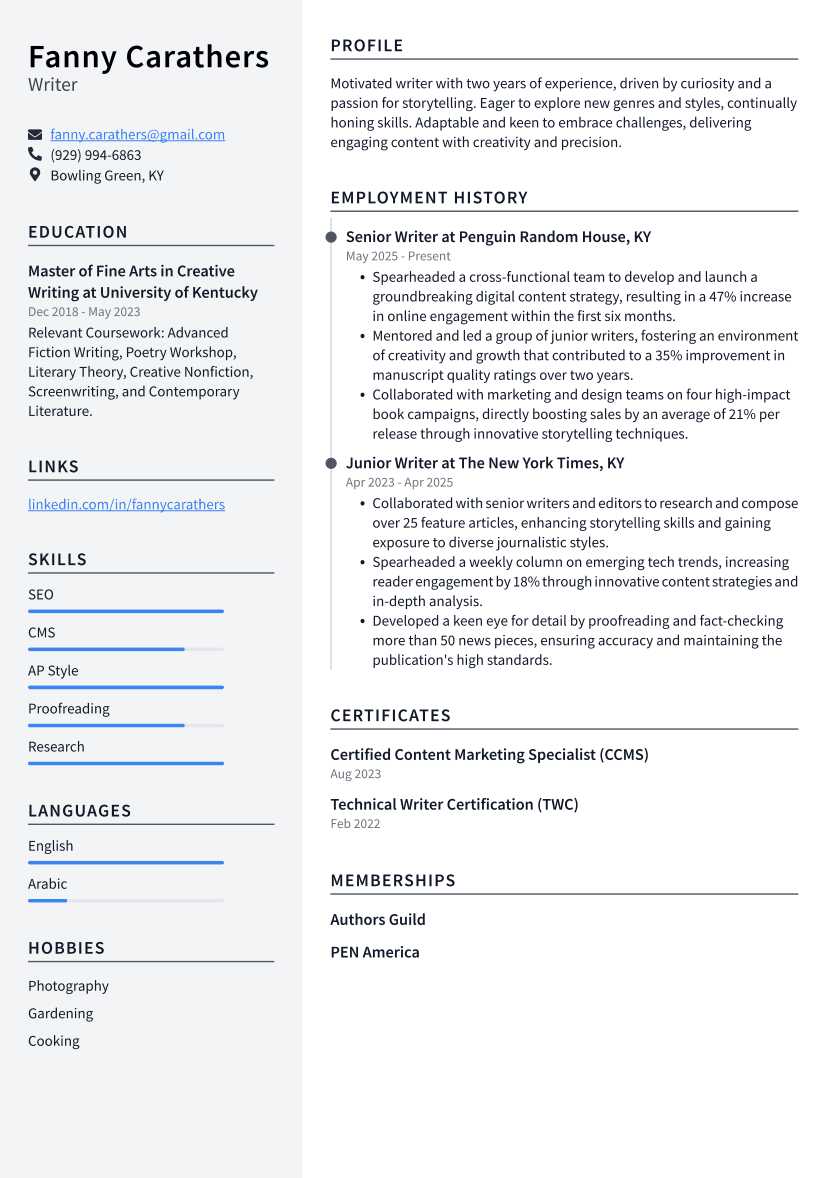
An entry-level writer resume typically highlights education and potential, while mid-level and senior resumes emphasize achievements and experience.
Mid-Level Writer Resume Sample
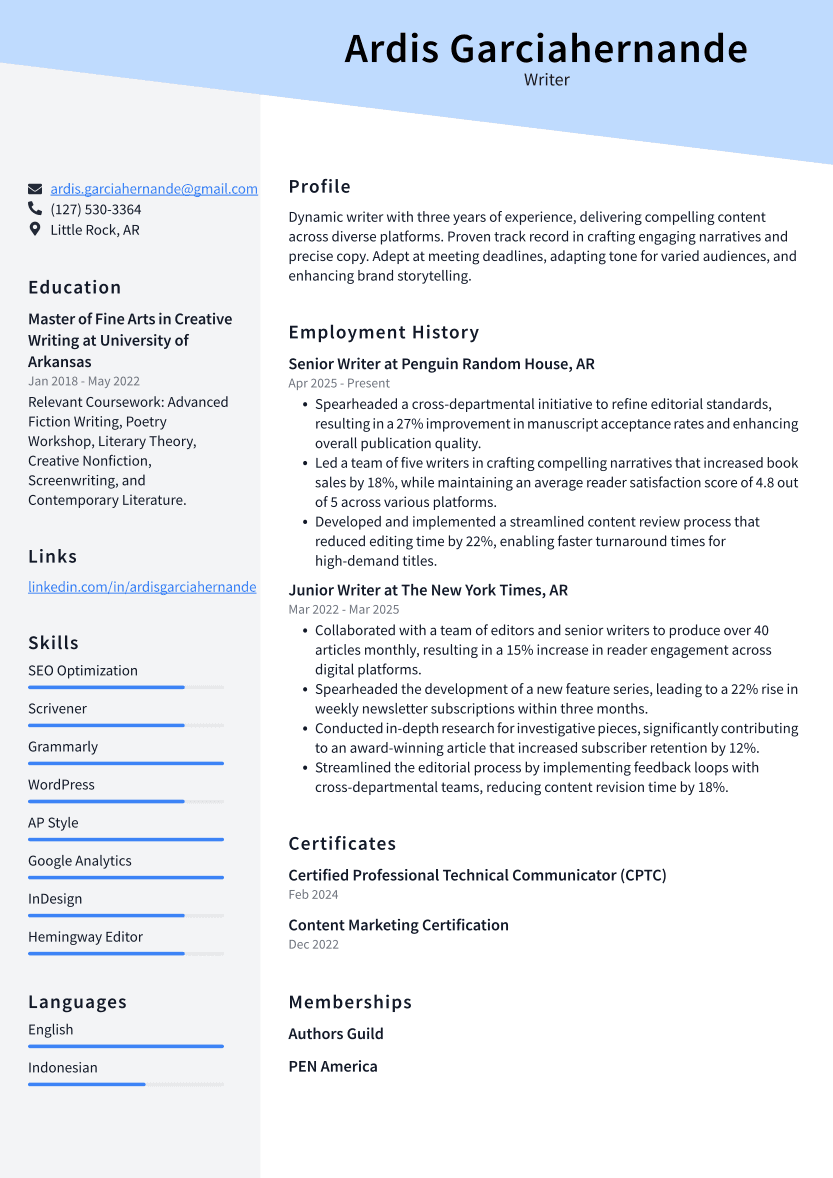
A mid-level Writer resume highlights specific industry experiences and skills showing growth and specialization, between the broad adaptability of entry-level and the leadership focus of senior resumes.
Senior Writer Resume Example
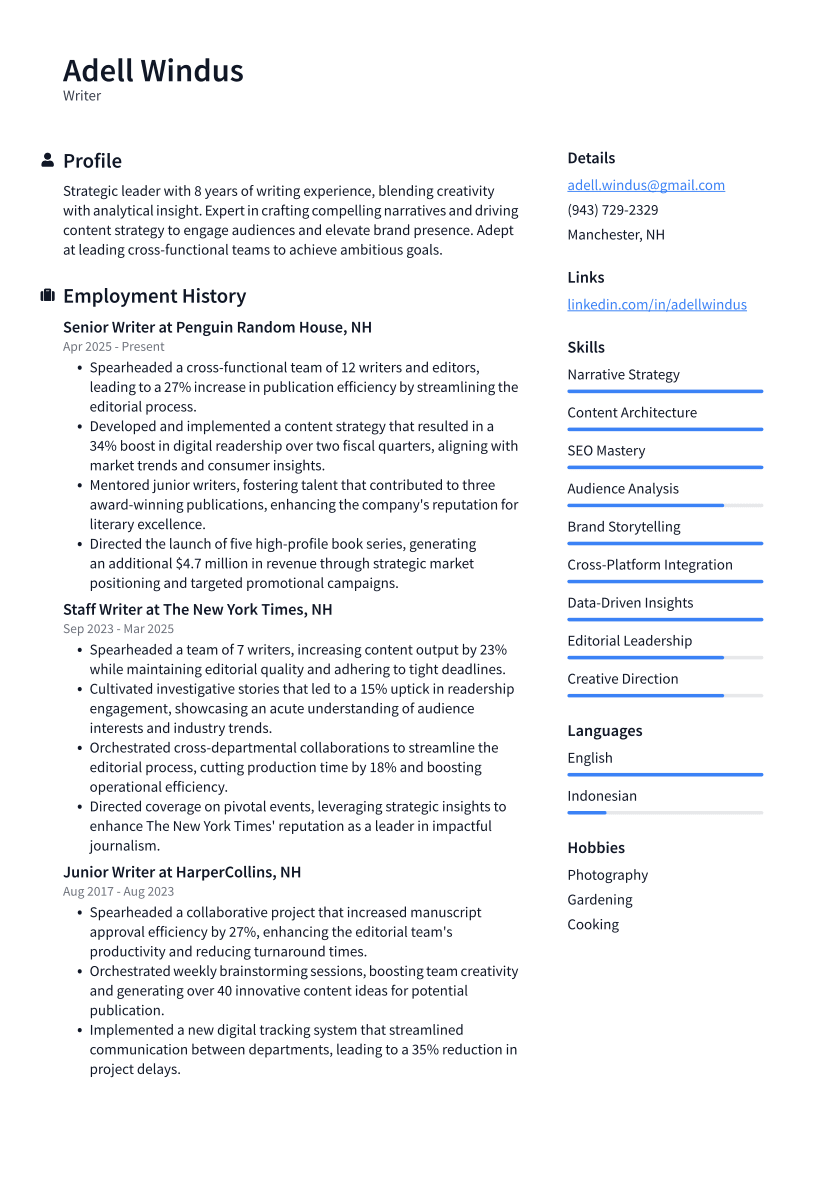
A senior-level Writer resume typically showcases extensive industry experience, leadership roles, and significant achievements, whereas entry-level or mid-level resumes focus more on foundational skills, education, and relevant but more limited work experience.
Writer Resume Do’s, Don’ts, and Checklist
DO'S
- Highlight your portfolio with diverse writing samples to showcase versatility.
- Emphasize experience with SEO for digital content to demonstrate awareness of online trends.
- Include metrics like readership growth or engagement rates to quantify the impact of your work.
DON'TS
- Don’t clutter it with overused buzzwords like "results-driven" or "synergistic".
- Don’t bury crucial skills in lengthy paragraphs; keep it snappy and direct.
- Don’t forget to tailor it specifically for each position; avoid generic templates.
CHECKLIST
- Highlight your unique writing skills and expertise.
- Showcase published work or specific projects.
- Emphasize your ability to meet deadlines consistently.
- Avoid excessive jargon or unnecessary fluff.
- Don’t overlook tailoring your resume for each application.
- Refrain from listing irrelevant experiences.