Security Analyst Resume Examples

Crafting a knockout resume for a Security Analyst position is like fashioning a digital suit of armor. It shields personal achievements while spotlighting technical prowess, turning potential threats into golden opportunities. This article will guide readers on concocting resumes that capture attention and can withstand even the most scrutinizing HR radar.
What to Include on a Security Analyst Resume
- Contact Information: Key details for reaching you quickly.
- Summary: Brief overview of your professional background.
- Work Experience: Previous roles showcasing security expertise.
- Skills: Core competencies in security tools and practices.
- Education: Academic credentials supporting your career.
- Certifications: Relevant security certifications you hold.
- Projects: Notable security projects you've completed.
- Languages: Programming languages you are proficient in.
Highlight your experience with threat detection and incident response in the summary, detailing specific tools or methodologies you've mastered. In the skills section, emphasize your proficiency in analyzing security logs, conducting vulnerability assessments, and staying updated on the latest cybersecurity threats.
Pro Tip: Incorporating relevant skills and keywords into a Security Analyst resume is crucial for ensuring it smoothly navigates through the ATS, enhancing the chances of catching a recruiter's eye.
Set Your Security Analyst Resume Apart
Showcase accomplishments by detailing specific incidents where your actions prevented potential security breaches, citing numbers when possible, like a 30% reduction in vulnerabilities. Highlight successful projects with measurable outcomes, such as implementing a threat detection system that increased response speed by 50%, to demonstrate your impact.
Consistent Font and Size: Utilize a professional font like Arial or Calibri, maintaining a size between 10-12 points for the main text, ensuring clarity and avoiding clutter.
Effective Use of White Space: Balance text with ample white space to guide the eye naturally, enhancing readability and making key information like certifications or technical skills stand out.
Clear Section Headings: Employ bold or slightly larger text for section headings such as "Experience," "Certifications," and "Technical Skills," facilitating quick navigation and highlighting areas of expertise.
Pro Tip: Tailoring your Security Analyst resume for each job highlights relevant skills and experiences, making you stand out to potential employers.
Sample Resume for Entry-Level Security Analyst
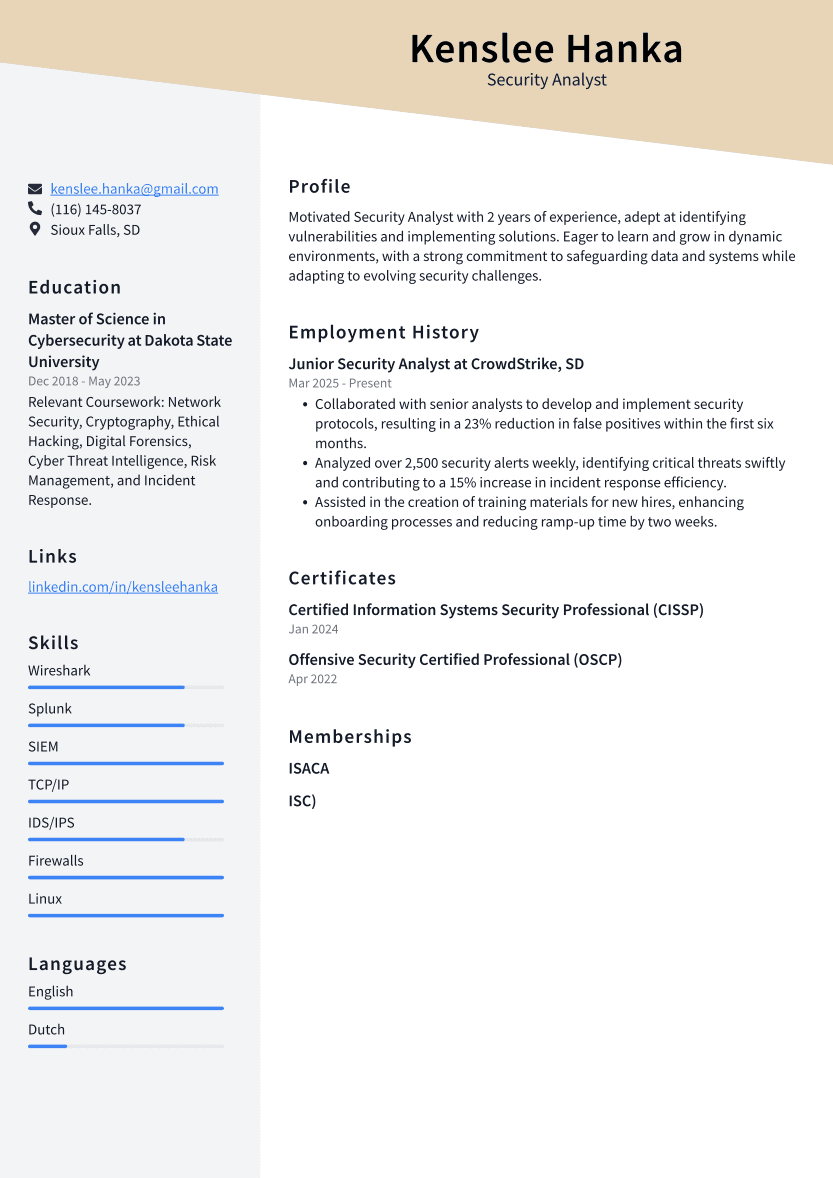
Entry-level Security Analyst resumes focus on foundational skills and education, while mid-level or senior ones showcase specialized experience, leadership, and advanced certifications.
Mid-Level Security Analyst Resume Sample
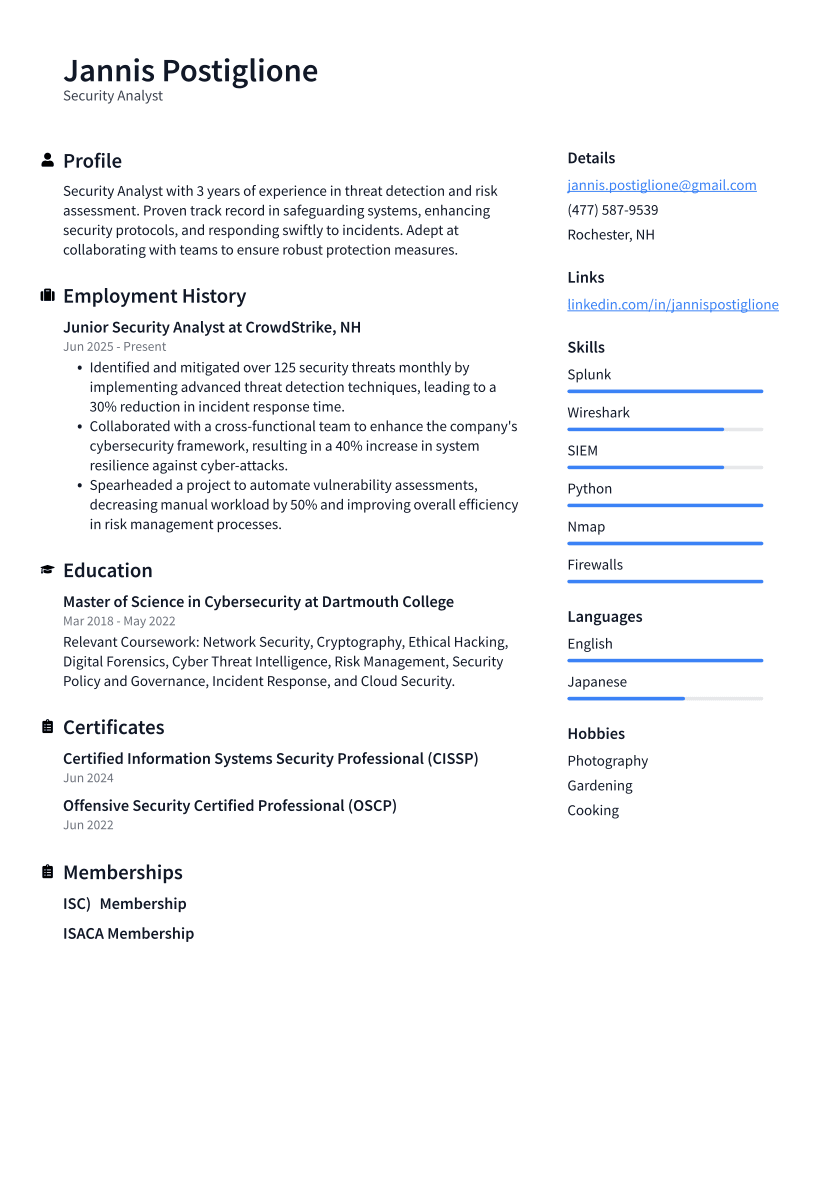
A mid-level Security Analyst resume balances foundational skills with demonstrated experience, bridging the learning phase characteristic of entry-level resumes and the leadership focus found in senior resumes.
Sample Resume for Senior Security Analyst
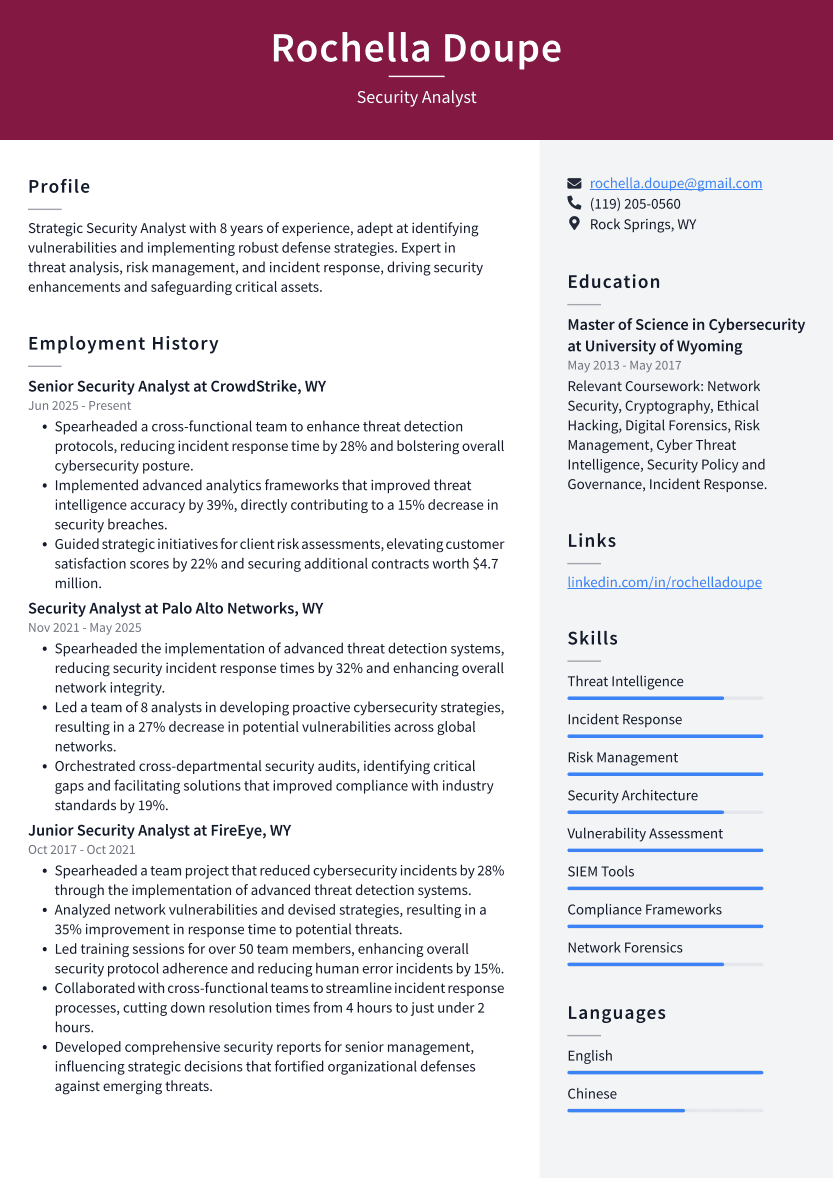
A senior-level Security Analyst resume brims with complex problem-solving achievements, strategic leadership roles, and a deep, often nuanced knowledge of diverse security frameworks, distinguishing it from the more straightforward, skill-centric focus of entry-level or mid-level resumes.
Do’s, Don’ts, and an Easy Checklist for Your Security Analyst Resume
DO'S
- Highlight relevant certifications and continuing education to showcase expertise and commitment.
- Emphasize quantifiable accomplishments, such as reducing incident response times or enhancing system security.
- Tailor the resume for each job application, focusing on the specific skills and experiences that align with the role.
DON'TS
- Don't provide overly detailed technical jargon that could confuse rather than clarify.
- Don't focus solely on job duties; instead, highlight achievements and the impact of your work.
- Don't include personal information like a headshot, age, or unrelated hobbies.
CHECKLIST
- Highlight precise metrics and achievements, not just responsibilities.
- Tailor your resume to each specific job description, emphasizing relevant skills.
- Use clear, professional language; avoid jargon that obfuscates.
- Avoid lengthy paragraphs; opt for bullet points for clarity.
- Don’t omit relevant certifications—these are crucial.
- Stay away from overused buzzwords that dilute your message.