Supply Chain Manager Resume Examples

A resume for the Supply Chain Manager: not just a document, but a master key to opportunities. Crafting it right can mean the difference between being just another suit in the line and standing out like a neon forklift at a black-tie event. In this cheeky guide, unearth the art of shaping your resume into a powerful magnet for recruiters, ensuring they can't resist calling you from the depths of their inboxes.
Essentials for a Strong Supply Chain Manager Resume
- Contact Information: Name, phone, email, LinkedIn, address.
- Summary: Brief professional overview and career goals.
- Work Experience: Relevant jobs, responsibilities, achievements.
- Skills: Key competencies in supply chain management.
- Education: Degrees, certifications, relevant coursework.
- Certifications: Industry-specific credentials and licenses.
- Projects: Noteworthy initiatives and outcomes.
- Languages: Proficiency in additional languages.
In your resume, highlight your expertise in optimizing logistics and inventory management by detailing specific systems or processes you’ve implemented that led to cost reductions or efficiency improvements. During interviews, discuss a challenging supply chain disruption you navigated, emphasizing your strategic problem-solving and cross-departmental collaboration skills.
Pro Tip: Crafting a resume for a Supply Chain Manager role with the right skills and keywords can mean the difference between catching the eye of an ATS and slipping into digital oblivion.
Set Your Supply Chain Manager Resume Apart
Illustrate your impact by detailing specific projects that improved logistics efficiency, reducing costs by a tangible percentage or timeframe. Spotlight instances where you led teams to enhance supplier performance, driving down delivery times or boosting inventory accuracy, underlining your strategic prowess with numbers that speak louder than words.
Clear Section Headers: Use bold, larger fonts for section titles like "Experience," "Skills," and "Education" to guide the reader's eye and break up blocks of text, making navigation effortless.
Consistent Formatting: Maintain uniformity in font type, size, and spacing throughout the document. This gives a polished look and helps prevent distraction from the content.
Effective Use of White Space: Strategically place margins and spacing between sections to avoid a cluttered appearance, allowing key information to stand out and making it easier to scan quickly.
Pro Tip: Tailoring your resume for each application highlights relevant skills and experiences, making you stand out to employers.
Resume Example: Starting Out as a Supply Chain Manager
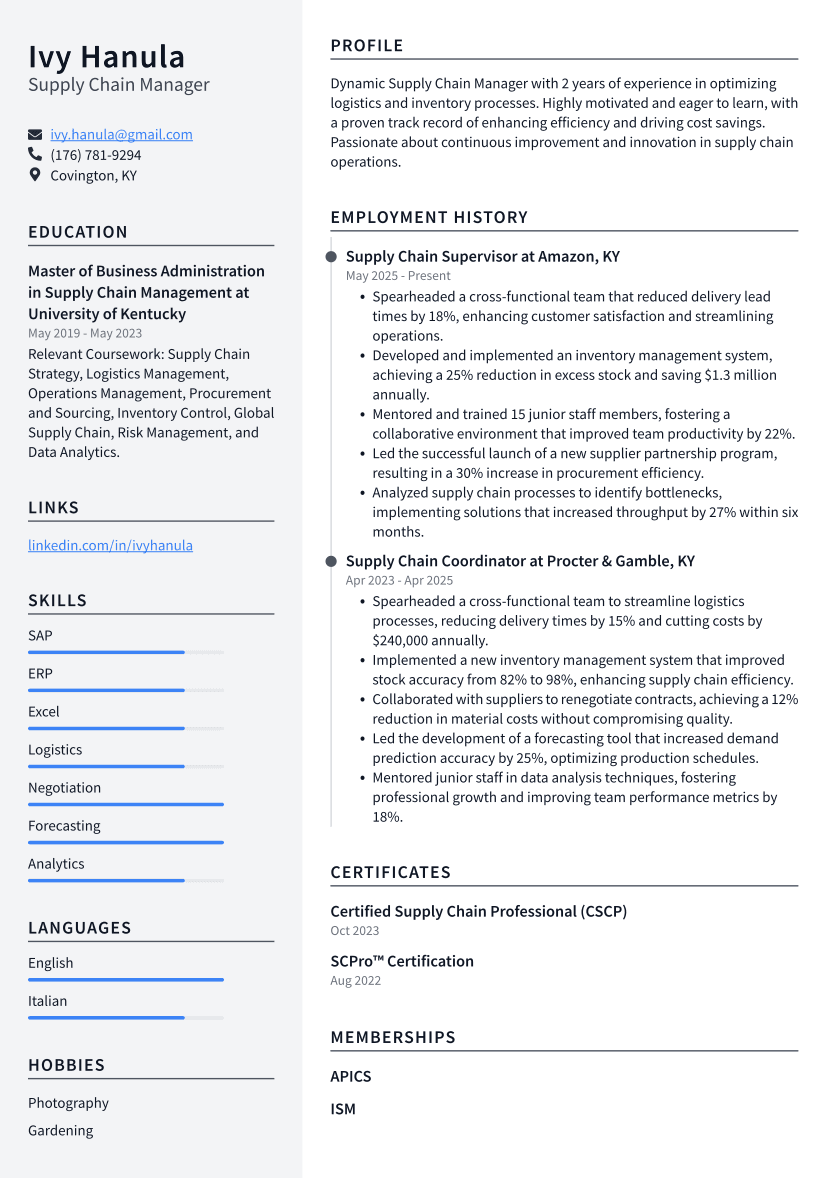
An entry-level Supply Chain Manager resume highlights foundational skills and education, while mid-level or senior resumes emphasize industry experience, leadership roles, and strategic achievements.
Experienced Supply Chain Manager Resume Sample
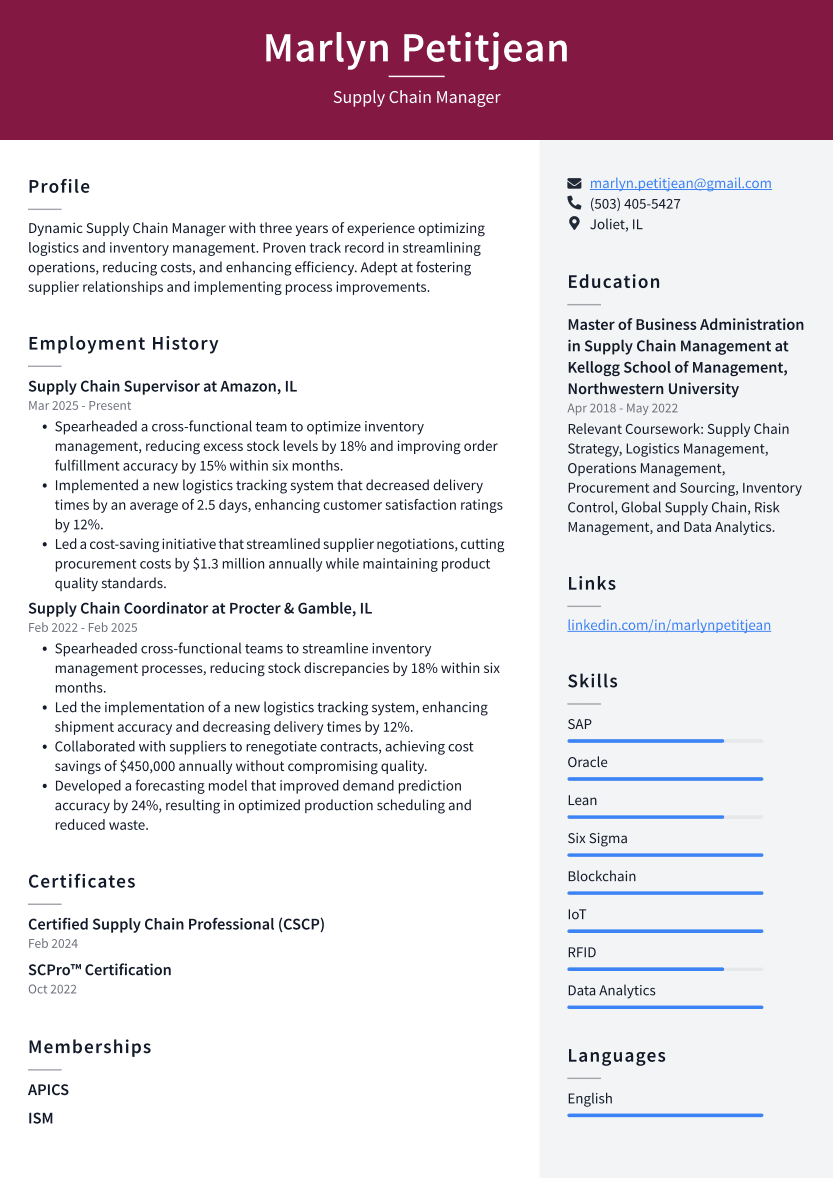
A mid-level Supply Chain Manager resume bridges foundational skills and strategic oversight, highlighting both hands-on experience and growing leadership.
Sample Resume for Senior Supply Chain Manager
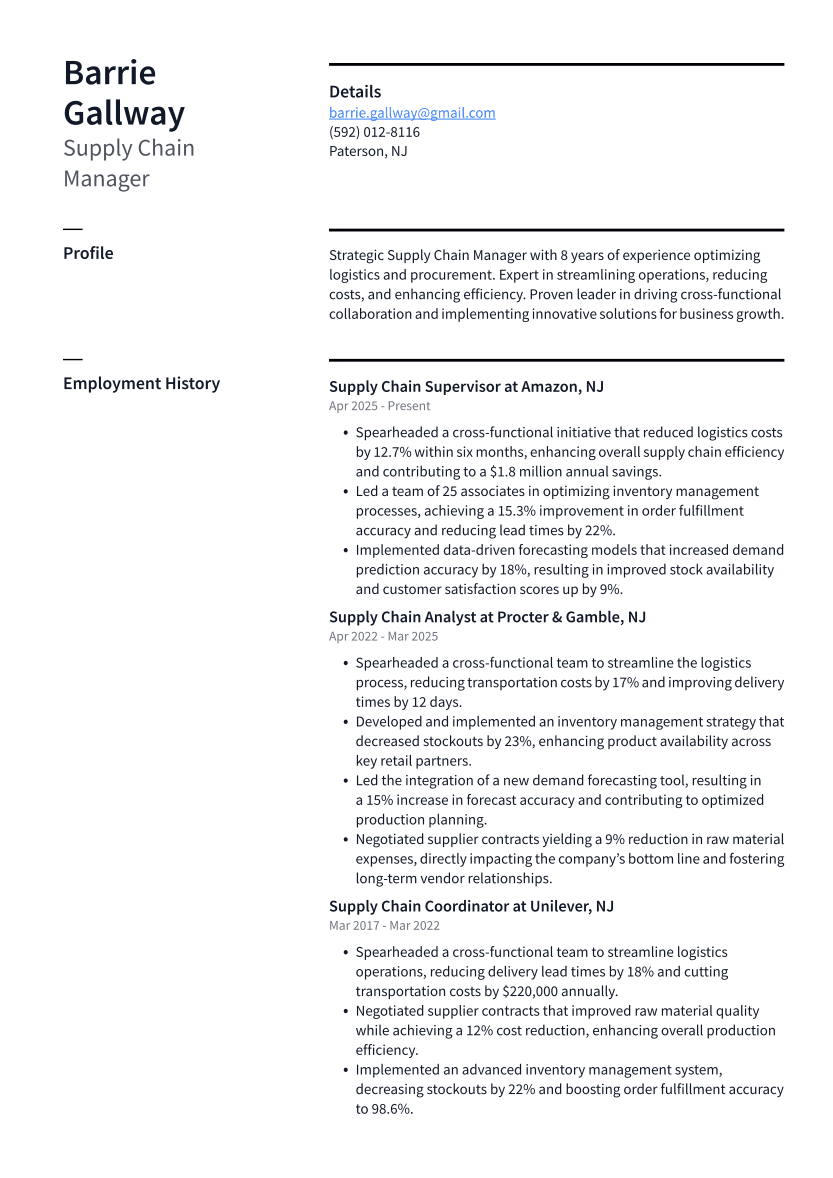
A senior-level Supply Chain Manager resume typically highlights strategic leadership, extensive global experience, and a proven track record of transformative efficiencies, unlike entry-level or mid-level resumes that focus more on operational skills and foundational experiences.
Supply Chain Manager Resume Success: Do’s, Don’ts, and Essential Checklist
DO'S
- Highlight quantifiable achievements that demonstrate impact and efficiency improvements.
- Tailor your resume to reflect the specific requirements and keywords of each job description.
- Include relevant certifications and skills that showcase expertise in logistics and operations.
DON'TS
- Don't flood it with irrelevant job experiences that don't relate to supply chain roles.
- Don't overlook including specific metrics or achievements that showcase your impact and contribution.
- Don't use complex jargon or overly technical language that can obscure your true skills and experience.
CHECKLIST
- Highlight relevant achievements in logistics and supply chain management.
- Use specific metrics or numbers to showcase impact and results.
- Tailor your resume to reflect the requirements of the specific job you are applying for.
- Avoid generic statements without concrete examples.
- Skip lengthy paragraphs; prefer bullet points for clarity.
- Don’t forget to update your resume with the latest roles and skills.