Solutions Architect Resume Examples

Crafting a killer resume for a Solutions Architect isn't just important; it's like having a secret weapon in your career arsenal. This article sheds light on the tricks of the trade to make your resume shine brighter than the competition. You'll discover how to highlight your skills, dazzle with your experience, and grab that dream job by the horns.
Building Blocks of a Solutions Architect Resume
- Contact Information: How employers can reach you directly.
- Summary: Snapshot of your professional identity and goals.
- Work Experience: Showcase relevant job roles and achievements.
- Skills: Highlight technical and soft competencies.
- Education: Academic credentials and relevant courses completed.
- Certifications: Proof of specialized industry knowledge.
- Projects: Key initiatives showcasing problem-solving prowess.
- Awards and Honors: Recognitions for outstanding professional accomplishments.
- Professional Affiliations: Memberships that enhance industry credibility.
- Languages: Proficiency in additional tongues.
For the Solutions Architect role, focus on showcasing your ability to design scalable solutions by including detailed examples of past projects where you successfully integrated complex systems. Highlight technical skills like cloud architecture and emphasize collaboration with cross-functional teams to align technical solutions with business objectives.
Pro Tip: Crafting a Solutions Architect resume with precise skills and keywords is crucial, as it weaves through the ATS filters like a key unlocking the door to potential job opportunities.
Crafting an Outstanding Solutions Architect Resume
When detailing achievements on a resume for a Solutions Architect role, focus on articulating the tangible impact of your work by specifying numerical results, such as boosting system efficiency by 30% or reducing project delivery time by two months. Highlight your role in architecting solutions that led to measurable business growth, like increasing client satisfaction scores by 15% or cutting operational costs by $200,000 annually through innovative design and implementation.
- Consistent Font Use: Stick to one or two professional fonts throughout the document. This ensures clarity and avoids distractions, allowing the reader to focus on your skills and achievements rather than the typography.
- Clear Section Headings: Use bold or slightly larger text for section headings like "Experience," "Skills," and "Education." This helps guide the reader's eye and quickly locate key information without scanning the entire page.
- Strategic Use of White Space: Avoid cramming too much information onto one page. Proper margins and spacing between sections enhance readability and give the document a clean, organized appearance.
Pro Tip: Tailoring your Solutions Architect resume for each role highlights specific skills and experiences that match the job, making you stand out to employers.
Example: Entry-Level Solutions Architect Resume
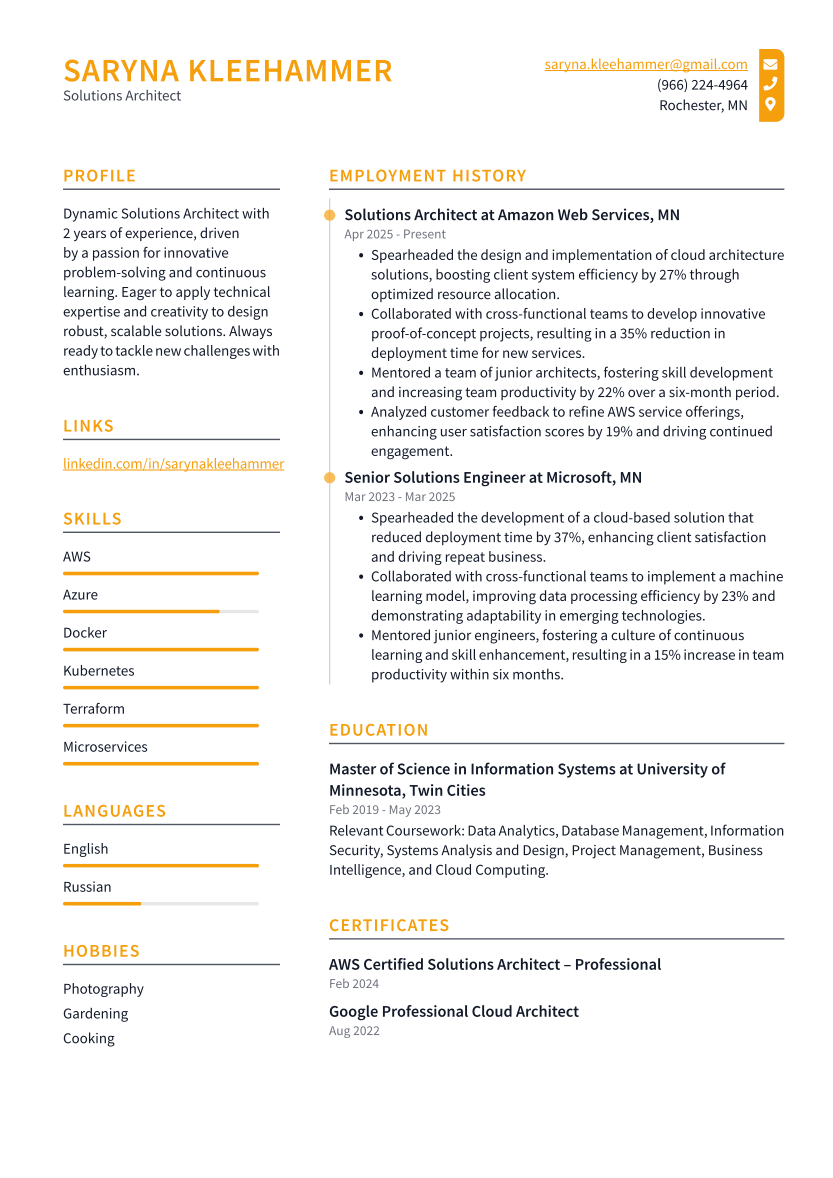
An entry-level Solutions Architect resume focuses more on foundational skills and relevant coursework, while mid-level or senior resumes emphasize proven experience, leadership roles, and complex project achievements.
Example: Experienced Solutions Architect Resume
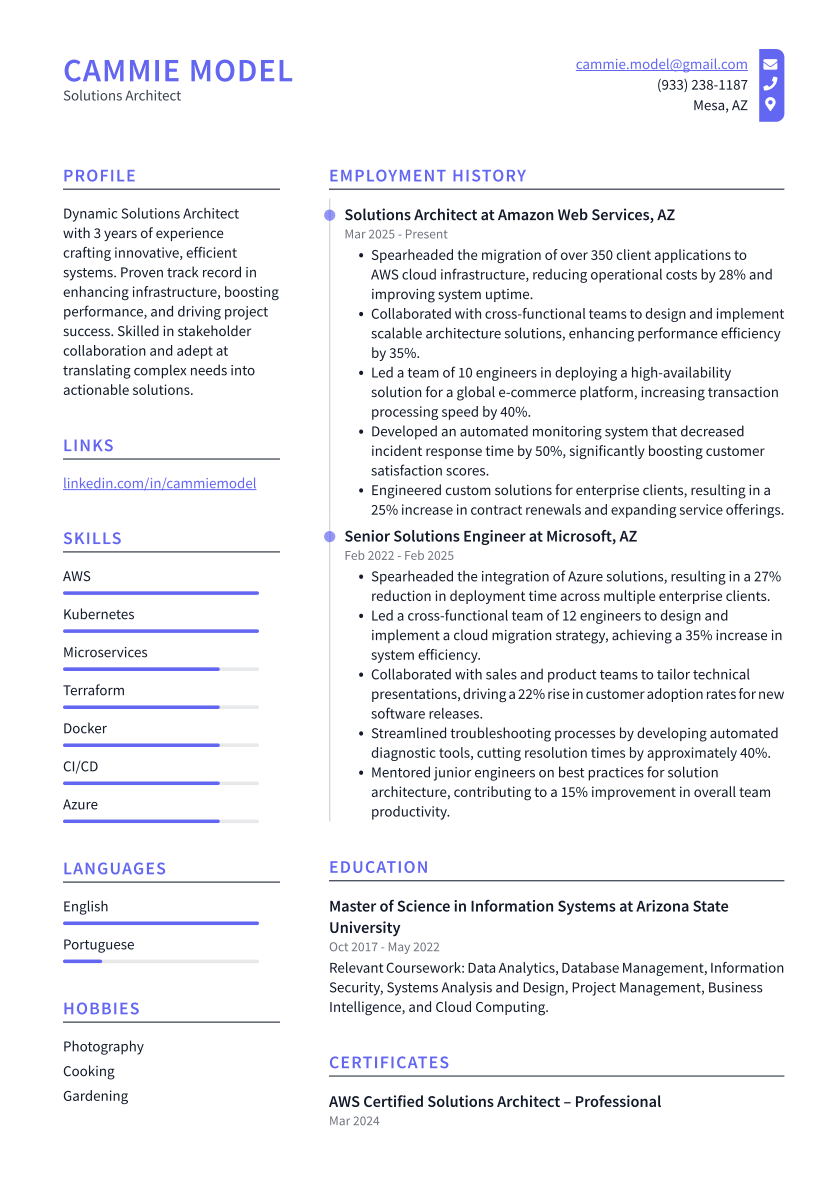
A mid-level Solutions Architect resume showcases a blend of hands-on experience and increasing responsibility but lacks the extensive leadership or strategic vision seen in senior roles.
Senior-Level Solutions Architect Resume Example
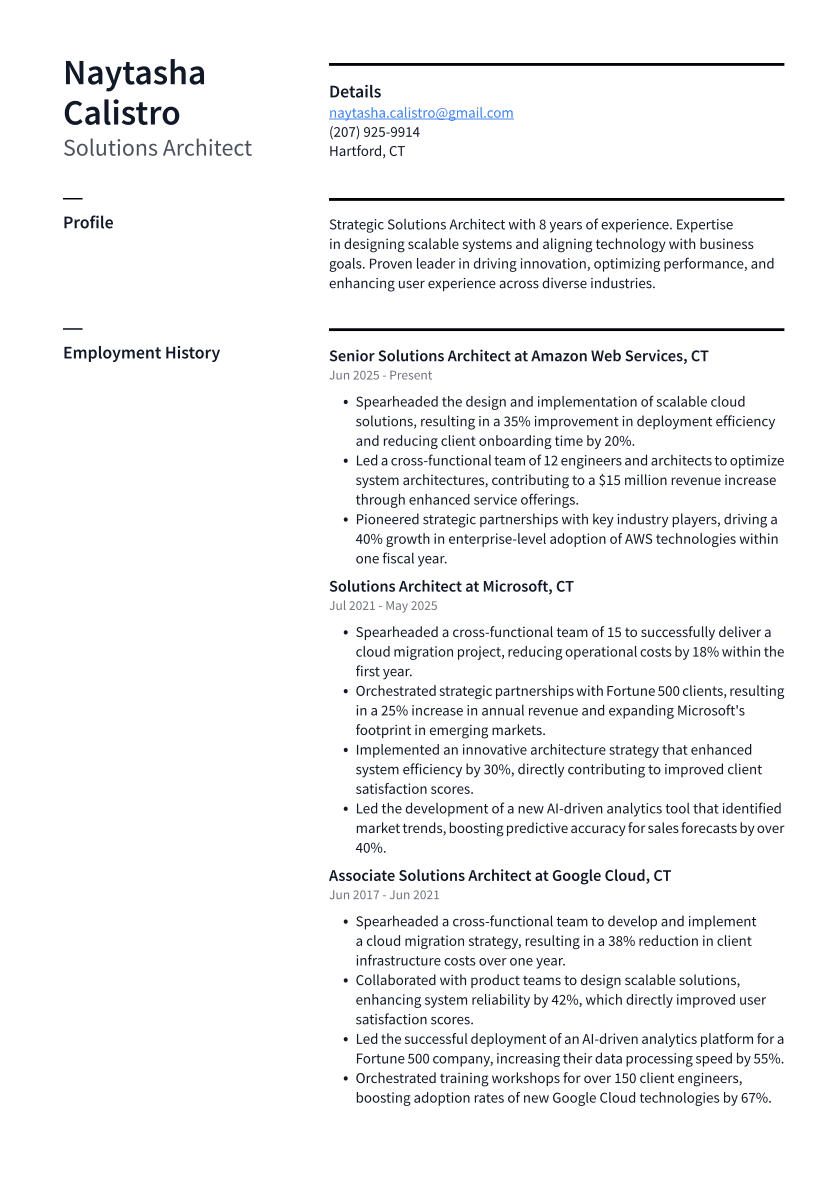
A senior-level Solutions Architect resume typically showcases extensive experience with complex project leadership, strategic decision-making, and a track record of transforming business needs into impactful technical solutions, unlike entry-level or mid-level resumes that focus more on foundational skills and basic contributions.
Do’s, Don’ts & a Handy Checklist: Solutions Architect Resume Guide
DO'S
- Highlight quantifiable achievements that showcase your impact on previous projects.
- Emphasize relevant certifications and technical expertise aligned with the job description.
- Tailor your resume to reflect the specific needs and language of the company you're applying to.
DON'TS
- Don’t list every single job duty; focus on impactful achievements.
- Don’t use generic jargon; tailor your language for the specific role.
- Don’t clutter the design with excessive formatting; keep it clean and professional.
CHECKLIST
- Highlight specific projects that demonstrate your problem-solving skills.
- Emphasize your proficiency with the latest technologies.
- Showcase experience working collaboratively with cross-functional teams.
- Avoid vague buzzwords; clarity trumps jargon every time.
- Don't simply list tasks—stress achievements and impacts.
- Steer clear of generic objectives; tailor your resume to each job.