Production Manager Resume Examples

In the bustling symphony of production, where efficiency and precision dance a delicate tango, a sharp resume is your maestro's baton. Crafting a stellar resume for a Production Manager position isn't just about listing accolades; it's about orchestrating a narrative that captivates. This article will guide you through tuning your credentials, so employers don't just see your resume—they hear it sing.
Key Sections to Add to Your Production Manager Resume
- Contact Information: Essential for reaching you swiftly and directly.
- Summary: Snapshot of your professional journey and achievements.
- Work Experience: Key roles and responsibilities undertaken previously.
- Skills: Valuable abilities relevant to production management.
- Education: Academic background and relevant certifications or degrees.
Highlight your experience in optimizing production processes, emphasizing any methods or strategies you've implemented that led to efficiency improvements or cost reductions. Showcase your ability to lead teams effectively by detailing specific examples of how you’ve fostered collaboration and resolved conflicts to meet production targets.
Pro Tip: Incorporating relevant skills and keywords into a Production Manager resume is crucial for navigating the digital gatekeepers of Applicant Tracking Systems, ensuring your experience and expertise shine through to potential employers.
Creating a Standout Resume as a Production Manager
Showcase your impact by weaving in numbers and tangible results, such as reducing production costs by 15% or boosting efficiency by 20% through streamlined processes. Highlight successful project completions, like leading a team to deliver a $2 million project on time and under budget, which not only demonstrates leadership but also a knack for achieving measurable outcomes.
- Strategic Use of White Space: Ample white space between sections can give the eyes a place to rest and makes information easier to digest, preventing the page from feeling cluttered and overwhelming.
- Consistent and Clear Formatting: Employ a uniform font size and style for headings and body text to maintain a professional look. Use bold or italics sparingly to highlight key achievements or roles, ensuring that nothing gets lost in a sea of text.
- Effective Use of Bullet Points: Concise bullet points help break down complex responsibilities and achievements into digestible chunks. They draw attention to important details without overwhelming the reader with dense paragraphs.
Pro Tip: Tailoring your Production Manager resume for each job shows employers you're keenly aligned with their specific needs and priorities.
Early Career Production Manager Resume Sample
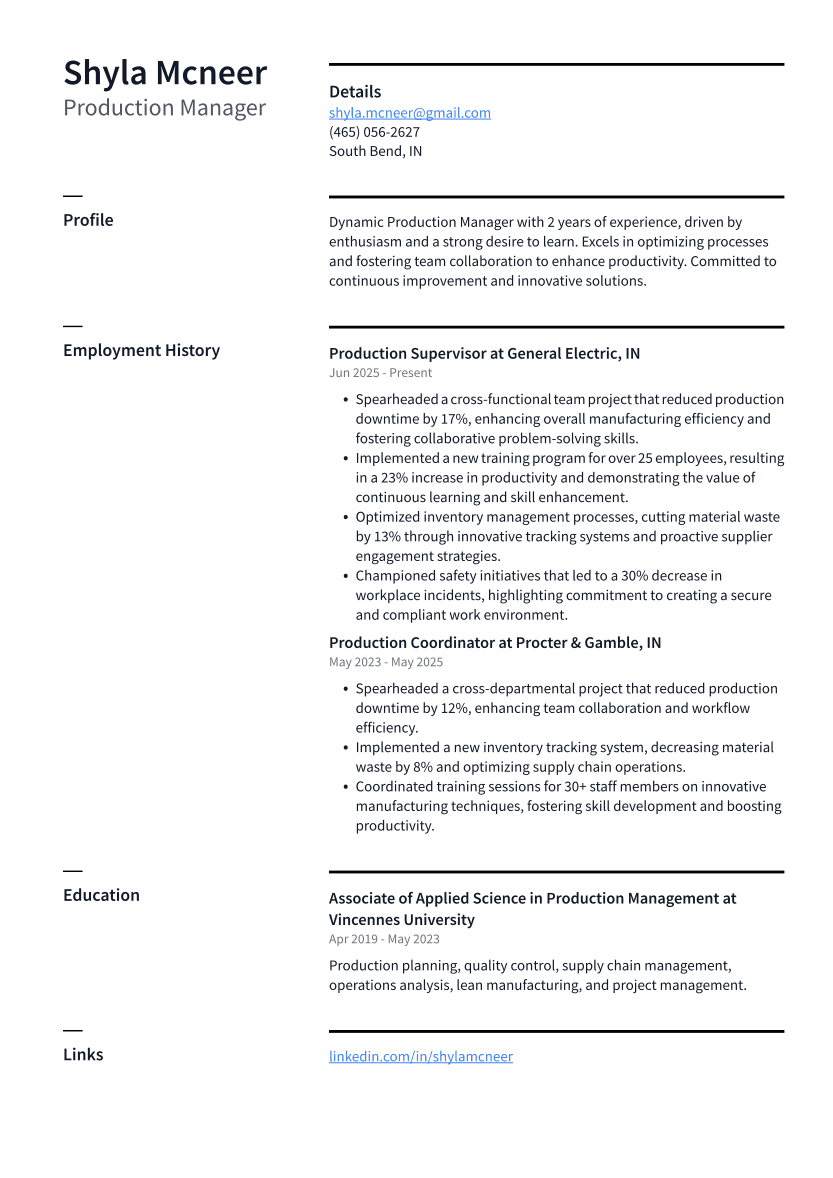
An entry-level Production Manager resume emphasizes foundational skills and internships, while mid-level or senior resumes highlight extensive experience, leadership roles, and specialized achievements.
Professional Production Manager Resume Example
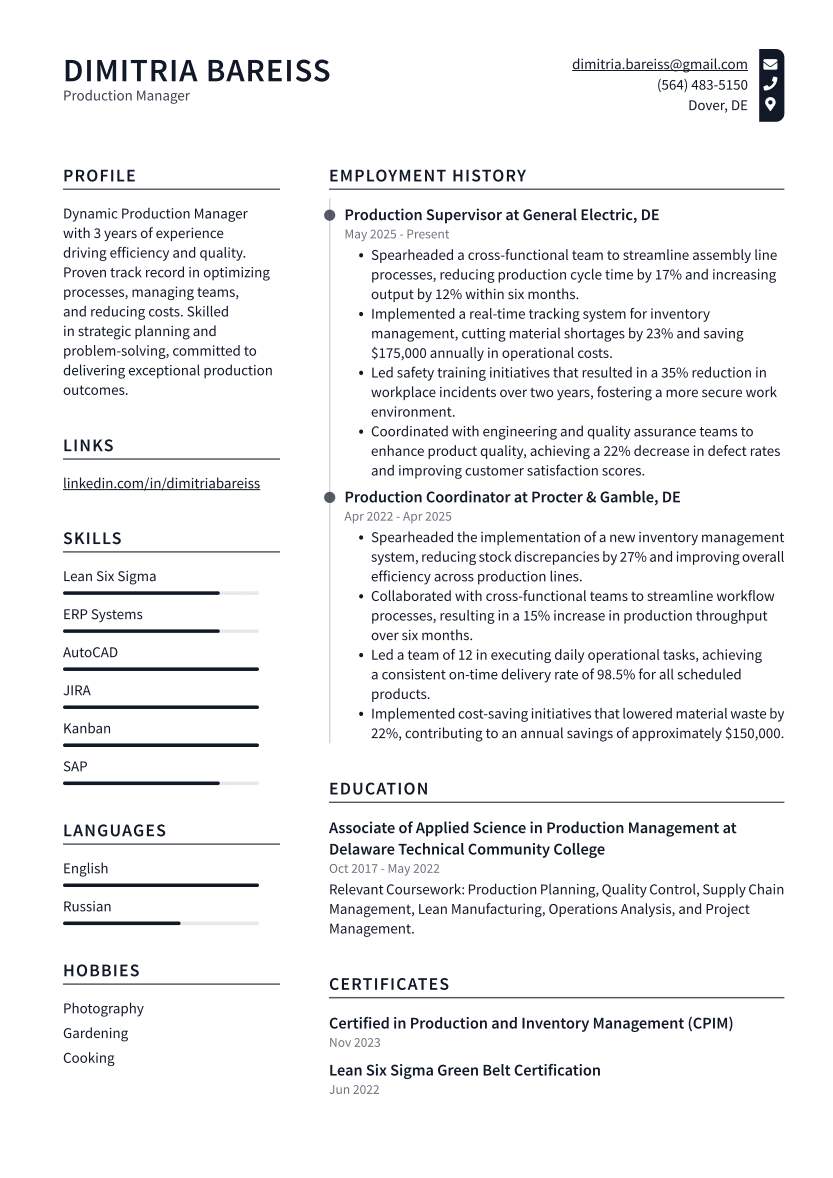
A mid-level Production Manager resume blends practical experience with growing leadership skills, unlike entry-level's emphasis on potential or senior's focus on strategic achievements.
Senior-Level Production Manager Resume Example
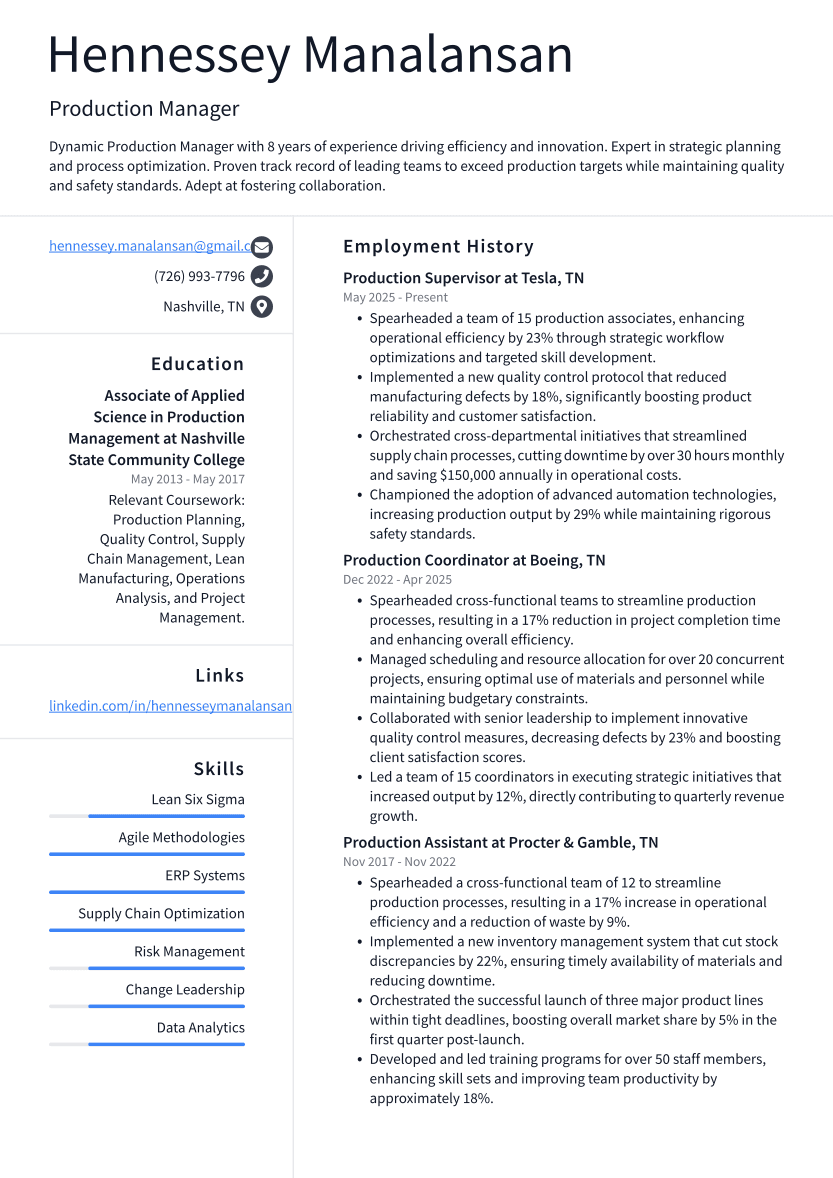
A senior-level Production Manager resume showcases extensive experience in strategic leadership, operational oversight, and successful project execution, whereas entry-level or mid-level resumes tend to focus more on specific skills, foundational knowledge, and potential for growth in the field.
Production Manager Resume Do’s, Don’ts, and Checklist
DO'S
- Highlight achievements with quantifiable results to show impact.
- Emphasize leadership skills and ability to enhance team productivity.
- Include knowledge of industry-specific software and process improvements.
DON'TS
- Don't list irrelevant job experiences unrelated to production management.
- Don't use overly generic language and fail to highlight specific achievements.
- Don't forget to include quantifiable results and data that demonstrate your impact.
CHECKLIST
- Highlight specific achievements in previous roles to demonstrate value.
- Include quantifiable results to capture attention and prove impact.
- Use industry-specific terminology to show expertise.
- Avoid vague language that obscures your contributions.
- Steer clear of over-used buzzwords that dilute uniqueness.
- Do not include irrelevant personal details that clutter the focus.