Paralegal Resume Examples

In the courtroom of hiring, your resume is the opening argument. A compelling paralegal resume can be the difference between being benched or making partner in the job market. This article will unveil how to craft that paper masterpiece, full of tips to ensure your skills, experience, and finesse leap from the page, dazzling employers with your legal prowess.
Essentials for a Strong Paralegal Resume
- Contact Information: Your name, phone, and email details.
- Summary: Brief highlight of your paralegal expertise.
- Work Experience: Key roles and achievements in legal settings.
- Skills: Core abilities relevant to paralegal duties.
- Education: Relevant degrees and certifications obtained.
- Certifications: Professional credentials enhancing your legal qualifications.
- Technical Proficiency: Legal software and tools you can operate.
- Volunteer Experience: Unpaid roles demonstrating commitment and skills.
- Languages: Additional languages spoken, if applicable.
- Professional Affiliations: Memberships in relevant legal organizations.
Highlight your experience in conducting legal research and drafting documents by showcasing specific cases or projects you've worked on. Emphasize your ability to manage deadlines and multitask by detailing how you've efficiently organized and maintained legal files in a fast-paced environment.
Pro Tip: In a digital landscape where resumes dance through automated filters, the magic of relevant skills and keywords ensures a paralegal's experience doesn't vanish into the ether but lands in the hands of decision-makers.
Crafting an Outstanding Paralegal Resume
When crafting a resume for a paralegal position, spotlight achievements by delving into specifics, such as reducing case preparation time by 30% through streamlined document management or successfully coordinating the retrieval of evidence that contributed to a favorable settlement in a $2 million lawsuit. Articulating these results with clear metrics not only paints a vivid picture of your impact but also showcases your ability to bring tangible benefits to future employers.
- Opt for a clean, professional font like Calibri or Garamond in 11-12 point size, ensuring clarity without overwhelming the page.
- Use concise headings and subheadings with consistent formatting, such as bolding or underlining, to guide the reader through sections like Experience and Education effortlessly.
- Incorporate strategic white space between sections and bullet points for easier scanning, allowing key details to stand out without clutter.
Pro Tip: Tailoring your Paralegal resume for each application highlights your relevant skills and experiences, catching the employer's eye.
Example: Entry-Level Paralegal Resume
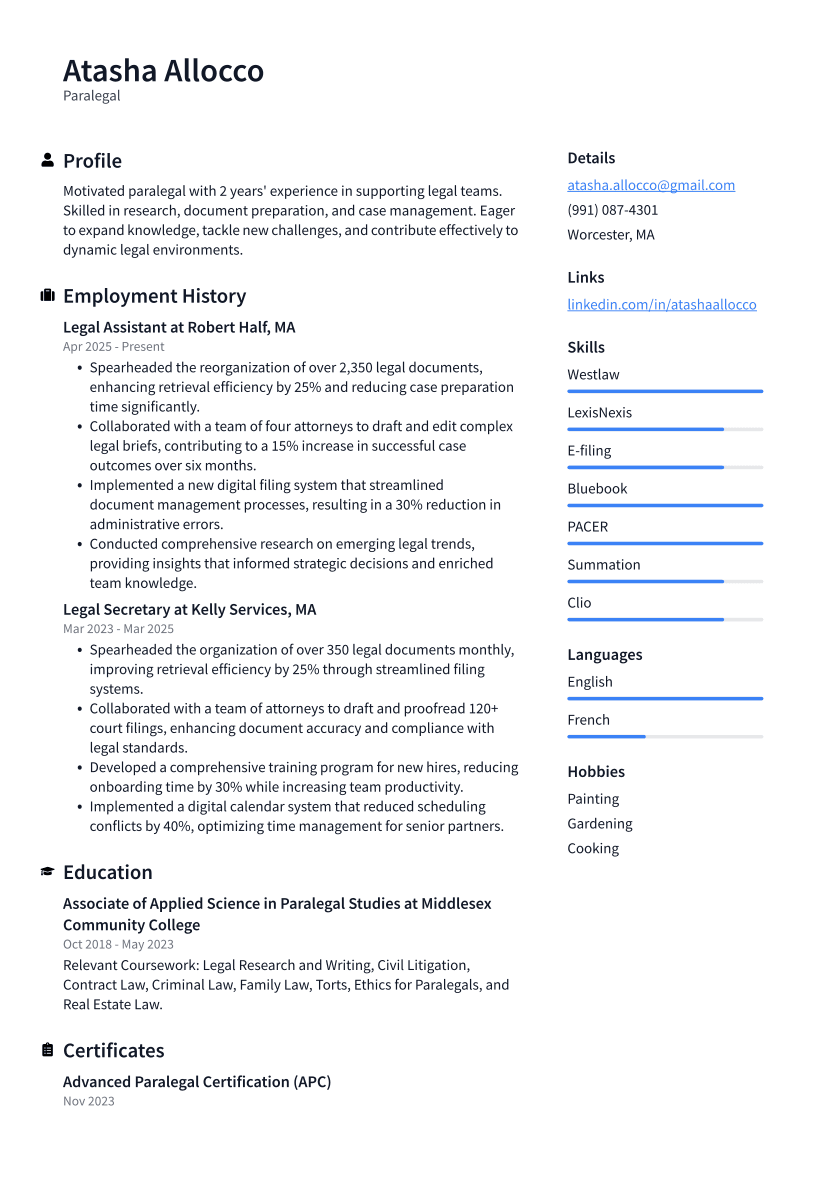
An entry-level paralegal resume focuses on education and internships, while mid-level or senior resumes highlight specialized experience and proven track records.
Resume Example for Experienced Paralegal
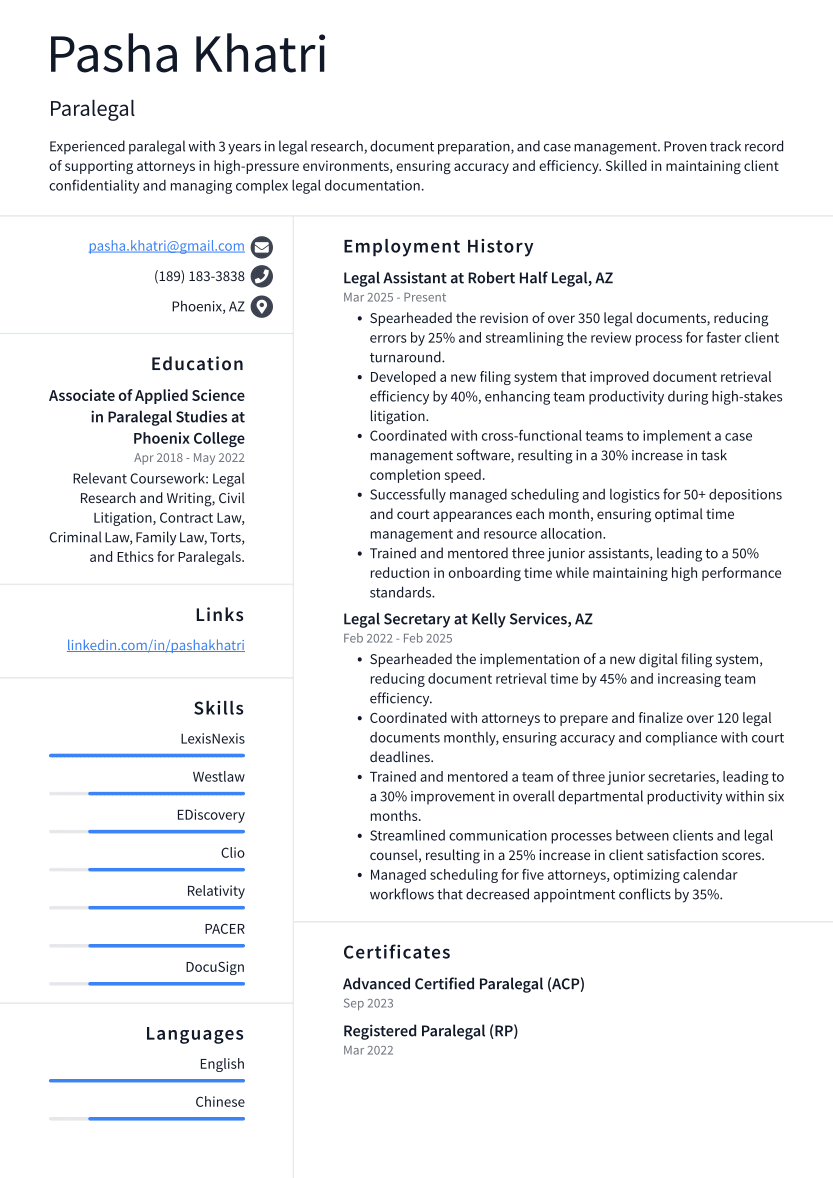
A mid-level paralegal resume bridges foundational skills with proven expertise, showcasing a blend of hands-on experience and growing responsibility, unlike the learning focus of an entry-level or the strategic contributions of a senior resume.
Resume Example: Senior-Level Paralegal
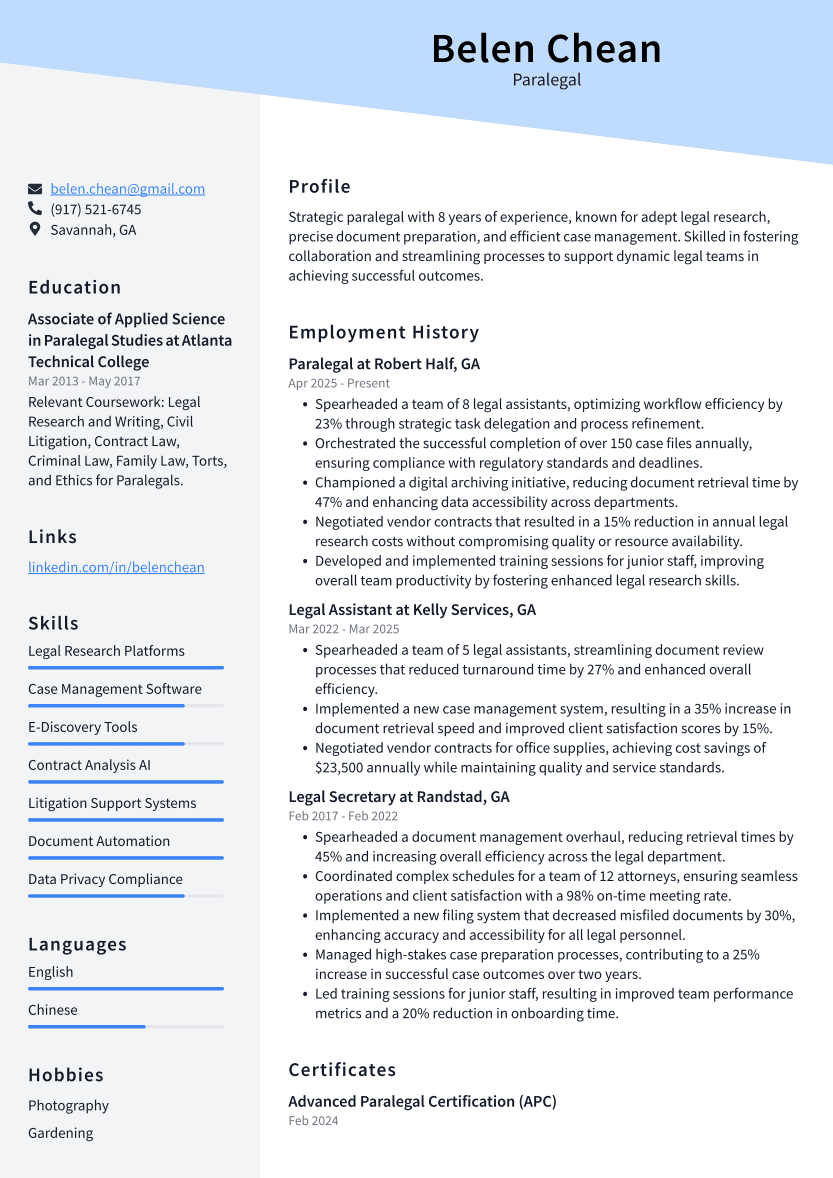
A senior-level Paralegal resume showcases a wealth of legal experience, advanced expertise in complex legal procedures, leadership roles, and significant contributions to substantial cases, setting it apart from the foundational skills and experiences typically highlighted in entry-level or mid-level resumes.
Do’s, Don’ts, and an Easy Checklist for Your Paralegal Resume
DO'S
- Showcase relevant legal experience with specific examples of your accomplishments.
- Highlight key skills such as legal research or document drafting.
- Tailor your resume to the job description, emphasizing directly applicable abilities.
DON'TS
- Don't list generic responsibilities without showcasing specific achievements or outcomes.
- Avoid using overly complex legal jargon that might confuse or alienate a general audience.
- Refrain from cluttering the resume with irrelevant personal details or exaggerated claims.
CHECKLIST
- Highlight relevant legal experience to show competence.
- Use clear, industry-specific language to convey expertise.
- Showcase strong organizational skills and multitasking abilities.
- Tailor the resume to fit the specific law firm or job position.
- Include certifications or courses to demonstrate ongoing education.
- Keep formatting clean and professional for readability.