Nurse Practitioner Resume Examples

In a world where stethoscopes are your best friends and patient care is your calling, an effective resume becomes your secret weapon in the job hunt battleground. This article sheds light on crafting a knockout resume for Nurse Practitioners, transforming dull details into enchanting snapshots. Unveil the art of narrating your professional journey in a way that leaves hiring managers wide-eyed and ready with an offer.
Essentials for a Strong Nurse Practitioner Resume
- Contact Information: Phone, email, and address for communication.
- Summary: Brief overview of qualifications and career goals.
- Work Experience: Previous roles showcasing nursing expertise.
- Skills: Key competencies relevant to patient care.
- Education: Degrees and certifications in nursing and healthcare.
- Licensure and Certifications: Current credentials and specializations held.
- Professional Affiliations: Memberships in nursing associations or groups.
- Volunteer Experience: Relevant unpaid work in healthcare settings.
- Honors and Awards: Recognitions received in the nursing field.
When tailoring your resume for a Nurse Practitioner role, emphasize clinical experience by detailing specific patient populations you've managed and highlight any specialized procedures or treatments you're adept at. In the cover letter, discuss how your approach to patient care aligns with the healthcare facility’s mission, drawing on examples where you improved patient outcomes or streamlined care processes.
Pro Tip: Crafting a Nurse Practitioner resume with relevant skills and keywords is crucial, as it ensures the document sails smoothly through the digital eyes of Applicant Tracking Systems, making sure it lands where it truly belongs – in the hands of decision-makers.
Crafting an Outstanding Nurse Practitioner Resume
When crafting your resume, spotlight achievements by showcasing specific outcomes—like increasing patient satisfaction scores by 20% through improved care plans or spearheading a new health initiative that reduced hospital readmission rates by 15%. Highlighting these quantifiable results not only demonstrates your impact but also vividly paints a picture of your proactive role in enhancing healthcare quality.
Consistent Font and Size: Choose a professional font like Arial or Times New Roman, maintaining a consistent size throughout, typically 11 or 12 points, ensuring easy readability while avoiding visual clutter.
Clear Section Headings: Utilize bold or slightly larger text for section headings such as Experience, Education, and Certifications, enabling quick navigation for the reader and highlighting essential information.
Strategic Use of White Space: Incorporate ample spacing between sections and bullet points to prevent overcrowding, making it easier for potential employers to absorb key details at a glance.
Pro Tip: Adapting your Nurse Practitioner resume for each job highlights relevant skills and experiences, making you stand out to prospective employers.
Entry-Level Nurse Practitioner Resume Sample
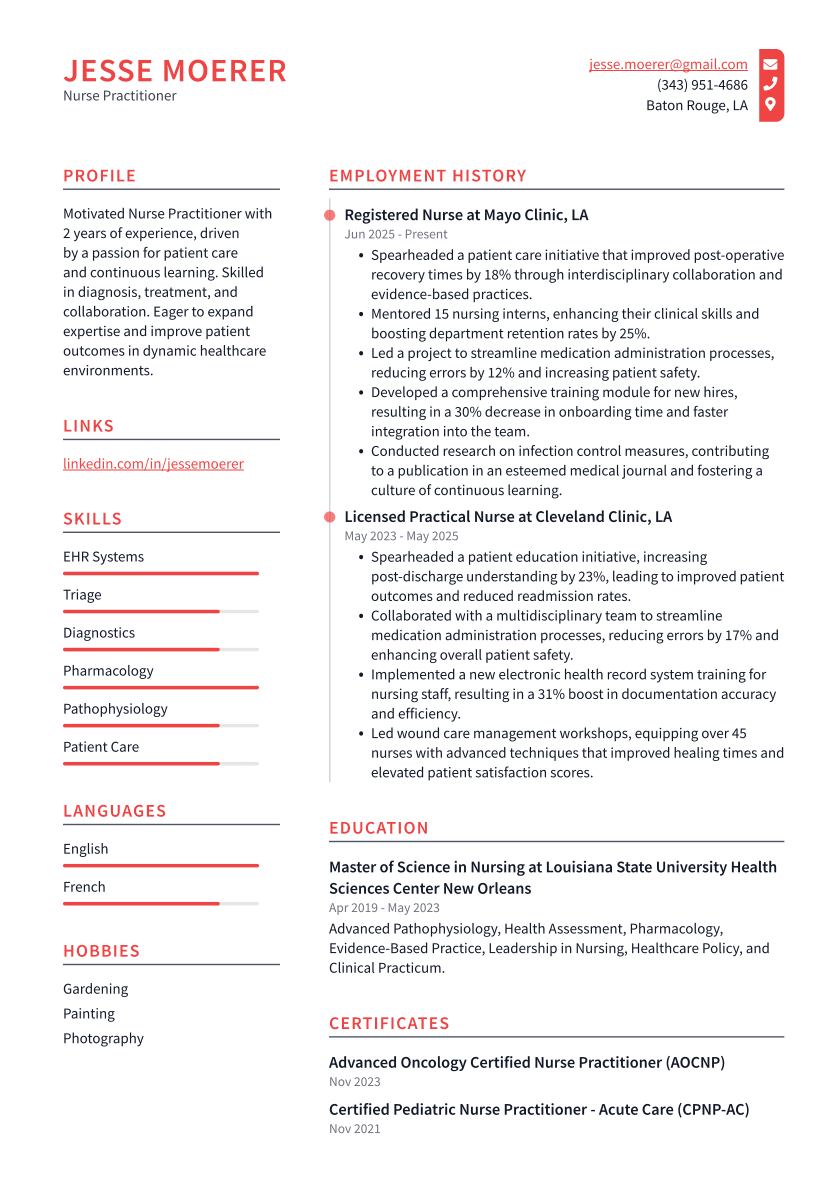
An entry-level Nurse Practitioner resume focuses more on education and clinical rotations, while mid-level or senior resumes emphasize extensive experience and leadership roles.
Professional Nurse Practitioner Resume Example
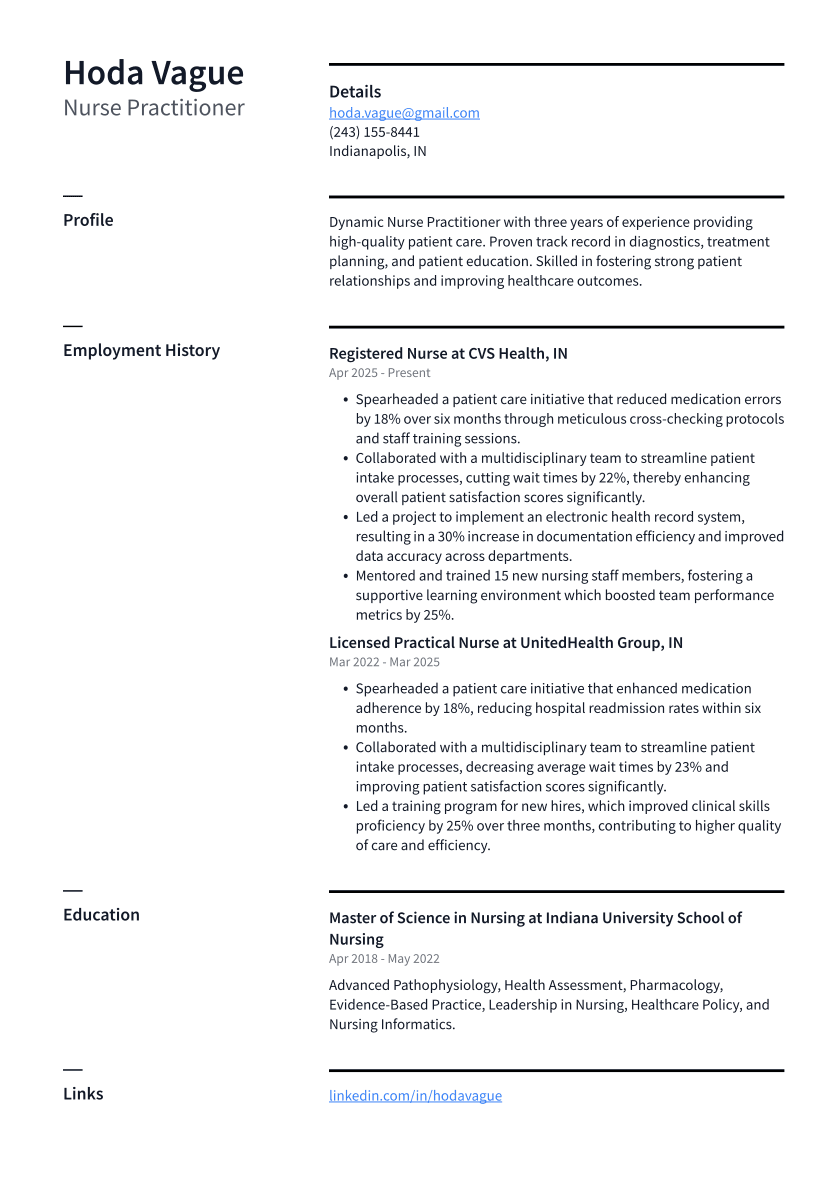
A mid-level Nurse Practitioner resume highlights specialized experience and a balanced mix of clinical skills, unlike entry-level versions focused on education and senior resumes emphasizing leadership roles.
Sample Resume for Senior Nurse Practitioner
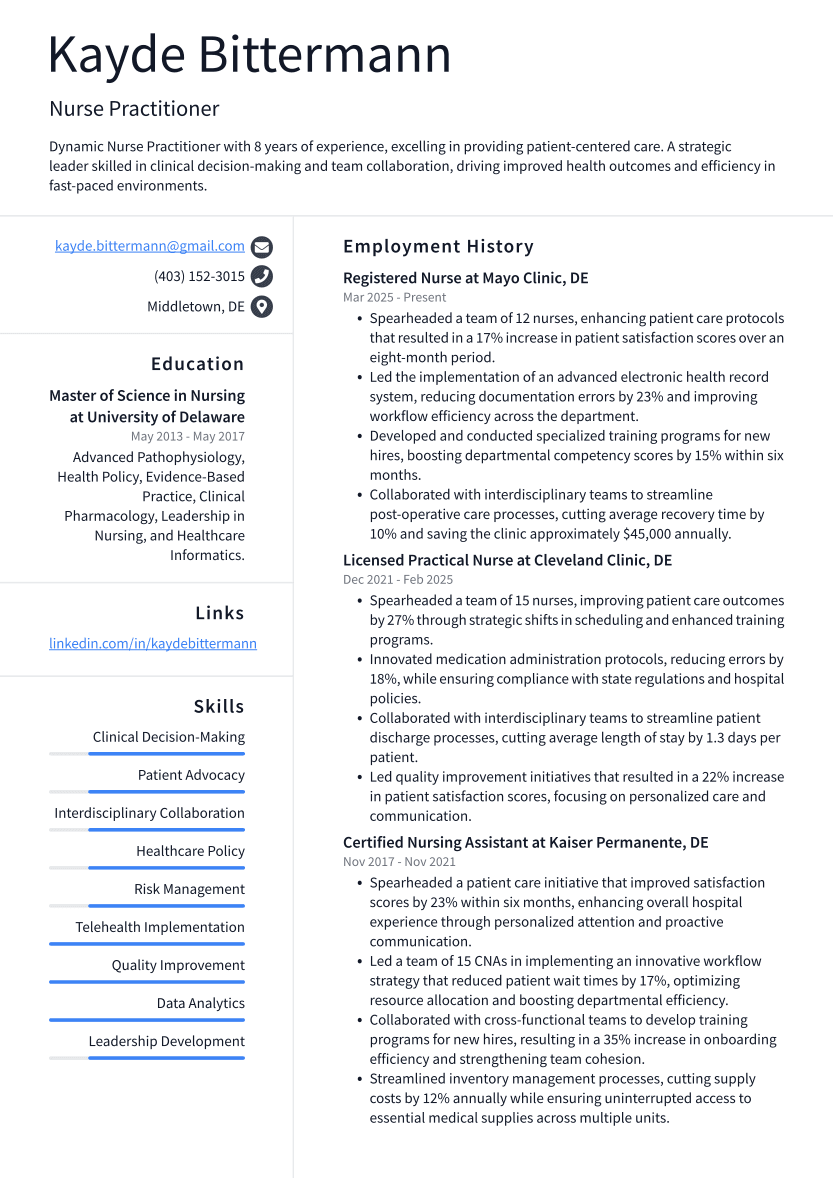
A senior-level Nurse Practitioner resume emphasizes extensive clinical experience, leadership roles, and advanced specializations, contrasting with the skill-building focus and foundational experience showcased in entry-level or mid-level resumes.
Do’s, Don’ts, and an Easy Checklist for Your Nurse Practitioner Resume
DO'S
- Highlight your clinical skills and experience with specific examples.
- Emphasize your ability to handle diverse patient populations and challenging situations.
- Showcase certifications, ongoing education, and specialized training.
DON'TS
- Don’t include irrelevant personal details; keep it professional and focused.
- Don’t use vague language; be specific about your skills and achievements.
- Don’t overload with unnecessary jargon; ensure clarity for different readers.
CHECKLIST
- Highlight relevant clinical experience that directly relates to the desired position.
- Emphasize key certifications and licensure to show qualifications.
- Focus on measurable accomplishments like patient outcomes or efficiency improvements.