Graphic Designer Resume Examples

For a graphic designer, a resume isn't just any old piece of paper; it's a canvas to showcase genius. In this article, you'll uncover the tricks to crafting resumes that pop with personality and professionalism. Get ready to learn how to paint your skills and experiences in the most eye-catching manner possible.
What to Include on a Graphic Designer Resume
- Contact Information: Name, phone, email, and location.
- Summary: Brief snapshot of your professional identity.
- Work Experience: Past roles showcasing design expertise.
- Skills: Key abilities relevant to graphic design.
- Education: Academic background and relevant training.
- Portfolio: Display of your best design work.
- Certifications: Proof of additional design qualifications.
- Awards: Recognition for outstanding design achievements.
- Software Proficiency: Programs you master in design tasks.
Craft a portfolio that not only showcases your diverse design projects but also highlights your creative process, from initial concept to final execution, making sure to include a range of mediums and styles to demonstrate versatility. Tailor your resume by incorporating industry-specific keywords and tools, such as Adobe Creative Suite, while emphasizing your ability to translate client briefs into visually striking designs.
Pro Tip: In the swirling digital maze of job applications, a Graphic Designer's resume must deftly weave relevant skills and keywords to slip past the vigilant eyes of Applicant Tracking Systems, ensuring their creative spark doesn't fizzle out before reaching human hands.
How to Make Your Graphic Designer Resume Stand Out
Transform project successes into compelling stories by highlighting specific, quantifiable results—such as a 30% increase in user engagement through a revamped website design. Showcase your knack for innovation by mentioning how a branding overhaul you spearheaded attracted three new high-profile clients, demonstrating a tangible impact on the company's growth.
Prioritize a Clean, Minimalist Layout: Emphasize white space and align elements neatly to ensure clarity. This prevents visual clutter and guides the eye smoothly across sections, enhancing overall readability.
Incorporate Consistent Typography: Use a limited selection of fonts, perhaps one for headings and another for body text. Consistency in size, weight, and style across different sections aids in creating a cohesive and professional look.
Utilize Effective Color Accents: Choose a subtle color palette to highlight key areas like headings or important achievements. This not only adds visual interest but also helps in drawing attention to crucial information without overwhelming the content.
Pro Tip: Tailoring your resume for each application highlights your most relevant skills and experiences, making you stand out to potential employers.
Resume Example 1: Entry-Level Graphic Designer
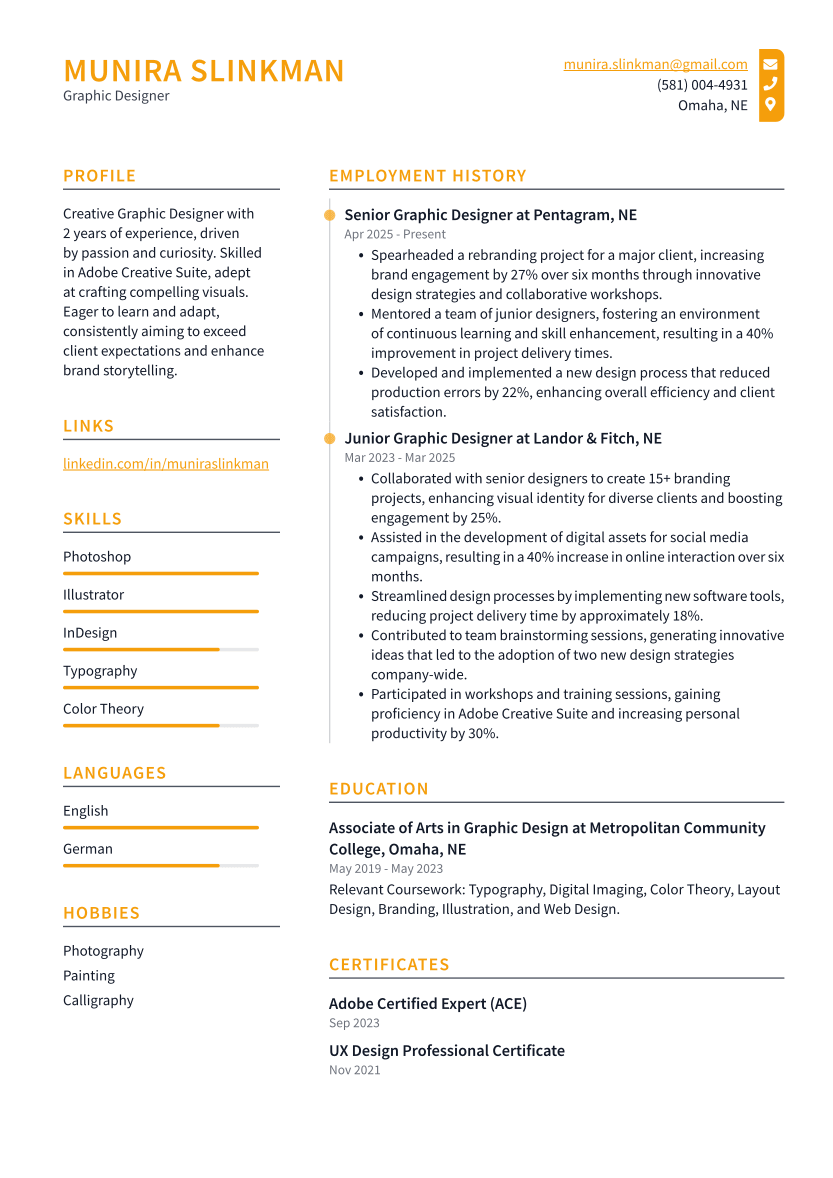
An entry-level Graphic Designer resume often focuses on showcasing basic skills and educational background, while mid-level or senior resumes emphasize experience, leadership roles, and specialized projects.
Resume Example 2: Experienced Graphic Designer
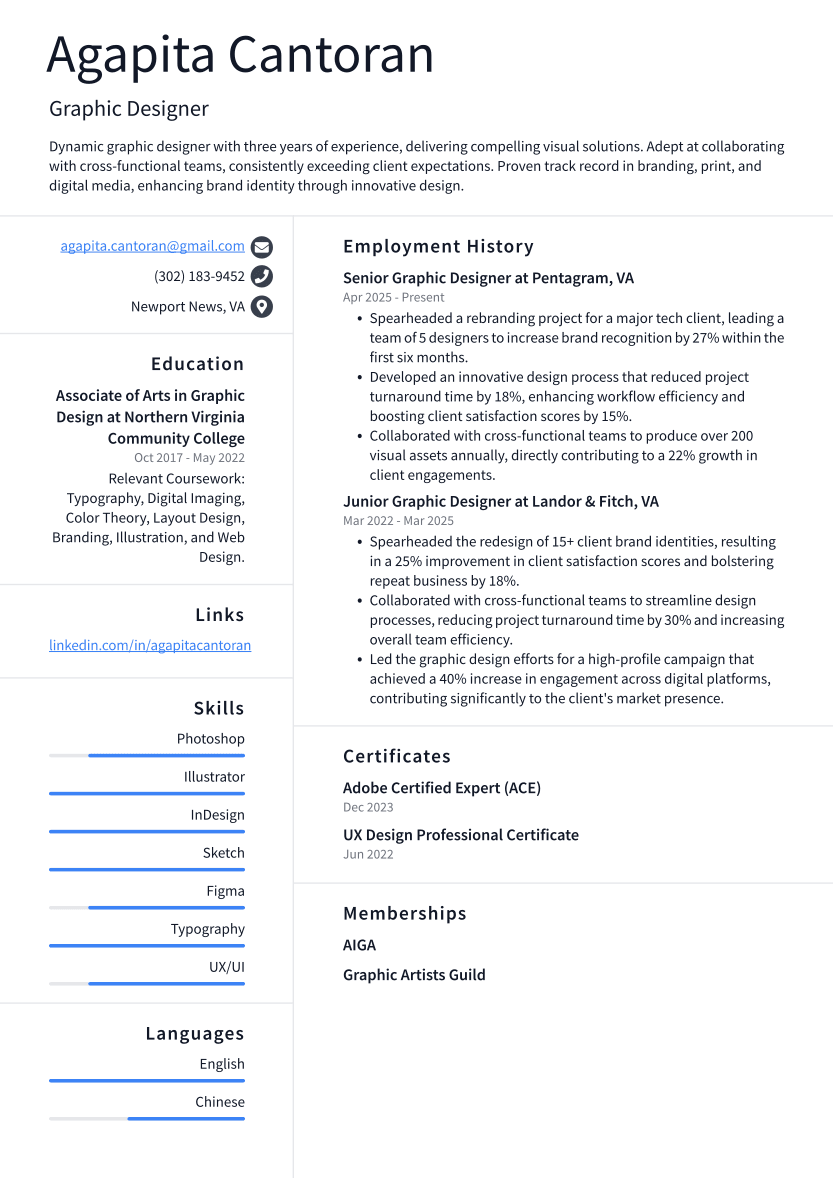
A mid-level Graphic Designer resume balances practical experience with proven capabilities, bridging the foundational skills of entry-level roles and the leadership qualities of senior positions.
Resume Example 3: Senior/Leadership Graphic Designer
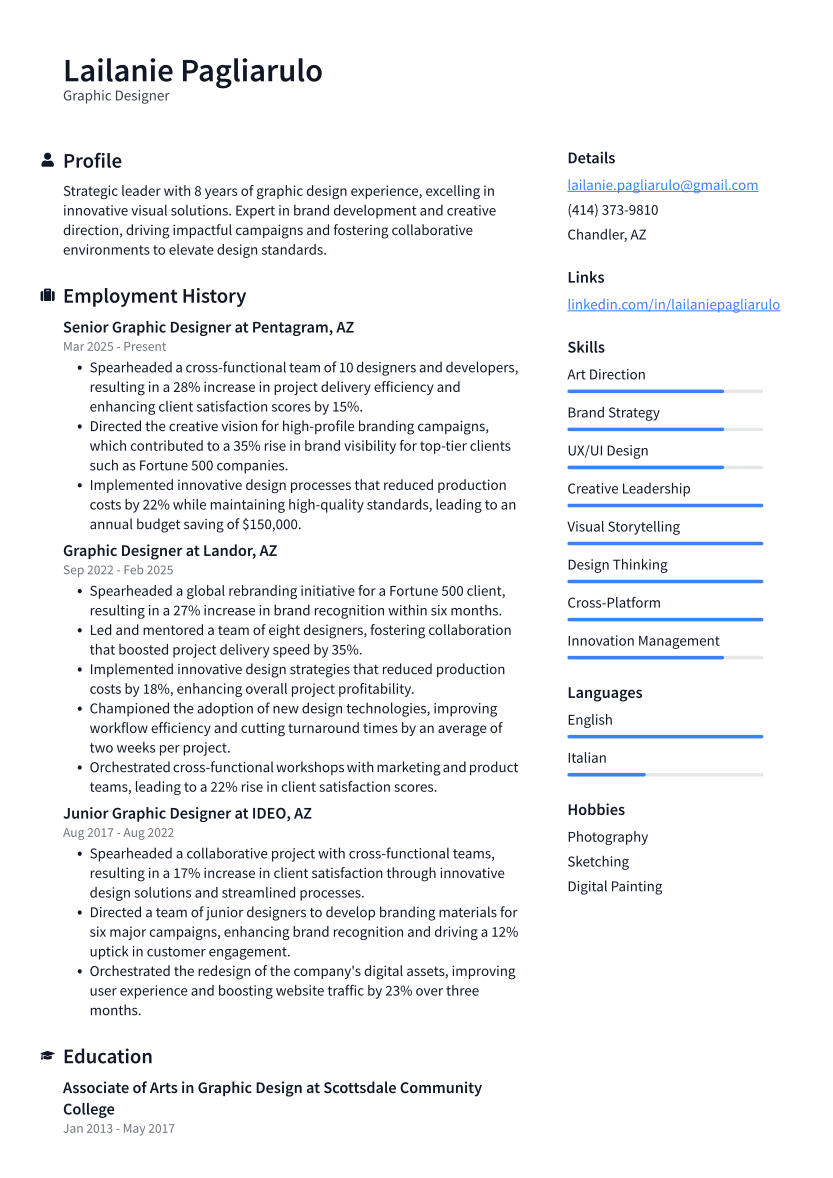
A senior-level Graphic Designer resume usually emphasizes a broader portfolio showcasing leadership roles in complex projects, strategic thinking, and mentorship experience, whereas entry- or mid-level resumes focus more on demonstrating technical skills and foundational experiences.
Graphic Designer Resume Do’s, Don’ts, and Checklist
DO'S
- Showcase a diverse portfolio reflecting your design versatility and creativity.
- Highlight specific contributions to successful projects, including any measurable impact.
- Use clear, concise language peppered with industry-relevant terminology.
DON'TS
- Don't clutter your resume with unnecessary design elements that distract rather than highlight your skills and experiences.
- Avoid using generic job descriptions without specific, quantifiable achievements that showcase your unique contributions and successes.
- Don't forget to tailor each resume to the specific job you're applying for, aligning your expertise with the company's needs and values.
CHECKLIST
- Highlight your specific design skills and relevant software expertise.
- Do showcase a diverse portfolio that demonstrates your creative range.
- Include measurable achievements with concrete numbers or results.
- Focus on clarity and stick to a clean, minimalistic layout.
- Tailor each resume to the specific job and company culture.
- Proofread meticulously to ensure error-free presentation.