General Manager Resume Examples

The art of crafting the perfect resume for a General Manager role could mean the difference between commanding attention or fading into mediocrity. This article seeks to unravel the secrets to constructing a resume that doesn’t just end up in the obliging embrace of the "maybe" pile. Dive in, and discover how to showcase leadership prowess, strategic vision, and the uncanny ability to juggle flaming swords—or team budgets—with flair.
What to Include on a General Manager Resume
- Contact Information: Name, phone, email, and LinkedIn profile.
- Summary: Snapshot of career highlights and goals.
- Work Experience: Detailed roles and achievements in management.
- Skills: Key competencies relevant to leadership and operations.
- Education: Formal qualifications and notable academic accomplishments.
Highlight leadership achievements in the resume by detailing initiatives that improved team performance or operational efficiency. During interviews, discuss strategic decisions that drove company growth and how you managed cross-departmental collaborations successfully.
Pro Tip: In the swirling chaos of job applications, weaving relevant skills and keywords into a General Manager resume isn't just a nod to precision but a vital dance with the digital gatekeepers of opportunity, the ATS, ensuring your experience doesn't vanish in the electronic ether.
How to Make Your General Manager Resume Stand Out
To spotlight achievements on a resume for a General Manager role, focus on presenting metrics-driven results, such as "boosted quarterly sales by 30% through strategic marketing initiatives." Additionally, emphasize transformative leadership, like "led a team of 50 to cut operational costs by 15%, enhancing overall efficiency and profitability.
Opt for a clean and professional font like Arial or Calibri; it ensures the text is easy on the eyes and maintains a polished look. Keep font sizes consistent, using larger sizes for headings and slightly smaller for details to guide the reader naturally through the sections.
Incorporate clear section headings and bullet points to break down complex information; this allows for quick scanning of key achievements and responsibilities, crucial for busy executives who need to extract key details swiftly.
Utilize ample white space to avoid overwhelming the reader; this enhances readability by allowing each section to breathe, making it easier for important accomplishments to stand out at a glance.
Pro Tip: Tailoring your resume for each application highlights the most relevant skills and experiences, making you a standout candidate.
Resume Example 1: Entry-Level General Manager
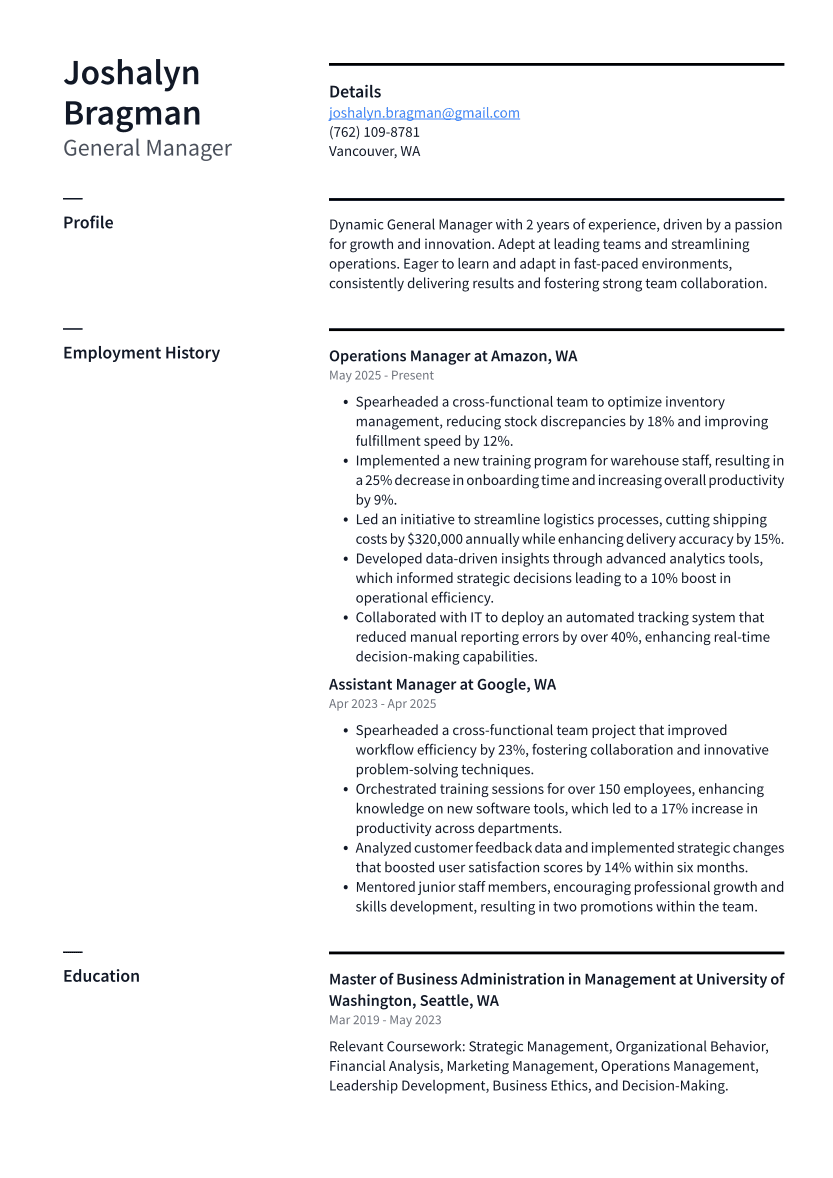
An entry-level General Manager resume emphasizes potential and foundational skills over the extensive leadership experience showcased in mid-level or senior resumes.
Resume Example 2: Experienced General Manager
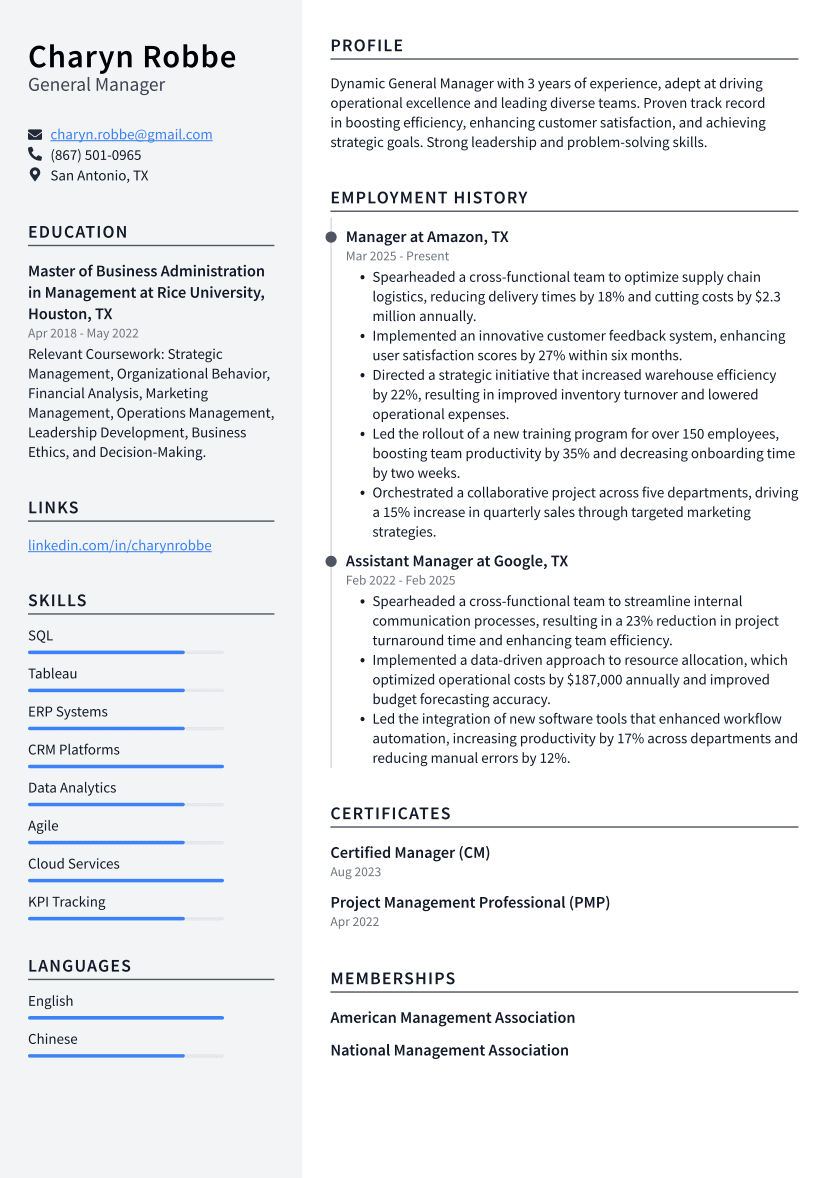
A mid-level General Manager resume balances skills and experience, bridging the gap between demonstrating potential and showcasing extensive leadership achievements.
Resume Example 3: Senior/Leadership General Manager
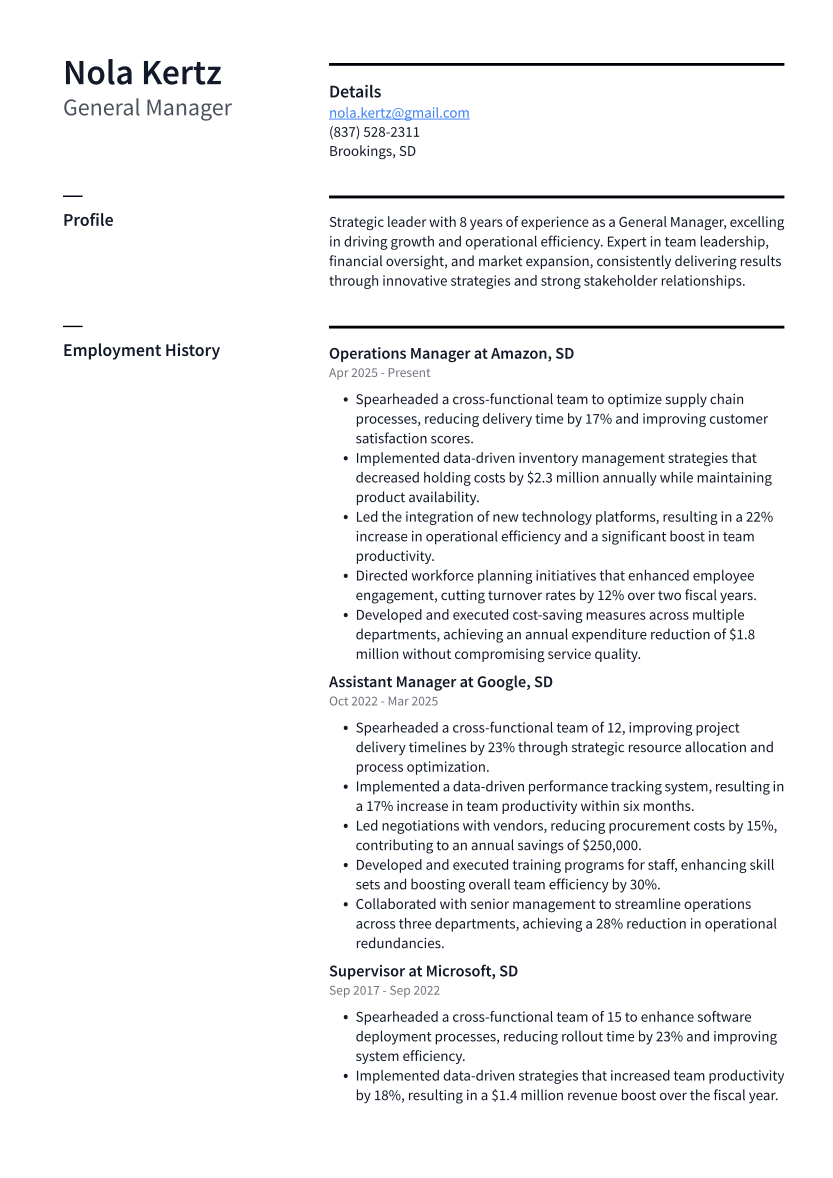
A senior-level General Manager resume dazzles with an intricate tapestry of strategic vision, leadership prowess, and quantifiable impact, while entry or mid-level resumes often navigate through skill-building and growth potential.
General Manager Resume Do’s, Don’ts, and Checklist
DO'S
- Highlight measurable achievements to showcase impact.
- Emphasize leadership skills and strategic vision.
- Tailor your experience to align with the desired role.
DON'TS
- Don’t clutter your resume with unnecessary jargon that clouds your achievements.
- Don’t overlook including specific outcomes or numbers that showcase your impact.
- Don’t use vague language; be direct and precise about your responsibilities and successes.
CHECKLIST
- Showcase leadership with vivid examples.
- Highlight quantifiable achievements.
- Incorporate industry-specific keywords.
- Avoid generic statements lacking substance.
- Steer clear of excessive jargon or buzzwords.
- Eliminate unnecessary personal details.