Electrical Engineer Resume Examples

Crafting an electrifying resume can be the spark an electrical engineer needs to light up their career prospects. This article identifies the key components of a knockout resume that won't short circuit your chances. Readers will discover how to make their skills and achievements illuminate brighter than a 100-watt bulb.
What to Include on a Electrical Engineer Resume
- Contact Information: Phone number, email, and physical address.
- Summary: Brief overview of professional background and goals.
- Work Experience: Previous jobs and responsibilities in engineering.
- Skills: Key technical and soft abilities relevant to the field.
- Education: Degrees and certifications in electrical engineering.
- Projects: Notable engineering projects and achievements.
- Certifications: Professional licenses and additional qualifications.
- Professional Affiliations: Memberships in engineering organizations.
- Technical Proficiencies: Software and tools expertise.
- Languages: Any additional languages spoken or written.
Highlight hands-on experience with circuit design and signal processing in the resume, ensuring projects showcase innovation and problem-solving. In the cover letter, delve into any experience with industry standards like IEEE and emphasize any unique contributions to power systems or electronics development.
Pro Tip: In the intricate dance of resume submission, weaving relevant skills and precise keywords into an Electrical Engineer resume is crucial for slipping past the ever-watchful eyes of Applicant Tracking Systems.
How to Make Your Electrical Engineer Resume Stand Out
Showcase accomplishments by weaving in numbers that speak volumes—think increased efficiency by 30% or slashed project costs by $20,000. Unveil the story behind each achievement, highlighting how your innovations propelled projects to success and set new standards.
Clean and Consistent Formatting: Use a clear, professional font like Arial or Calibri in a size that's easy on the eyes. Ensure consistency in headings, bullet points, and spacing, creating a streamlined look that guides the reader smoothly through the sections.
Section Prioritization: Position key sections such as Experience, Skills, and Education prominently. For an electrical engineer, emphasize technical skills and relevant project experiences, possibly using bold or italic styles sparingly to highlight crucial achievements or certifications.
Effective Use of White Space: Balance text with ample white space to prevent overcrowding. This enhances the readability and allows each section to stand out, making it easier for hiring managers to quickly find and focus on essential information.
Pro Tip: Tailoring your Electrical Engineer resume for each application highlights relevant skills and experiences, aligning you more closely with the specific job requirements.
Resume Example 1: Entry-Level Electrical Engineer
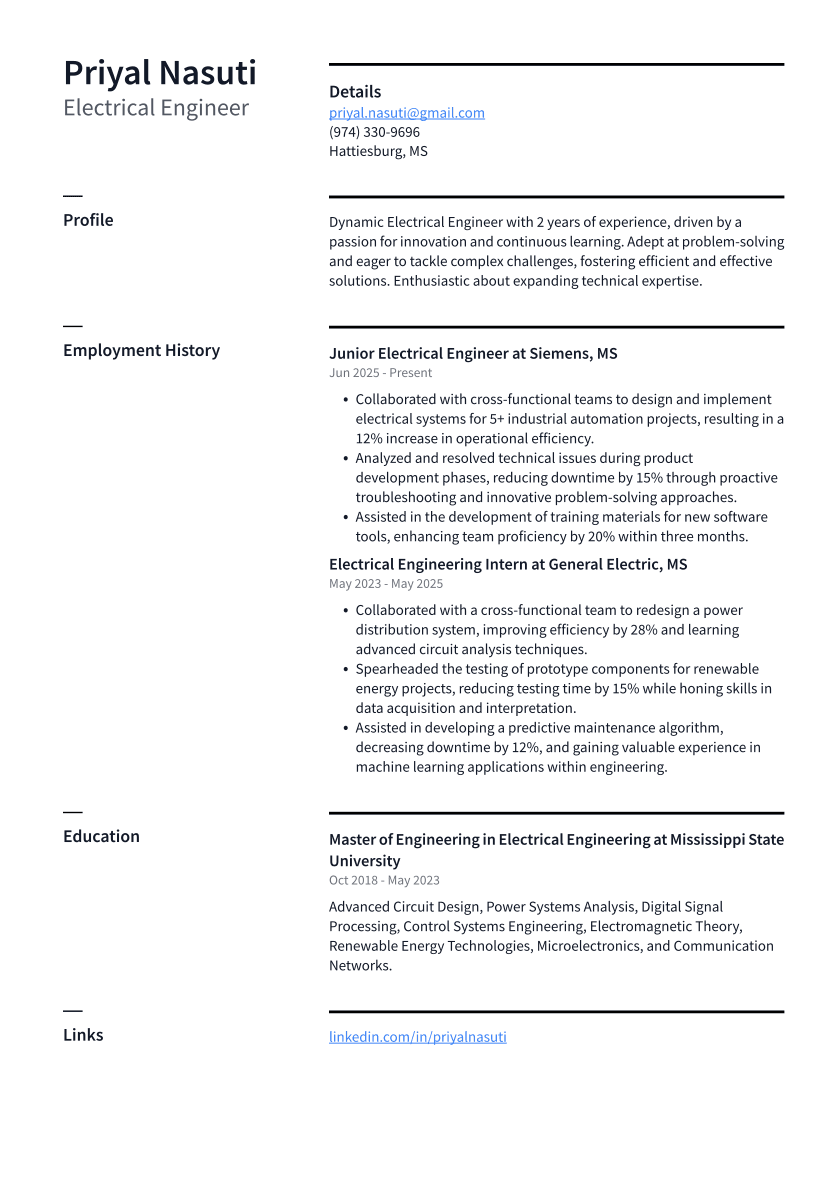
An entry-level Electrical Engineer resume focuses more on education, internships, and fundamental skills, while mid-level or senior resumes emphasize experience, leadership, and specialized achievements in the field.
Resume Example 2: Experienced Electrical Engineer
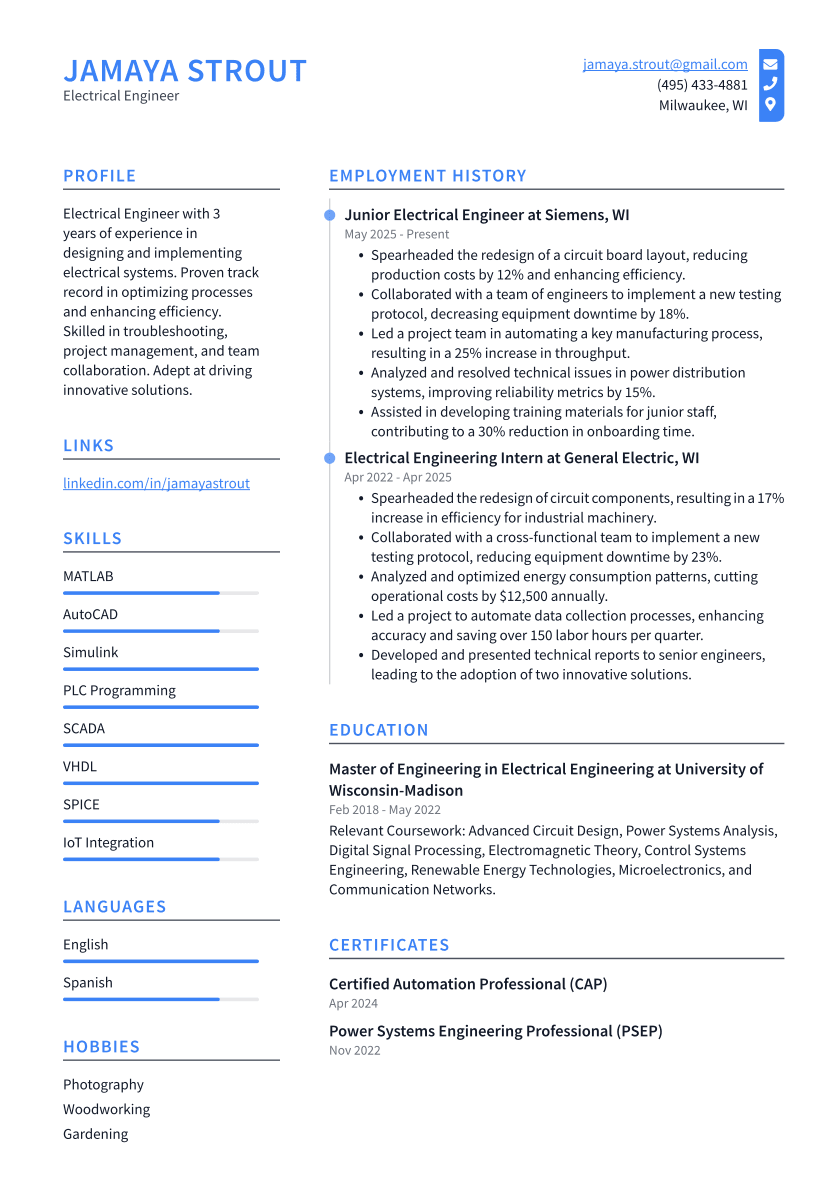
Mid-level Electrical Engineer resumes focus on demonstrated industry experience and specific project contributions, bridging the foundational learning of entry-level roles and the strategic leadership expected from senior positions.
Resume Example 3: Senior/Leadership Electrical Engineer
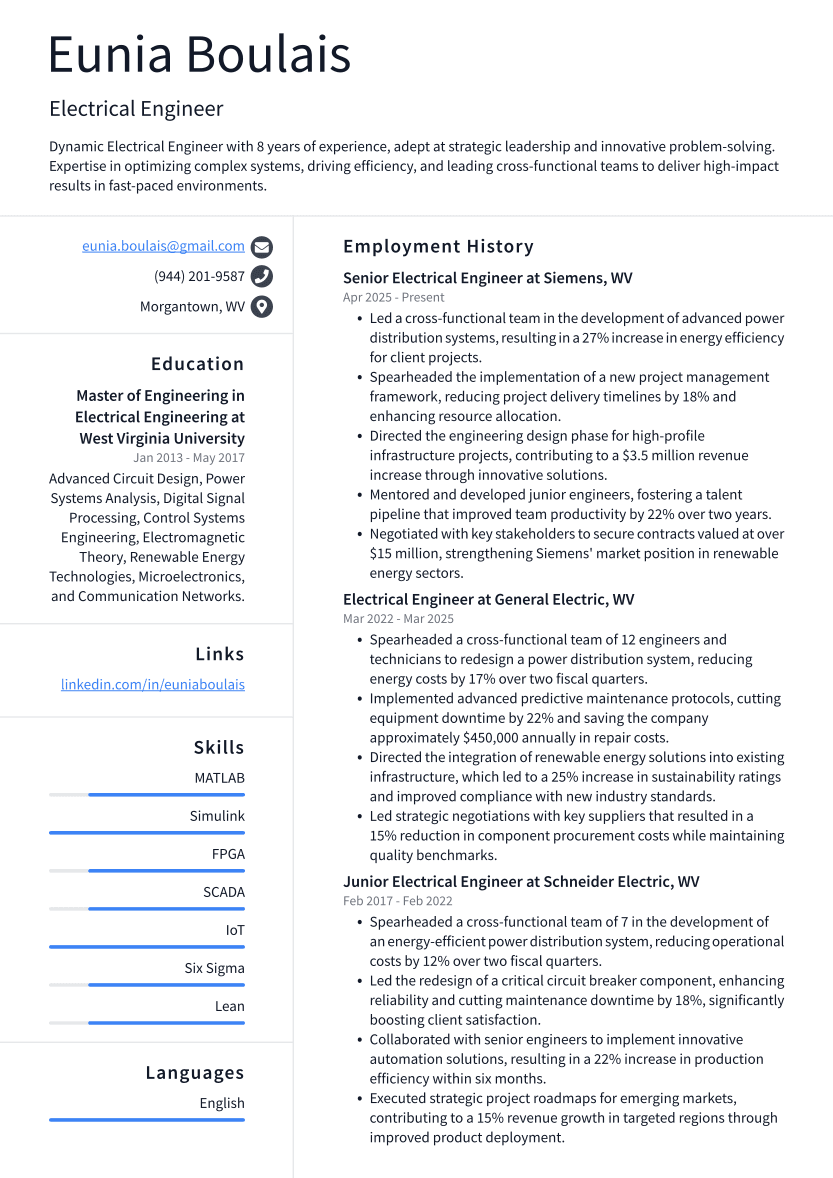
A senior-level Electrical Engineer resume stands out by emphasizing extensive leadership experience, deep project management expertise, and a proven track record of successful high-stakes projects, unlike entry-level or mid-level resumes that focus more on foundational skills and growing career achievements.
Electrical Engineer Resume Do’s, Don’ts, and Checklist
DO'S
- Highlight specific projects where technical skills made a real-world impact.
- Emphasize proficiency in software tools and engineering methodologies relevant to the field.
- Include quantifiable achievements or results that showcase problem-solving abilities.
DON'TS
- Don't include irrelevant personal information that doesn't pertain to the job.
- Don't use overly technical jargon that might confuse the human resources personnel.
- Don't exaggerate or lie about your skills, as this can backfire during interviews.
CHECKLIST
- Highlight relevant technical skills and certifications prominently.
- Tailor your resume for each specific job application.
- Include quantifiable achievements to demonstrate your impact.