Brand Manager Resume Examples

In the whirlwind world of branding, crafting a resume that pops like a champagne cork can make all the difference. This article unwraps the secrets of sculpting a standout Brand Manager resume, guiding readers through the essential ingredients to showcase their flair and finesse. Expect insights that transform bland paper profiles into vivid narratives that leave employers craving more.
Structuring Your Brand Manager Resume
- Contact Information: Provide phone, email, and location details.
- Summary: Briefly highlight your career focus and goals.
- Work Experience: Detail previous roles and achievements.
- Skills: List relevant competencies and expertise.
- Education: Mention degrees and academic institutions attended.
Focus on showcasing how your strategic vision has driven brand growth, emphasizing examples where you effectively managed cross-functional teams to enhance brand presence and market share. Highlight experience in analyzing consumer insights and market trends to craft compelling brand narratives that resonate with target audiences.
Pro Tip: Crafting a Brand Manager resume with precise skills and industry-specific keywords is crucial for navigating the labyrinth of Applicant Tracking Systems, ensuring your expertise doesn't vanish into the digital ether.
How to Make Your Brand Manager Resume Stand Out
When crafting your resume for a Brand Manager role, focus on showcasing achievements by detailing specific results, such as "increased brand visibility by 40% in six months through strategic social media campaigns" or "led a team that boosted sales by $1.2 million annually by launching a successful rebranding initiative." By quantifying your impact, you create a compelling narrative that not only highlights your skills but also underscores the tangible value you bring to the table.
- Prioritize clean, uncluttered design with generous white space to allow key achievements and experiences to stand out, making it easier for hiring managers to skim through your qualifications quickly.
- Use a consistent, professional font like Arial or Calibri, and strategically apply bold or italics to emphasize specific roles or accomplishments without overwhelming the reader.
- Incorporate clear headings and bullet points to organize information logically, ensuring that each section flows naturally and highlights relevant skills and experiences in brand management.
Pro Tip: Tailoring your Brand Manager resume for each job highlights your most relevant skills and experiences, making you stand out to employers.
Sample Resume for Entry-Level Brand Manager
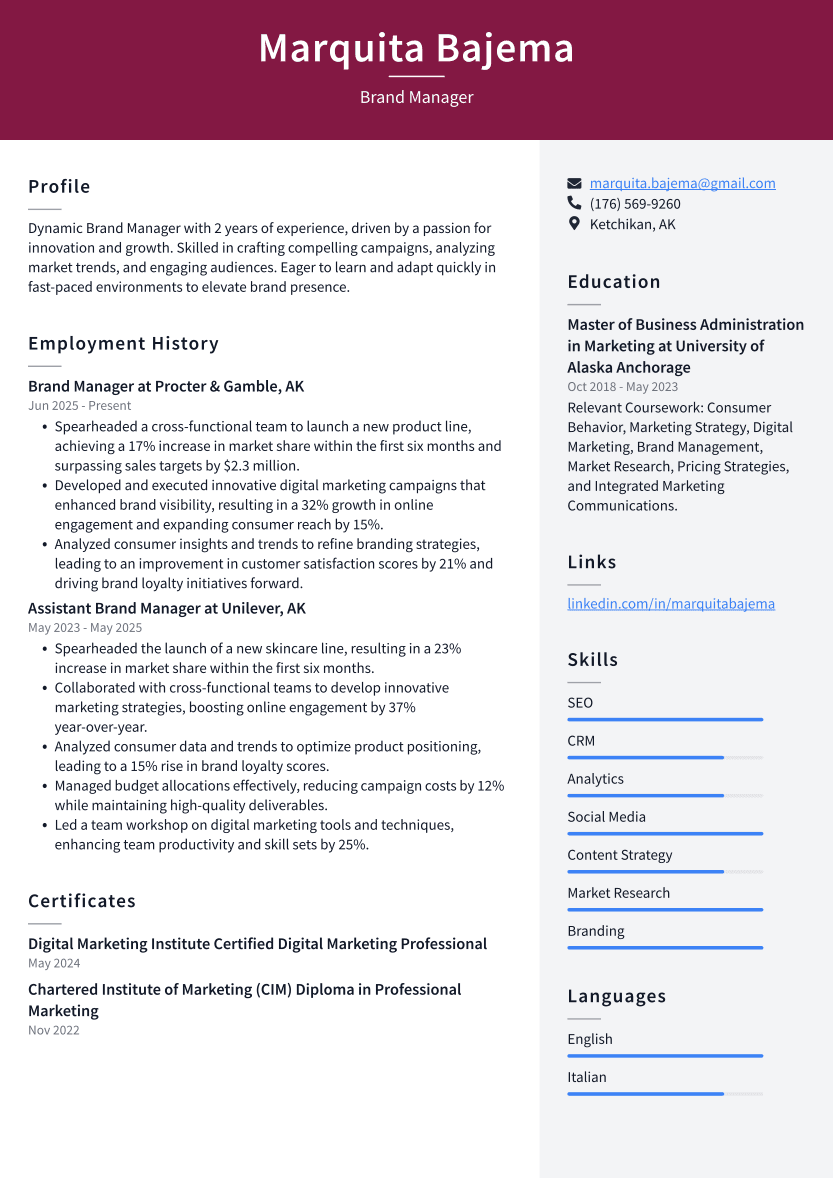
An entry-level Brand Manager resume typically highlights potential and foundational skills, whereas mid-level or senior resumes emphasize experience, leadership, and strategic achievements.
Example: Experienced Brand Manager Resume

A mid-level Brand Manager resume emphasizes a balance of relevant experience and demonstrated leadership skills without the extensive strategic oversight expected in a senior resume or the foundational training and entry-level positions highlighted in a junior resume.
Sample Resume for Senior Brand Manager
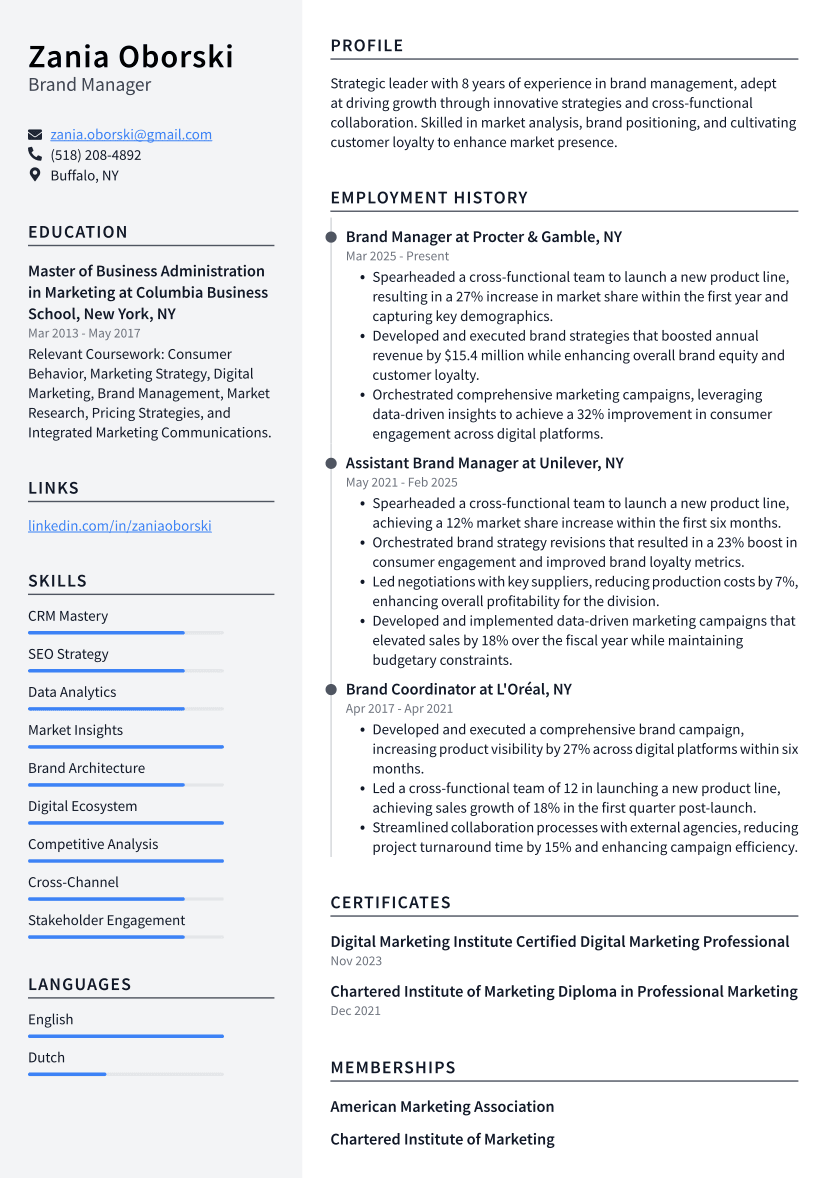
A senior-level Brand Manager resume exudes strategic vision and proven leadership, showcasing transformative brand achievements, unlike the skill-focused, growth-oriented profiles typical of entry-level or mid-level resumes.
Brand Manager Resume Success: Do’s, Don’ts, and Essential Checklist
DO'S
- Showcase measurable achievements explicitly.
- Highlight expertise in market analysis and strategy.
- Emphasize leadership experience and teamwork skills.
DON'TS
- Avoid using vague buzzwords without substance.
- Don't overcrowd your resume with irrelevant job details.
- Refrain from listing duties; focus on achievements instead.
CHECKLIST
- Highlight achievements with specific metrics to showcase impact and effectiveness.
- Tailor the resume for each application to align with the company's brand strategy.
- Include leadership experience to demonstrate capability in managing cross-functional teams.
- Communicate a clear understanding of audience targeting and engagement tactics.
- Showcase creativity through successful campaign examples or unique problem-solving instances.
- Certify knowledge of digital tools and platforms that enhance brand visibility and interaction.