Architect Resume Examples

Crafting an effective resume for an architect job isn’t just about listing blueprints and bricks. It's about constructing a masterpiece that showcases your flair, precision, and ability to bring visions to life. Dive into this guide to learn how to transform your experiences into a blueprint that captivates potential employers and ensures your portfolio stands tall.
What to Include on a Architect Resume
- Contact Information: Make it easy to reach you.
- Summary: Capture your professional essence succinctly.
- Work Experience: Highlight impactful projects and roles.
- Skills: Showcase abilities in design and technology.
- Education: List relevant degrees and certifications.
- Portfolio: Display your architectural masterpieces.
- Professional Affiliations: Mention industry groups or associations.
- Awards and Honors: Celebrate your achievements and recognitions.
- Technical Proficiency: List software and tools mastered.
- Languages: Specify any additional languages spoken.
For an Architect role, highlight your proficiency in sustainable design principles and your experience with innovative materials that reduce environmental impact. Showcase your ability to lead complex projects from concept through completion, emphasizing collaboration with multidisciplinary teams to meet both aesthetic and functional objectives.
Pro Tip: Including relevant skills and keywords on an architect resume is crucial for ATS compatibility, as it helps ensure your application isn't lost in the digital shuffle, making it more likely to reach the eyes of a human decision-maker.
How to Make Your Architect Resume Stand Out
Showcase your architectural prowess by spotlighting projects where your innovative designs slashed construction costs by a significant percentage or enhanced energy efficiency, quantifying these accomplishments with precise figures. Highlight awards or recognitions that underscore your creative impact, and, when possible, back these accolades with numbers that illustrate the scale of your influence in transforming spaces.
Prioritize a clean, minimalist design with ample white space, allowing the eye to rest and easily navigate through your achievements and roles. Avoid clutter; clarity is key.
Employ a consistent, professional typeface like Helvetica or Arial, and use bold or italics sparingly to highlight key sections such as project names or leadership roles without overwhelming the reader.
Integrate visual elements like subtle lines or section dividers, which guide the reader’s gaze naturally down the page, and consider including a small portfolio section with thumbnail images to showcase your architectural projects directly on the resume.
Pro Tip: Tailoring your architect resume for each application highlights specific skills and experiences that align with the job, making you a standout candidate.
Resume Example 1: Entry-Level Architect
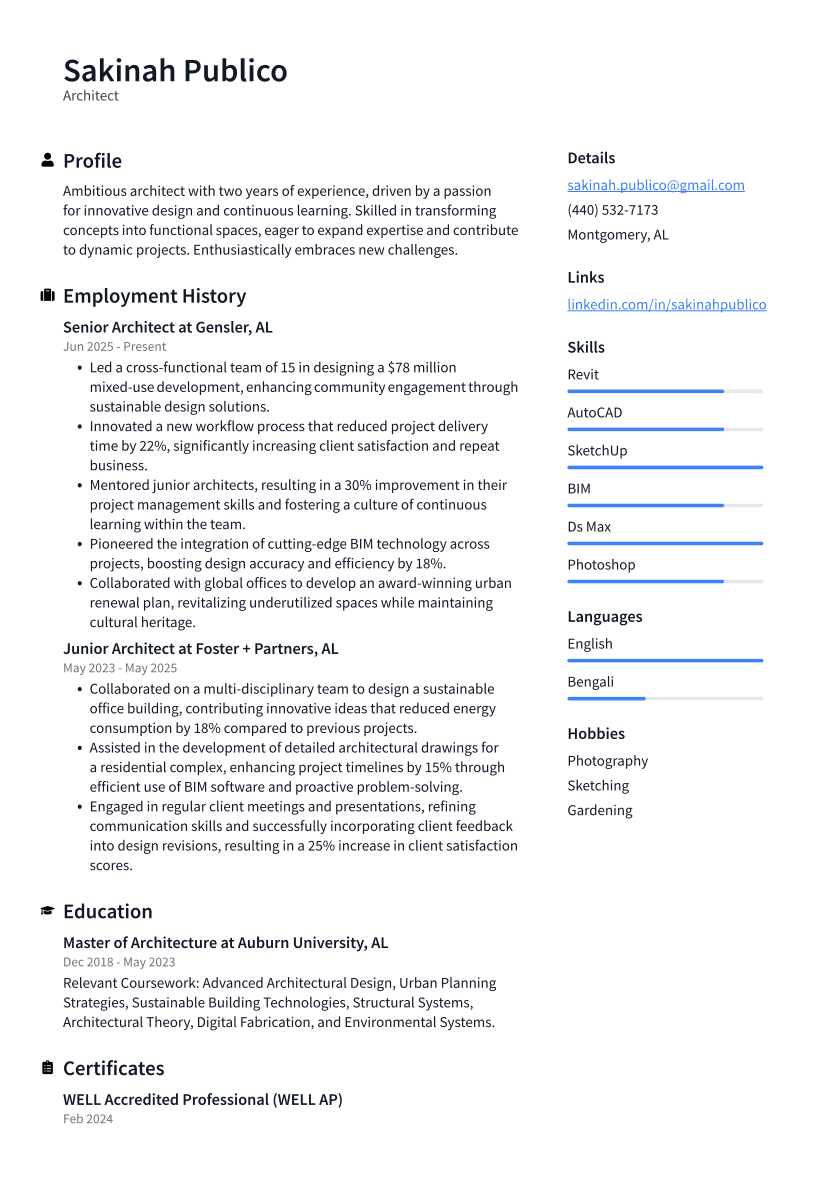
An entry-level architect resume often focuses on educational achievements and internships, while mid-level or senior resumes highlight extensive work experience and leadership roles.
Resume Example 2: Experienced Architect
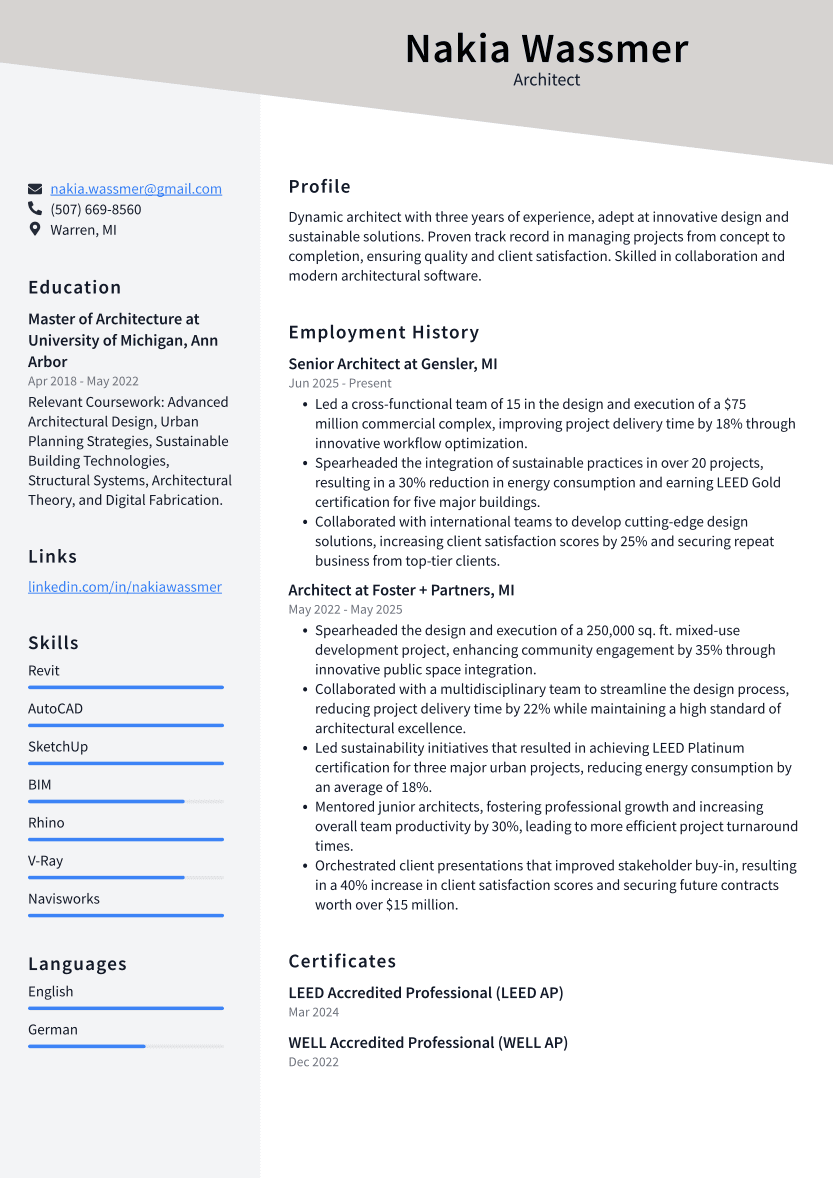
A mid-level architect resume balances technical skills with some leadership experience, unlike entry-level focusing on learning or seniors emphasizing strategic oversight and innovation.
Resume Example 3: Senior/Leadership Architect
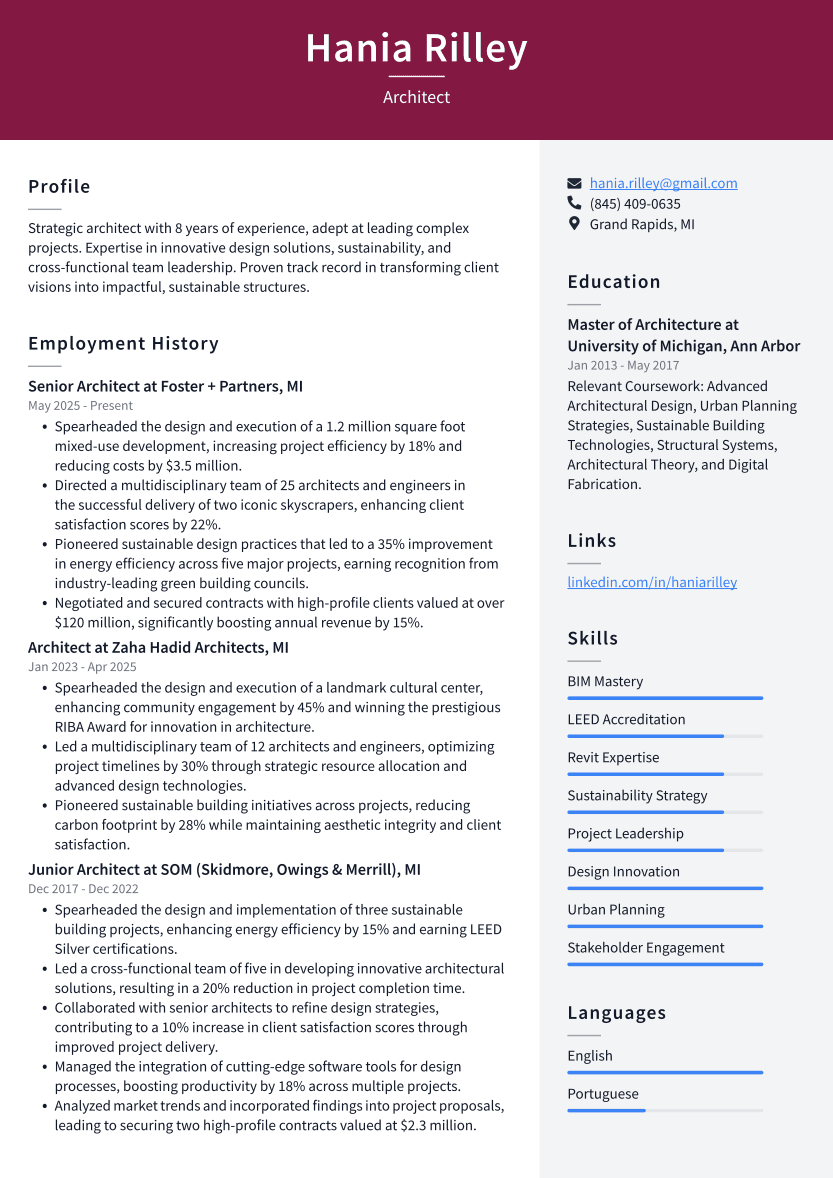
A senior-level Architect resume showcases extensive leadership experience, complex project management, and strategic visioning, unlike entry-level or mid-level resumes which focus more on foundational skills and technical competencies.
Architect Resume Do’s, Don’ts, and Checklist
DO'S
- Showcase your technical proficiency by highlighting relevant software skills and design capabilities.
- Emphasize your experience with a variety of projects, detailing the scale and outcomes.
- Incorporate industry-specific terminology to align with job descriptions and attract attention.
DON'TS
- Don't overload your resume with technical jargon that may confuse more than clarify.
- Don't neglect to highlight your problem-solving skills and creative solutions.
- Don't overlook the importance of tailoring your resume to match the specific job description.
CHECKLIST
- Highlight project achievements and quantify them.
- Showcase technical skills specific to architecture software.
- Emphasize leadership roles in architectural projects.
- Avoid using vague language or unnecessary jargon.
- Don’t forget to tailor the resume to the specific job application.
- Don’t include outdated or irrelevant work experience.