Teacher Resume Certifications

Certifications on a teacher resume are like secret sauce—proof you’re not just winging it, but actually qualified to juggle chaotic classrooms and win over even the grumpiest principal. This article spills the beans on why those tidy little acronyms matter and shows you exactly how to flaunt them. Get ready to turn “certified” into “hired.”
How Certifications Boost Your Teacher Resume
A certification stamped on a teacher’s résumé signals more than just extra effort—it’s proof they understand the latest methods or content, not just yesterday's textbook. Parents and school boards start to trust those credentials as a mark of real, measurable expertise. In a sea of job applicants, that piece of paper whispers, “I’ve gone further,” making hiring committees look twice. It’s a kind of shortcut for credibility, helping teachers stand out in a fiercely competitive field.
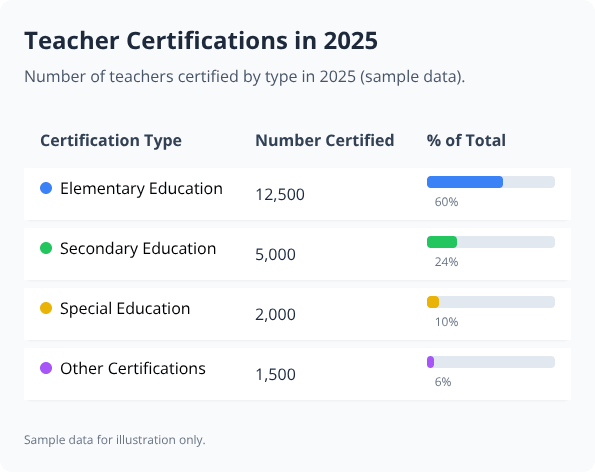
Adding a certifications section to your resume can really boost your chances, especially for teaching jobs that look for specific skills or credentials.
Top 7 Certifications for Teacher Resumes
National Board Certified Teacher (NBCT): Considered one of the gold standards, it demonstrates advanced teaching knowledge and instructional expertise across subjects and grade levels.
Certified Teacher (State Credential): The baseline requirement for most U.S. teachers, this license is proof of subject mastery, pedagogical skill, and legal standing to teach in public schools.
TESOL Certification (Teaching English to Speakers of Other Languages): Equips educators to work effectively with English learners, opening doors in both domestic and international classrooms.
Google Certified Educator: Validates fluency with Google’s suite of educational tools, streamlining tech integration and boosting classroom engagement.
Special Education Certification: Acknowledges expertise in adapting curriculum and methods for students with diverse learning needs, making teachers invaluable assets to inclusive schools.
Reading Specialist Certification: Signals advanced skills in literacy instruction and intervention, empowering teachers to lead efforts in boosting reading proficiency.
Project Management Professional for Educators (PMP-Edu): While not universally required, this credential demonstrates a teacher’s ability to plan, execute, and manage complex educational projects or programs.
DO'S
- Showcase only relevant and up-to-date certifications near the top, right after your contact information.
- Include full certification names, issuing organizations, and dates earned or expired.
- Highlight any state-specific credentials or specialized endorsements directly related to the teaching role.
DON'TS
- Don’t list expired or irrelevant certifications.
- Don’t crowd the page with every minor workshop attended.
- Don’t forget to include dates and issuing institutions.
Pro Tip: Hiring managers zero in on certifications first—they want proof you hold the credentials that actually matter, so skipping the most relevant ones might send your whole resume straight to the no pile.