Claims Adjuster Resume Certifications
Certifications aren’t just shiny add-ons—they’re secret handshakes in the world of claims adjusting. This article spills why those acronyms beside your name matter and shows you which ones give your resume a serious power-up. By the end, you’ll know exactly which certifications open doors and how to flaunt them with style.
Why Earning Certifications Is Key for Claims Adjuster Success
Certifications give Claims Adjusters an undeniable stamp of legitimacy—proof they actually know their stuff beyond just talk. Employers and clients feel more confident handing over tricky cases when someone’s got credentials backing up their skills. It’s more than just initials after a name; it shows a drive to stay sharp and updated. When jobs are tight and resumes look alike, an extra certification can tilt the balance and land an interview or a promotion.
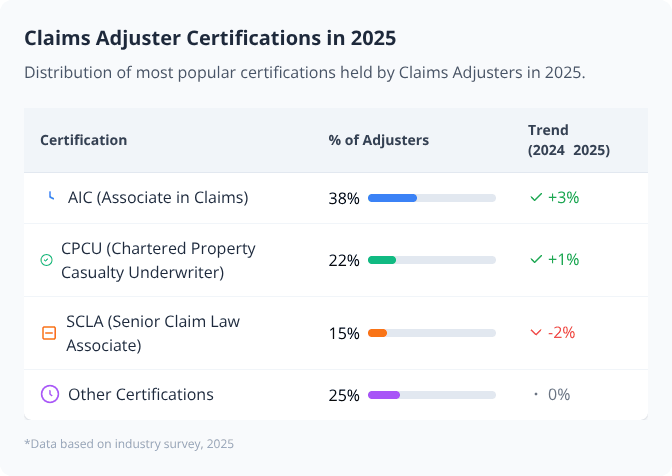
Adding a certifications section to your resume can really boost your chances, especially for claims adjuster jobs where proof of specific skills matters.
Essential Certifications for Advancing as a Claims Adjuster
- Associate in Claims (AIC) – A widely respected designation that sharpens claim-handling expertise and proves a deep grasp of core claims principles to employers.
- Chartered Property Casualty Underwriter (CPCU) – This challenging credential signals advanced knowledge in insurance and claims, often opening doors to higher-level or specialized adjuster positions.
- Certified Claims Professional (CCP) – Recognized for its practical focus, it validates a well-rounded skill set and dedication to best practices in the claims industry.
- State Insurance Adjuster License – Each state’s licensure acts as a legal must-have, demonstrating legitimacy and permitting professionals to legally handle claims in their geography.
- Senior Claim Law Associate (SCLA) – A legal-heavy credential emphasizing an adjuster’s understanding of claim law and ethical responsibilities, particularly valued by employers looking for leadership.
- Fraud Claims Law Specialist (FCLS) – With insurance fraud on the rise, this niche certification highlights expertise in detection and prevention methods, making the holder especially valuable in investigative roles.
- Workers’ Compensation Claims Professional (WCCP) – For adjusters focused on work comp cases, this certification sets them apart as experts in the maze of regulations, benefits, and medical issues involved.
DO'S
- Highlight certifications relevant to insurance, risk management, or adjusting.
- List full certification names along with abbreviations and issuing organizations.
- Place the most impressive or recent certifications near the top of your resume.
DON'TS
- Don't list outdated or irrelevant certifications.
- Don't exaggerate or fabricate your credentials.
- Don't bury key certifications at the end of your resume.
Pro Tip: Throwing every certificate on your resume is like dumping your entire closet onto the bed—messy, distracting, and overwhelming; highlighting only the most relevant ones proves you know what genuinely matters in the world of claims adjusting and grabs the hiring manager’s eye where it counts.