Insurance Agent Resume Certifications

Certifications: those shiny stamps of credibility that separate the insurance rookies from the trusted pros. This article untangles why flaunting your credentials on a resume matters and spills exactly which certifications turn hiring managers’ heads. Ready to beef up your brag sheet? Let’s dive in.
The Value of Certifications in Insurance Agent
Certifications act like a badge—proof that an agent hasn’t just skimmed the rulebook but has actually put in the sweat to master it. Clients and employers see those credentials and breathe easier, knowing they're talking to someone with real knowledge, not just big talk. In a sea of resumes, that certified status is a lighthouse, pulling attention and inspiring trust. It’s not just about passing a test; it’s about showing you’re serious, reliable, and a step ahead of those who didn’t bother.
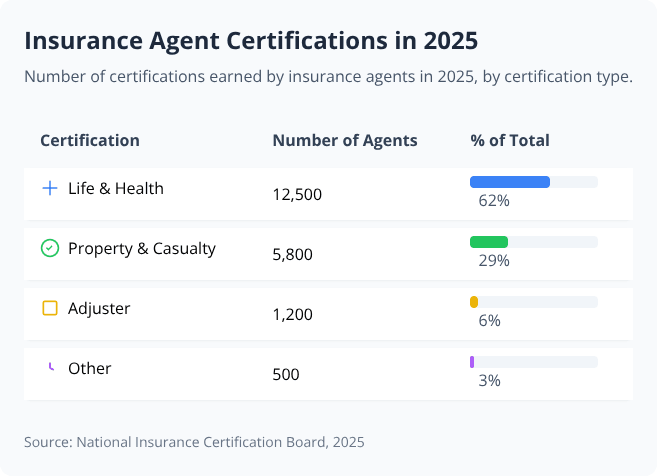
Adding a certifications section to your resume can really boost your chances, especially for insurance jobs where proof of your expertise matters.
Best Certifications to Add to Your Insurance Agent Resume
Chartered Property Casualty Underwriter (CPCU) – Recognized as the gold standard in property-casualty insurance, this designation signifies deep expertise in risk, underwriting, and insurance operations.
Certified Insurance Counselor (CIC) – Awarded to professionals who complete rigorous coursework and exams, CIC reflects extensive knowledge in personal, commercial, and agency management insurance topics.
Life Underwriter Training Council Fellow (LUTCF) – Blends sales training with in-depth product knowledge, tailored for life insurance agents eager to build a foundation of trust and credibility with clients.
Certified Risk Manager (CRM) – Affirms advanced understanding of risk identification, analysis, control, financing, and administration applicable across a spectrum of insurance specialties.
Accredited Adviser in Insurance (AAI) – Signals proficiency in agency operations and production, making it a favorite among agents wanting to strengthen their consultative selling capabilities.
Certified Insurance Service Representative (CISR) – Designed for client-facing professionals, CISR demonstrates a commitment to ongoing service excellence and technical acumen in day-to-day policy tasks.
Health Insurance Associate (HIA) – Focuses on the health insurance landscape, arming agents with expertise in plan design, regulatory matters, and effective client communication in the ever-changing healthcare sector.
DO'S
- Do mention the full official name of each certification.
- Do list the date earned and issuing authority.
- Do prioritize certifications most relevant to your insurance specialty.
DON'TS
- Don't list expired or irrelevant certifications that don’t fit the insurance role.
- Don't crowd your resume with every certificate—stick to the most valuable ones for the job.
- Don't forget to include official titles and issuing organizations to add credibility.
Pro Tip: Imagine a hiring manager’s tired eyes flicking over a crowded page—spot-on certifications leap out like beacons, instantly marking you as credible and ready, instead of blending into the blur of hopefuls.