Psychiatrist Resume Certifications

Certifications on a psychiatrist’s resume aren’t just fancy badges—they’re your golden tickets past gatekeepers with checklists. This article will unpack which certifications matter, why employers care, and show you how to spotlight them so your resume lands on the “let’s interview” pile. Readers will learn exactly what to showcase for maximum career oomph.
The Value of Certifications in Psychiatrist
There’s a certain gravity that comes with a stack of certifications next to a psychiatrist’s name—they don’t just dangle there for decoration. Those credentials announce, quietly but firmly, that this person really knows their stuff, has spent countless hours honing skills and absorbing knowledge beyond the basics. Employers and patients alike see these and feel reassured, trusting that they’re in capable hands. In a sea of resumes, that extra line or badge can be the nudge that pushes one candidate into the spotlight while others blend invisibly into the background.
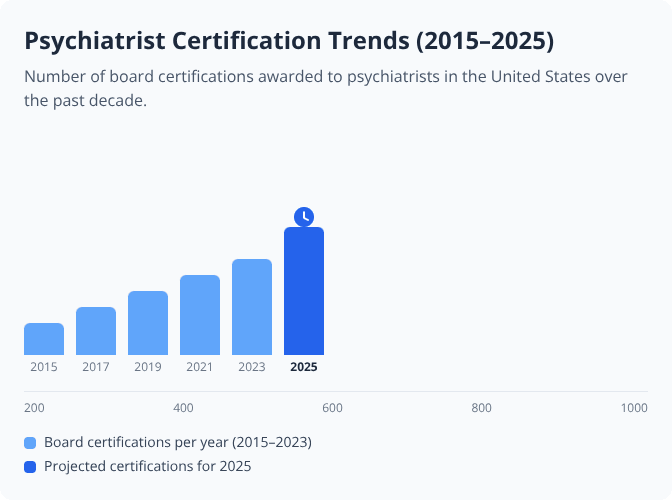
Adding a certifications section to your resume can really boost your chances, especially for psychiatrist roles where proven expertise matters.
Top 7 Certifications for Psychiatrist Resumes
American Board of Psychiatry and Neurology (ABPN) Certification: The central credential for psychiatrists in the U.S., this board certification signals advanced expertise and commitment to professional standards in psychiatry.
Child and Adolescent Psychiatry Subspecialty Certification: Recognition of in-depth training and skills for treating young patients, highly regarded for psychiatrists focusing on children and teenagers.
Addiction Psychiatry Subspecialty Certification: Showcases specialized knowledge in diagnosing and treating substance use disorders, allowing psychiatrists to tackle one of healthcare’s most urgent issues.
Forensic Psychiatry Subspecialty Certification: Demonstrates proficiency in the intersection of mental health and the legal system, giving psychiatrists credibility in courtrooms and evaluations.
Consultation-Liaison Psychiatry (formerly Psychosomatic Medicine) Certification: Highlights skill in managing psychiatric conditions in medically complex patients, essential for working in hospital or inpatient settings.
American Board of Addiction Medicine (ABAM) Certification: Expands a psychiatrist’s scope by officially verifying expertise in addiction medicine, opening doors for leadership in treatment programs.
Electroconvulsive Therapy (ECT) Certification: A practical testament to focused training and competence in administering ECT, important for psychiatrists in hospitals or specialty clinics offering advanced therapeutic modalities.
DO'S
- Highlight relevant certifications near the top of your resume for visibility.
- Include the full name of each certification along with the issuing organization.
- Add expiration dates or renewal periods to show your credentials are current.
DON'TS
- Don’t list outdated or irrelevant certifications.
- Don’t clutter with acronyms nobody outside your subspecialty recognizes.
- Don’t exaggerate or fabricate credentials—integrity matters most.
Pro Tip: Highlighting your most relevant certifications ensures employers immediately see your specialized expertise—letting your true skills rise above the paper shuffle and signaling you’re not just any candidate but someone utterly prepared for this complex, sensitive work.