Pharmacist Resume Certifications

No pharmacist ever dazzled a hiring manager with merely a charming smile and alphabet soup after their name—those letters need muscle. Relevant certifications on your resume shout, “I know my stuff!” Louder than a mortar and pestle in a silent pharmacy. In this article, discover which credentials deserve prime real estate on your resume and how to flaunt them like a pro.
How Certifications Boost Your Pharmacist Resume
Certifications hand pharmacists a badge of trust—proof to employers and patients alike that their knowledge isn’t stale, but razor-sharp and current. They signal commitment, a willingness to dig deeper and master complexities others might only gloss over. That stamp on their resume whispers to hiring managers, “Here’s someone who stands out from the crowd.” More than just paper, credentials open doors and spark confidence all around.
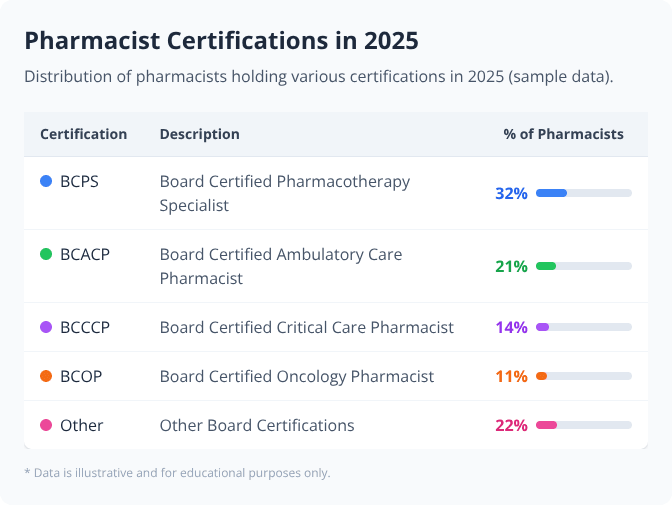
Adding a certifications section to your resume can really boost your chances, especially for pharmacist jobs where specific credentials matter.
Essential Certifications for Advancing as a Pharmacist
Board Certified Pharmacotherapy Specialist (BCPS) – Demonstrates advanced expertise in optimizing drug therapy and improving patient outcomes in a variety of clinical settings.
Board Certified Ambulatory Care Pharmacist (BCACP) – Validates specialized skills in managing chronic illnesses and medication therapy for patients in outpatient settings.
Board Certified Oncology Pharmacist (BCOP) – Recognizes proficiency in the complex field of cancer pharmacotherapy, spanning chemotherapy, targeted agents, and supportive care.
Board Certified Critical Care Pharmacist (BCCCP) – Highlights mastery in delivering pharmaceutical care to critically ill patients in intensive care environments.
Certified Geriatric Pharmacist (CGP or BCGP) – Establishes competence in the unique medication needs and challenges facing older adults.
Certified Diabetes Care and Education Specialist (CDCES) – Confirms capability in delivering diabetes education and managing comprehensive diabetes care plans.
Immunization Certification – Shows training and qualification to safely administer immunizations and manage vaccine-related care, now a core pharmacist responsibility.
DO'S
- Do list certifications relevant to pharmacy practice, such as immunization or medication therapy management.
- Do include the full name of each certification and the issuing organization.
- Do mention the expiration or renewal date if applicable to show current standing.
DON'TS
- Don’t list expired or irrelevant certifications.
- Don’t use confusing abbreviations without explanations.
- Don’t bury your certifications deep in the resume—keep them visible.
Pro Tip: Highlighting the most relevant certifications on your Pharmacist resume instantly signals your expertise to employers, steering their attention to the qualifications that actually matter for the job at hand instead of burying them in a sea of less important details.