Interior Designer Resume Certifications

Slipping a few sparkling certifications onto your interior designer resume isn’t just for show—it’s the secret passcode to impressing picky clients and skeptical hiring managers alike. In this article, you’ll learn why those little acronyms matter, which credentials make eyes widen, and exactly how to spotlight them for maximum wow factor.
Why Earning Certifications Is Key for Interior Designer Success
A certification hanging on the wall shouts credibility before you even say a word—clients and employers breathe easier when they know you’ve met rigorous standards. It’s more than a piece of paper; it signals hours poured into honing design instincts and mastering building codes, safety, and sustainability. While portfolios show style, certifications whisper trustworthiness and a commitment to ongoing learning. In a crowded field, that seal can tilt the scales, nudging your name higher in the pile of resumes and turning “maybe” into “let’s talk.”
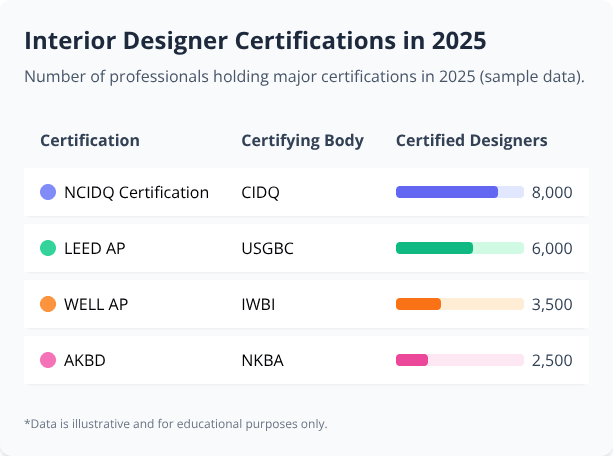
Adding a certifications section to your resume can really boost your chances, especially for interior design jobs that look for specific skills or credentials.
Essential Certifications for Advancing as an Interior Designer
NCIDQ Certification (National Council for Interior Design Qualification) — Recognized as the gold standard, this credential proves your knowledge of core competencies and codes required for professional interior design practice.
LEED Accredited Professional (Leadership in Energy and Environmental Design) — Demonstrates your expertise in sustainable design and ability to integrate green building principles into your projects.
WELL Accredited Professional (WELL AP) — Signals proficiency in advancing health and wellness in the built environment, a rapidly growing focus for clients and employers alike.
Certified Interior Decorator (CID) — Highlights your skills in decorating, from color theory to spatial planning, helping you stand out in residential and commercial interiors.
American Society of Interior Designers (ASID) Certification — Membership and credentialing from ASID boost your marketability and connect you with a respected community of design professionals.
Certified Aging-in-Place Specialist (CAPS) — Shows your ability to design safe, accessible spaces for older adults, a critical skill as demographics shift.
NKBA Certification (National Kitchen & Bath Association) — Demonstrates specialized knowledge in kitchen and bath design, appealing to a crucial and lucrative market segment.
DO'S
- Highlight certifications right beneath your name or title for instant visibility.
- Include only relevant, up-to-date credentials that match the job’s requirements.
- Mention licensing numbers or accrediting organizations to boost credibility.
DON'TS
- Don't list expired or irrelevant certifications that don't reflect your current skills.
- Don't clutter the section with basic workshops or unrecognized courses.
- Don't forget to include the full certification name and issuing organization.
Pro Tip: Jumbled among all your achievements, the certifications that matter most can shout above the noise and signal instantly to a client or employer: “This person knows their stuff—no guesswork needed.”