Electrician Resume Certifications

Flip that breaker on your resume’s wattage—relevant electrician certifications are your golden ticket past HR’s dreaded filter. This article will zap you straight to the specifics: why those credentials matter and exactly how to spotlight them for maximum amperage. Spark up your job hunt, and let’s turn you into hiring managers’ current favorite.
Why Earning Certifications Is Key for Electrician Success
Certifications for electricians act like a spotlight, shining proof of real, hard-won skills in a crowded field. They tell employers and clients, “This person knows their stuff, not just the basics but the finer details too.” With that badge, an electrician isn’t just another name on a résumé—they’re someone who’s invested time to master their trade. When jobs are tight and competition bristles, having that credential can tip the scales and crack open doors that might stay shut otherwise.
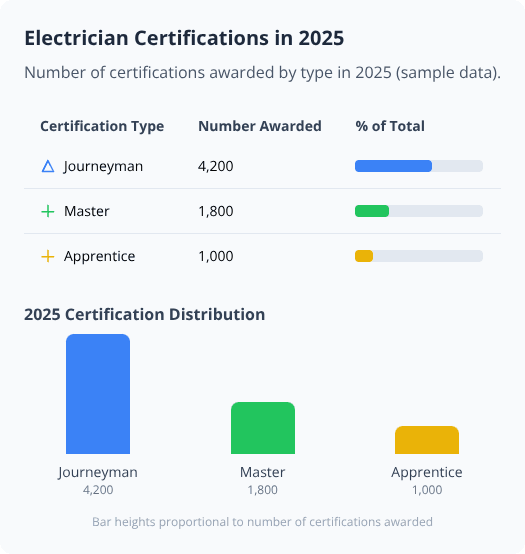
Add a certifications section to your resume—it shows you’ve got the right skills and proves you’re serious about the job, especially when employers want someone qualified.
Essential Certifications for Advancing as an Electrician
Journeyman Electrician License: Grants legal authority to work independently and signals mastery of foundational electrical skills and local codes.
Master Electrician License: Represents a higher level of expertise, qualifying holders to supervise projects, pull permits, and operate their own electrical business.
National Institute for Certification in Engineering Technologies (NICET) – Electrical Power Testing Certification: Recognized for validating skills in electrical power testing and safety, especially crucial in industrial and commercial environments.
Occupational Safety and Health Administration (OSHA) 30-Hour Construction Safety Certification: Demonstrates advanced knowledge of jobsite hazards and regulations, highlighting a commitment to workplace safety.
NFPA Certified Electrical Safety Worker (CESW): Focuses on electrical safety standards as set by the National Fire Protection Association, reducing risk on the job.
Electrical Contractor License: Required by many states for those who want to contract their services and lead larger-scale electrical projects.
Certified Control Systems Technician (CCST) – International Society of Automation: Indicates specialized skills in installation and maintenance of automation and control systems, a valued asset in modern facilities.
DO'S
- List certifications relevant to the job you’re applying for.
- Include the full name of each certification and the issuing organization.
- Add expiration dates or renewal years to show they’re current.
DON'TS
- Don't list expired or irrelevant certifications that have no bearing on the job.
- Don't forget to include the official title and accrediting body for each certification.
- Don't bury your certifications deep in the resume where they might get overlooked.
Pro Tip: Hiring managers hardly skim—those top certifications scream credibility before you’ve even shaken hands, showing you’re not just another wire wrangler but exactly who they need.