Editor Resume Certifications
If you want your Editor resume to gleam brighter than a freshly proofed headline, don't skip those certifications. This article dives into which editorial badges actually matter and shows you how they can tip the scales in your favor. Get ready to discover exactly what to add, why it counts, and how to make your achievements impossible to ignore.
How Certifications Boost Your Editor Resume
A certification flashes like a badge, telegraphing to employers that an editor knows their stuff and isn’t just bluffing their way through the world of red pens and tracked changes. It’s proof—tangible, stamped, and often hard-earned—that you’ve mastered the nuts and bolts of grammar, style, and editorial judgment. In a pile of résumés, those extra letters or seals can nudge you out of the sludge and into the spotlight; they announce seriousness and up-to-date skills. Employers scan for shortcuts, and sometimes, a certification is the brightest highlight on the page.
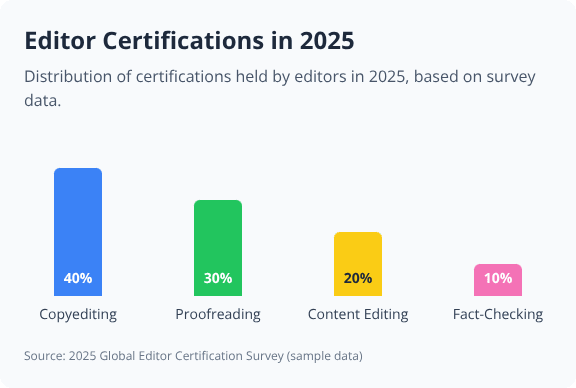
Adding a certifications section to your resume can really boost your chances, especially for editor jobs that demand proven skills or industry credentials.
Must-Have Certifications for Editor
- ACES Certificate in Editing – Signifies sharp editorial judgment and adherence to industry standards through the American Copy Editors Society’s credible assessment.
- Editors Canada Professional Certification – Stamps editors with proven mastery in structural, stylistic, and proofreading skills recognized across Canada’s publishing world.
- Certified Proofreader (SfEP UK/Chartered Institute of Editing and Proofreading) – Validates proficiency in meticulous proofreading and editing ensuring adherence to British standards.
- Poynter ACES Certificate in Editing – Demonstrates strong editing fundamentals and digital editing tools knowledge geared toward newsroom efficiency.
- Chicago Manual of Style Online Certification – Broadcasts command over the venerable Chicago style, crucial for academic, publishing, and corporate editorial jobs.
- Editorial Freelancers Association (EFA) Courses & Certificates – Marks an editor trained through hands-on courses respected by freelancers and in-house teams alike.
- Publishing Training Centre (PTC) Certified Editor – Endorses a practical grasp on advanced editorial processes with a reputation for upholding UK and international publishing standards.
DO'S
- Do list certifications that directly match editing or media industry standards.
- Do place your most recent and relevant certifications near the top of your resume.
- Do specify the full certification name and issuing organization for clarity.
DON'TS
- Don’t cram unrelated certificates hoping to impress—relevance wins.
- Don’t list expired or unverifiable credentials; keep it current and real.
- Don’t use vague certificate names; clarity beats confusion every time.
Pro Tip: Jammed inboxes, dozens of resumes—those top certifications jump out, flashing instant proof you’re not just interested, you’re qualified right now.