Chemist Resume Certifications
Certifications on a chemist’s resume are like secret handshakes—they signal serious know-how and open doors that a fancy degree alone can’t always unlock. This article will show you which certifications actually matter and how to parade them on your resume for maximum impact. Get ready to turn your credentials into pure, job-landing gold.
How Certifications Boost Your Chemist Resume
Credentials dangle like bright flags, instantly signaling a chemist’s command of their craft. Employers, flooded with resumes, scan for certifications as an assurance that someone not only studied but truly mastered the essentials—and maybe a few advanced tricks too. That little seal of approval whispers, “I’ve got the know-how and the grit,” making a candidate stand out when the competition is fierce. In interviews or on the job, it’s an extra glint in the eye—trust earned before a single experiment begins.
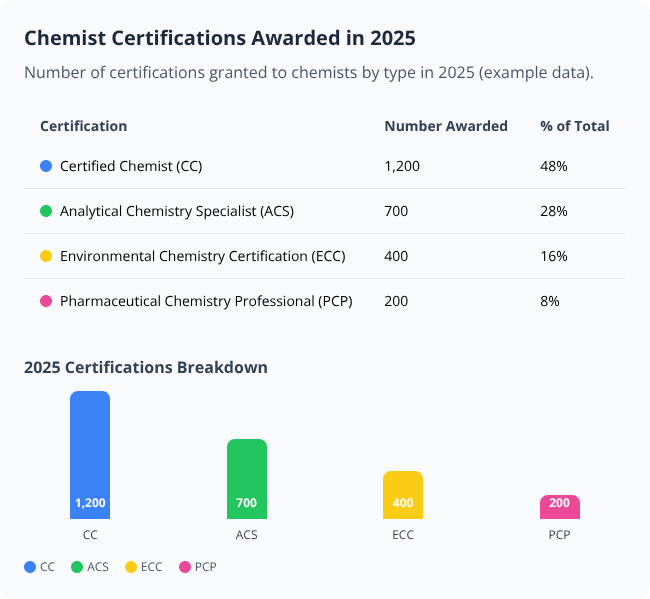
Adding a certifications section to your resume can really boost your chances, especially for chemist jobs that demand proven skills or specific credentials.
Essential Certifications for Advancing as a Chemist
- Certified Chemist (CChem) by the Royal Society of Chemistry: Recognized internationally, this certification stamps a chemist’s expertise, professionalism, and commitment to ongoing scientific development.
- American Chemical Society Certified Chemist (ACS Certified): Validates both rigorous academic training and practical laboratory experience—often a passport to advanced positions in the U.S. chemical industry.
- Certified Professional Chemist (CPC) by the American Institute of Chemists: Demonstrates high professional standards, ethical conduct, and continued education, opening doors to broader responsibilities and leadership.
- Environmental Professional (EP) Chemistry by ECO Canada: Tailored for chemists working in environmental fields, this title signals a blend of technical and regulatory know-how.
- Six Sigma Green Belt Certification: Equips chemists in manufacturing or process development with powerful quality control and problem-solving methodologies valued by many employers.
- Certified Quality Auditor (CQA) by ASQ: Signals mastery in auditing processes and quality systems in laboratories, especially useful for regulated industries like pharmaceuticals.
- Laboratory Safety Professional Certification (CLSP) by ABIH: Highlights expertise in laboratory safety management—critical for leadership roles or any chemist overseeing complex lab environments.
DO'S
- Highlight certifications relevant to the specific chemistry role you're targeting.
- Place recognized or in-demand certificates near the top for visibility.
- Include issue dates and certifying organizations for credibility.
DON'TS
- Don't list expired or irrelevant certifications.
- Don't clutter the section with unclear acronyms.
- Don't exaggerate your level of qualification.
Pro Tip: Because nobody wants to wade through a swamp of irrelevant details; the right certifications snap attention straight to your expertise and show you mean business in the lab.