Biomedical Engineer Resume Certifications

A resume without certifications is like a lab report without data—hardly convincing. In the world of biomedical engineering, the right credentials can crack open doors you didn’t even know existed. In this article, you’ll discover which certifications matter, why they boost your chances, and how to spotlight them on your resume like a pro with a microscope.
How Certifications Boost Your Biomedical Engineer Resume
Certifications wrap a kind of spotlight around a biomedical engineer’s skills—they aren’t just paper; they stand as proof to employers that you really know your stuff. They whisper (sometimes shout) to companies, colleagues, and clients that you’ve met standards set by the industry, that you’re not just floating along but thriving at the edge of what’s current and required. When the job market’s bristling with hopefuls, certifications can tip the scales, making you the clear choice in a heap of resumes. Confidence, proof, and just a little bit of swagger—invaluable, really, when the stakes are high and the competition fierce.
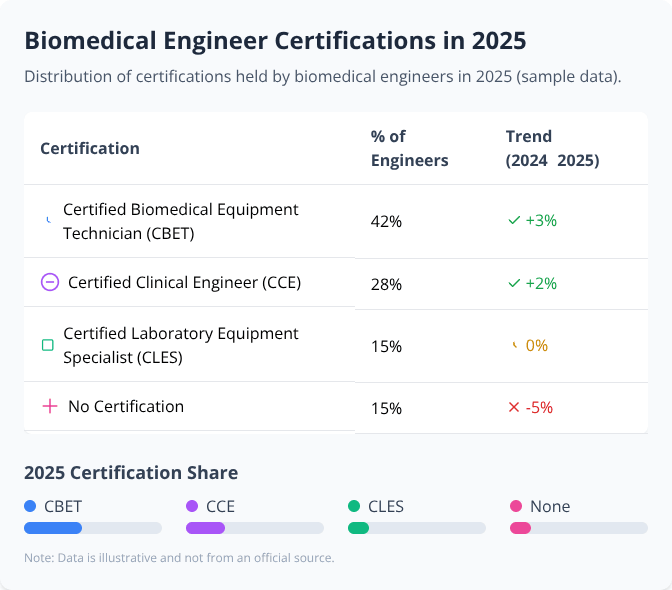
Adding a certifications section to your resume can really boost your chances, especially for biomedical engineering jobs that demand proven expertise.
Top 7 Certifications for Biomedical Engineer Resumes
Certified Biomedical Equipment Technician (CBET) – Signals professional competence in servicing and maintaining healthcare technology, a staple for hospital and clinical settings.
Certified Clinical Engineer (CCE) – Recognizes mastery of advanced engineering principles applied to medical device systems, raising a candidate's profile for senior roles.
Certified Laboratory Equipment Specialist (CLES) – Focuses on the skills needed to manage, repair, and calibrate laboratory diagnostic devices, crucial for biotech and research environments.
Certified Radiology Equipment Specialist (CRES) – Demonstrates specialty expertise in imaging equipment, making holders attractive to diagnostic imaging centers and large hospitals.
Project Management Professional (PMP) – Equips engineers with proven project leadership skills, vital for overseeing complex biomedical tech projects from conception to launch.
Six Sigma Green Belt Certification – Validates capability in quality process improvement, a game-changer in roles tied to medical device manufacturing and regulatory compliance.
Regulatory Affairs Certification (RAC) – Marks deep understanding of international medical device regulations, offering influence over compliance strategies and product approvals.
DO'S
- Highlight certifications near the top, close to your name and contact information.
- Include the full certification title, issuing organization, and date earned.
- Prioritize industry-relevant certifications that align with the job description.
DON'TS
- Don't list expired or irrelevant certifications.
- Don't overload your resume with basic or unrelated online course badges.
- Don't forget to include certifying bodies and dates for each credential.
Pro Tip: Splashing your most relevant certifications right at the top of your Biomedical Engineer resume instantly signals to recruiters that you’ve got the specialized know-how they’re desperately hunting for—no guesswork required, just clear proof you’re right for the job.