Biologist Resume Certifications
Why let your hard-earned biology certifications gather digital dust when they can leapfrog your resume to the top of the pile? This article reveals why showcasing those credentials isn’t just smart—it’s your backstage pass to the professional wild. Get ready to learn which certificates impress, where to flaunt them, and how to turn scientific know-how into irresistible resume gold.
Why Certifications Matter for Biologist Careers
A certification stamped on a biologist's resume isn't just extra paper—it signals a hard-earned mastery that colleagues and employers notice. It means someone didn't just pass through school but pursued deeper, specialized knowledge. That badge boosts credibility; managers and future collaborators eye it with trust, knowing this person brings tested expertise to the table. When dozens of applicants stack up, those with certifications often spark straight-to-the-top interest—they’ve set themselves apart from the crowd.
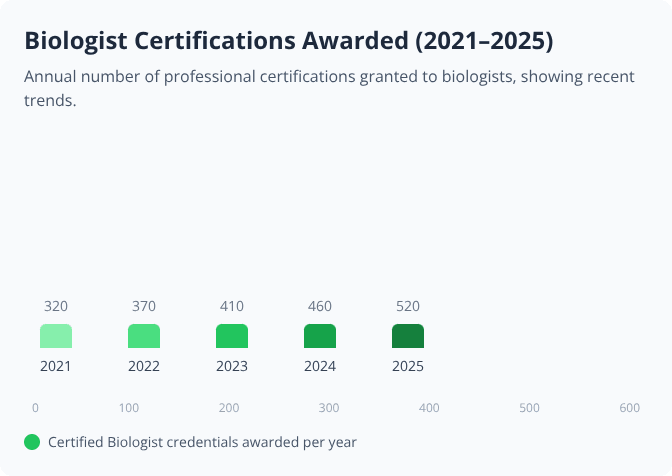
Adding a certifications section to your resume can really boost your chances, especially for biologist roles that demand proven expertise or specific training.
Best Certifications to Add to Your Biologist Resume
Certified Biological Safety Professional (CBSP): Recognized worldwide, this certification signals expertise in managing biohazards and ensuring lab safety standards are met at the highest level.
Professional Wetland Scientist (PWS): Delivers authoritative credibility in wetland assessment and conservation, making it vital for ecologists and biologists working with aquatic environments.
Registered Biosafety Professional (RBP): Validates advanced knowledge of safe biological research practices and risk management, a must for biologists handling infectious agents.
Certified Wildlife Biologist (CWB): Signals comprehensive field proficiency in wildlife study and management, setting apart professionals in conservation, research, or policy.
American Board of Toxicology (ABT) Certification: Industry-respected proof of toxicological skills, showing mastery in analyzing the impact of chemicals on biological systems.
Ecologist Certification (by Ecological Society of America): Demonstrates a robust grasp of ecological principles and professional ethics, supporting careers in research, restoration, and ecosystem management.
GIS Professional Certification (GISP): Recognizes the power to leverage Geographic Information Systems in biological research, which is crucial for mapping, tracking species, and ecological modeling.
DO'S
- Do list certifications directly relevant to your biology field or target role.
- Do include the full certification name, issuing body, and date earned.
- Do position key certifications near the top to grab attention quickly.
DON'TS
- Don't list expired or irrelevant certifications that have nothing to do with biology.
- Don't forget to include the issuing organization and date for each certification.
- Don't exaggerate your qualifications by making up or inflating certifications.
Pro Tip: Hiring managers skim fast—if your top certifications pop out, you suddenly look like the right person for the role, not just another resume in a digital pile.