Aerospace Engineer Resume Certifications

Slapping the right certifications on your aerospace engineer resume isn’t just resume glitter—it’s runway fuel for takeoff in a field obsessed with precision. This article dives into why those fancy credentials matter, what certifications actually count, and how to parade them so recruiters can’t look away. Ready to dial your resume from basic to rocket scientist? Buckle up.
Why Earning Certifications Is Key for Aerospace Engineer Success
Certifications act like a beacon, signaling to employers that an aerospace engineer isn’t just competent—they’ve proven themselves through rigorous, industry-recognized standards. They validate a deep well of knowledge and hands-on ability, offering proof that goes beyond what a résumé alone can say. When job markets grow fierce and resumes pile up, those extra letters tacked onto a name have the quiet power to nudge someone’s application right onto the top of the stack. In a field where safety, precision, and innovation matter, being certified tells the world you don’t just meet expectations—you aim for higher altitudes.
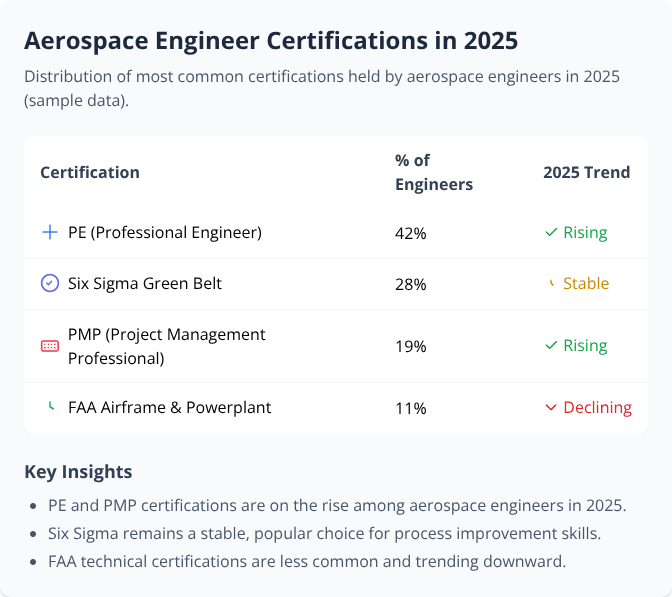
Adding a certifications section to your resume can really boost your chances, especially in aerospace engineering where specific skills and credentials matter a lot.
Essential Certifications for Advancing as an Aerospace Engineer
- Professional Engineer (PE) License – The gold standard of engineering certification in the US, this license signals authority and responsibility over critical aerospace projects and designs.
- Certified Systems Engineering Professional (CSEP) – Recognition from INCOSE that you’ve mastered the ins and outs of complex engineering systems, ideal for aerospace integration challenges.
- Project Management Professional (PMP) – An assurance that you can corral timelines, budgets, and unruly teams, often a must-have for aerospace project leads.
- FAA Airframe and Powerplant (A&P) Certification – A coveted credential for engineers dabbling in aircraft maintenance and safety, opening doors for hands-on work and regulatory compliance.
- Six Sigma Green Belt/Black Belt – Proof you can crush inefficiencies and improve quality—skills adored in aerospace manufacturing and supply chains.
- Lean Manufacturing Certification – Evidence you wield the tools to squeeze waste from complex aerospace production lines, boosting overall productivity.
- Certified Reliability Engineer (CRE) – Certification that you speak the language of reliability engineering, critical when failure is not an option at 30,000 feet.
DO'S
- List certifications that are directly relevant to aerospace engineering roles.
- Include the full certification name and the issuing organization.
- Highlight certifications near the top of your resume for visibility.
DON'TS
- Don’t list outdated or irrelevant certifications that have nothing to do with aerospace engineering.
- Don’t forget to include the certifying organization and date—mysterious credentials raise eyebrows.
- Don’t stuff every line with acronyms; clarity trumps a wall of letters every time.
Pro Tip: Listing your most relevant certifications right up front grabs a recruiter’s attention fast—they know immediately you have the credentials that actually matter for the job, rather than making them dig through a pile of unrelated information.