Financial Analyst Cover Letter Examples and Templates

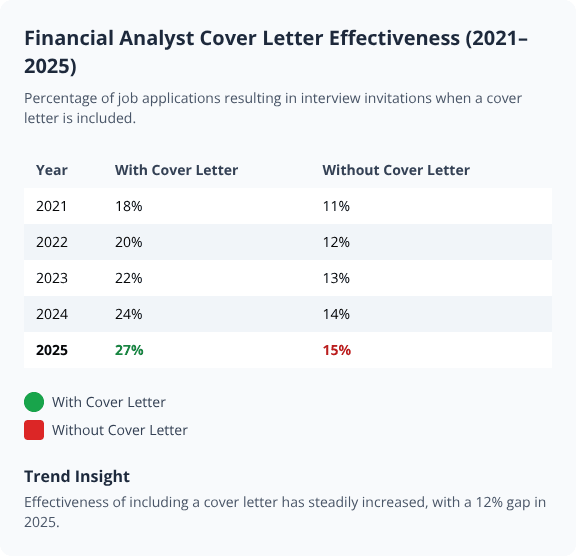
Numbers whisper secrets, but a drab cover letter shouts "ignore me" louder than a busted calculator. If you want hiring managers to pay attention, your cover letter needs to sparkle brighter than a quarterly earnings surprise. In this article, you’ll discover how to craft a compelling introduction, tailor your achievements, and script a finale that lands you in the “interview” column.
How a Standout Cover Letter Sets You Apart as a Financial Analyst
A tailored cover letter breathes life into the black-and-white facts of a resume, showing not just what you’ve done, but why it matters for this specific role at this company. It’s a chance to weave a story—maybe that one project where your analysis shifted the needle, or the way you thrive on digging into messy financial data others avoid. Unlike a resume’s bullet points, your cover letter can reflect a genuine understanding of the firm’s needs, echo their language, hint at their culture. Suddenly, you’re not just another analyst—you’re the right fit.
Sample Cover Letter for Entry-Level Financial Analyst
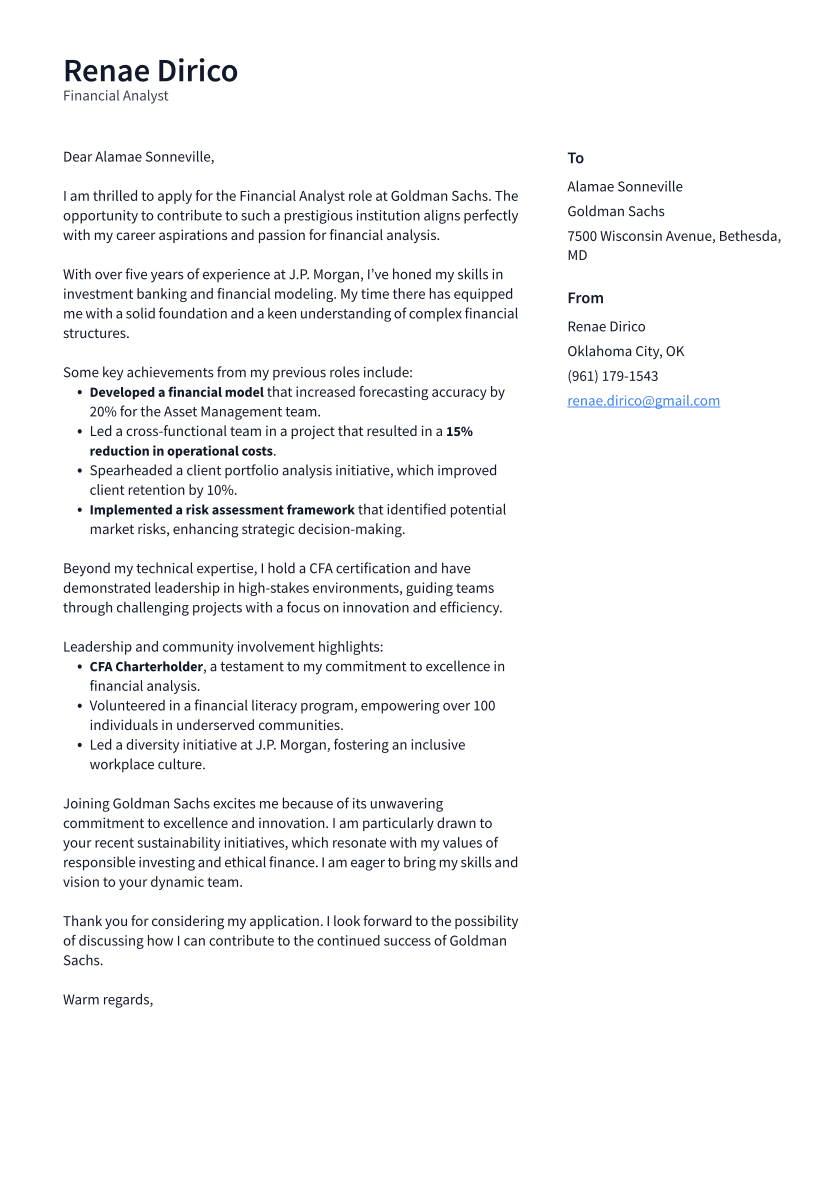
It jumps straight into real results—no fluff, just proof they can handle numbers and pressure. You can feel their drive; it doesn’t read like a template.
Sample Cover Letter for Mid-Level Financial Analyst
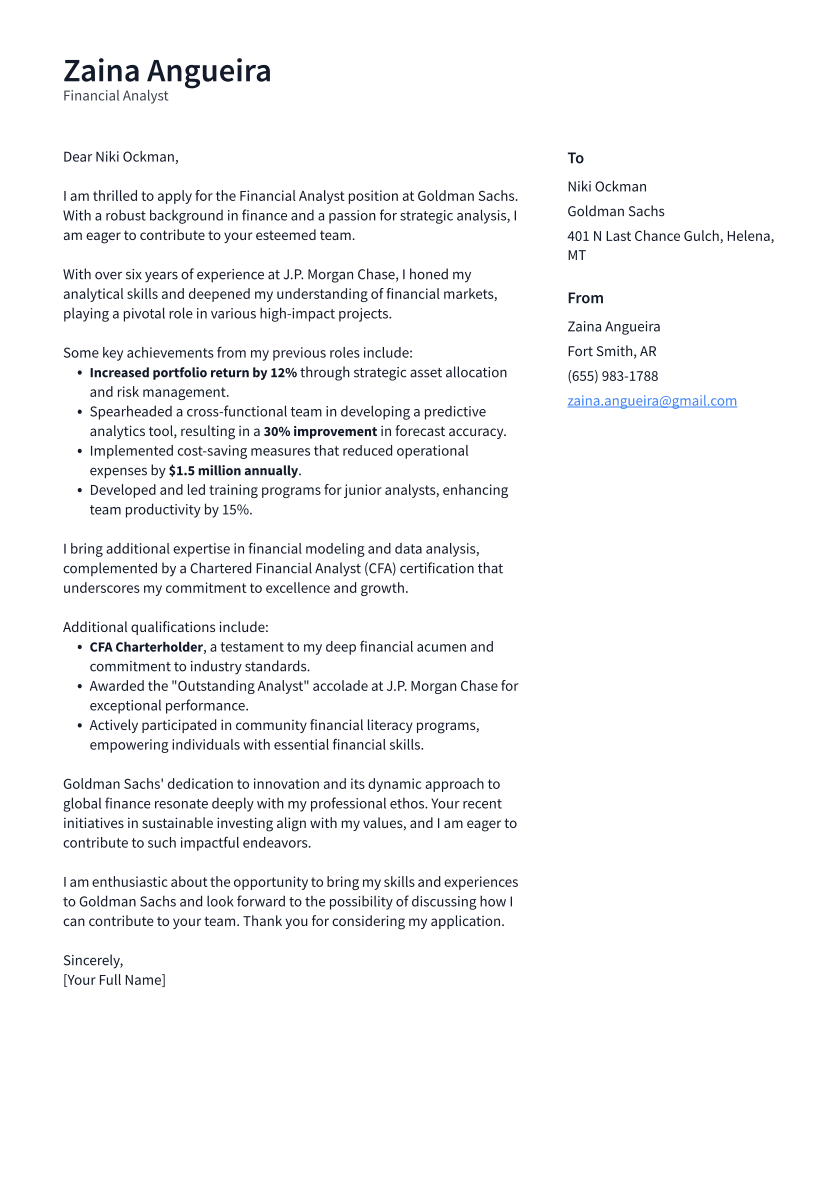
It cuts through fluff and gets straight to results—specific wins, clear skills, no wasted words. You know in seconds what this person brings to the table.
How to Write a Senior-Level Financial Analyst Cover Letter
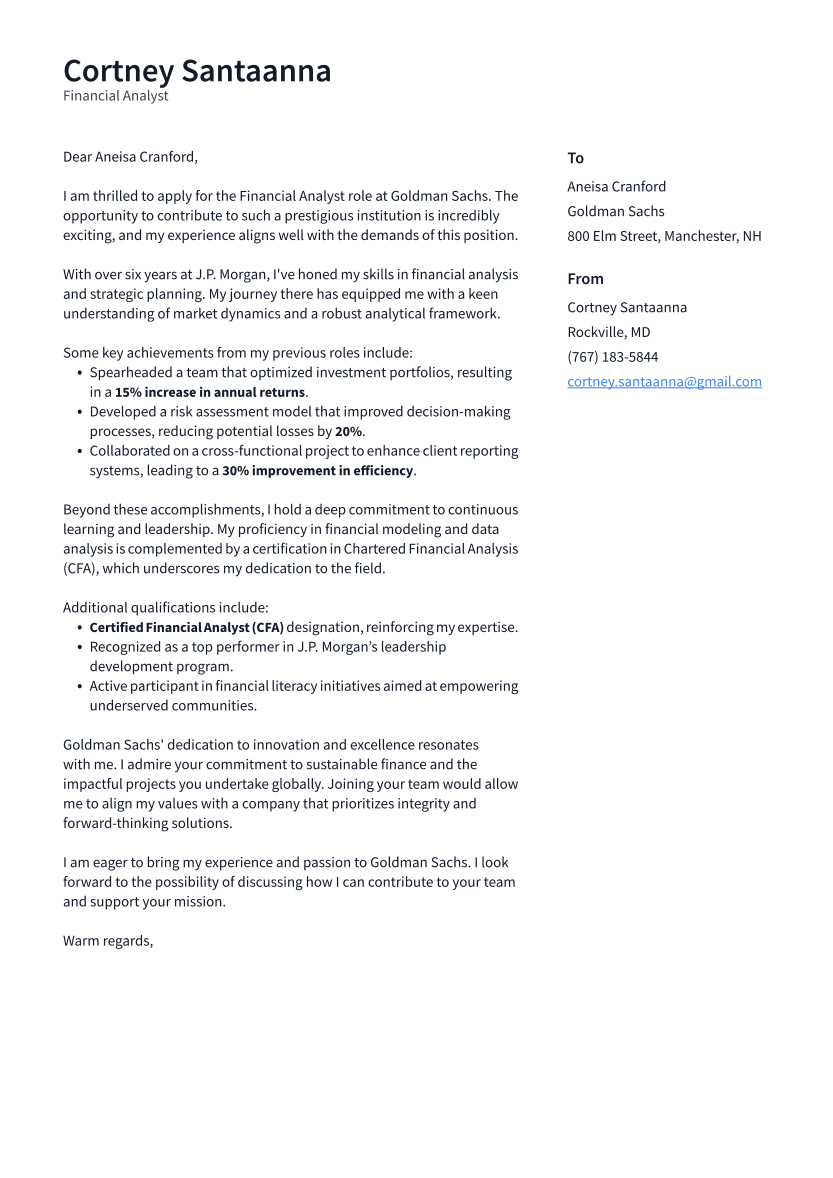
It gets straight to results—clear numbers, sharp impact, no fluff. You know exactly what this person brings from the first line.
Expert Advice for Your Financial Analyst Cover Letter
Pro Tip: Tailoring your Financial Analyst cover letter for each job shows the employer you’ve done your homework and truly see yourself fitting into their specific world—not just any old office with a calculator and spreadsheets.
DO'S
- Showcase your analytical achievements with specific, measurable results.
- Tailor your letter to the company's industry and highlight relevant skills.
- Demonstrate clear communication by using straightforward, professional language.
DON'TS
- Don’t regurgitate your resume—share something new about yourself.
- Don’t forget to tailor every line to the job and company in question.
- Don’t drown your message in buzzwords or vague claims; show real achievements.