Estimator Cover Letter Examples and Templates
A bland cover letter for an Estimator role is like submitting a blank invoice—sure to be ignored. This article sticks a highlighter on what it takes to make your cover letter stand out from the stack. Prepare to learn how to crunch numbers on paper and charm hiring managers simultaneously.
Why a Great Cover Letter Matters for an Estimator
A tailored cover letter transforms a list of qualifications from your resume into a living, breathing story—one that pinpoints exactly why you’re the missing piece in the Estimator puzzle. It lets you address a company’s quirks, values, and the specifics of their projects, showing not just what skills you have, but how you’ll put them to work for them. While your resume drops breadcrumbs, your cover letter ties them neatly into the path that leads from their needs straight to your hands-on experience. It’s your chance to show you’ve done your homework and aren’t just randomly scattering resumes—you’re targeting this, and them, for a reason.
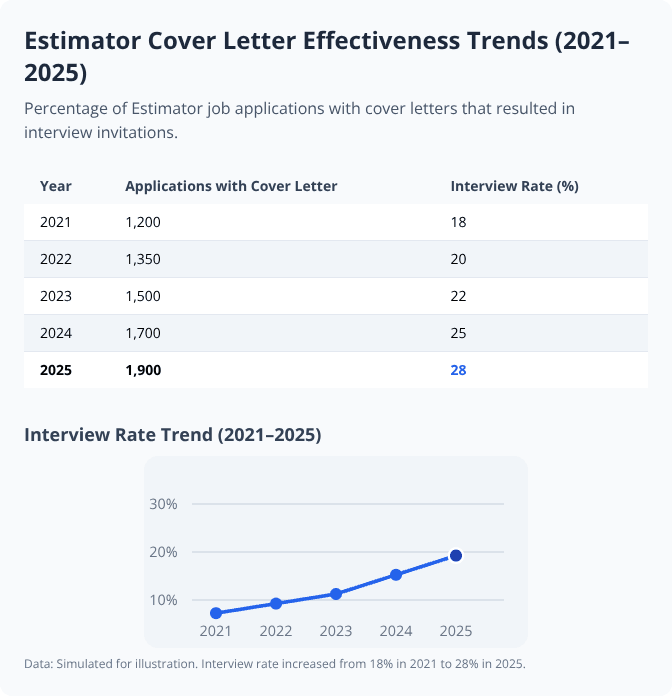
Entry-Level Cover Letter Template for an Estimator
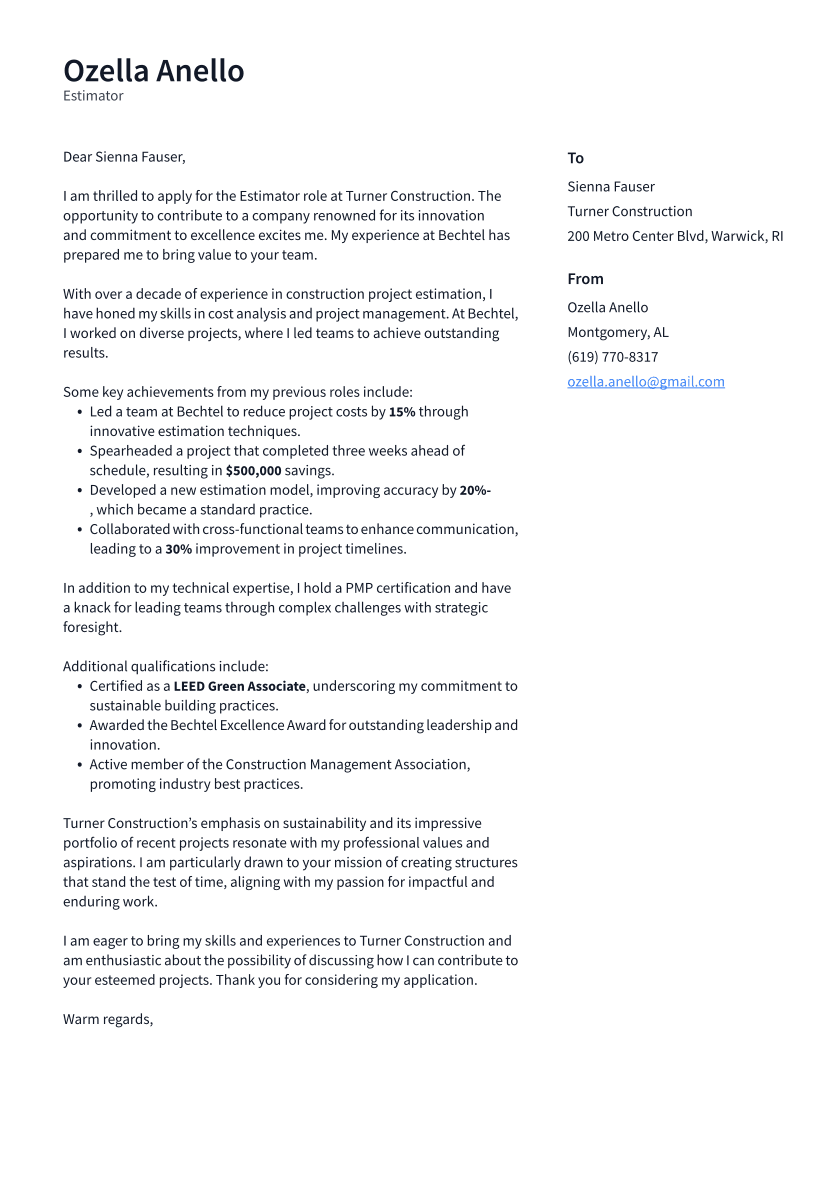
It wastes no time getting to the heart of real experience and enthusiasm. You can feel the drive; it doesn’t just list skills, it shows hunger to learn and contribute.
How to Write a Mid-Level Estimator Cover Letter
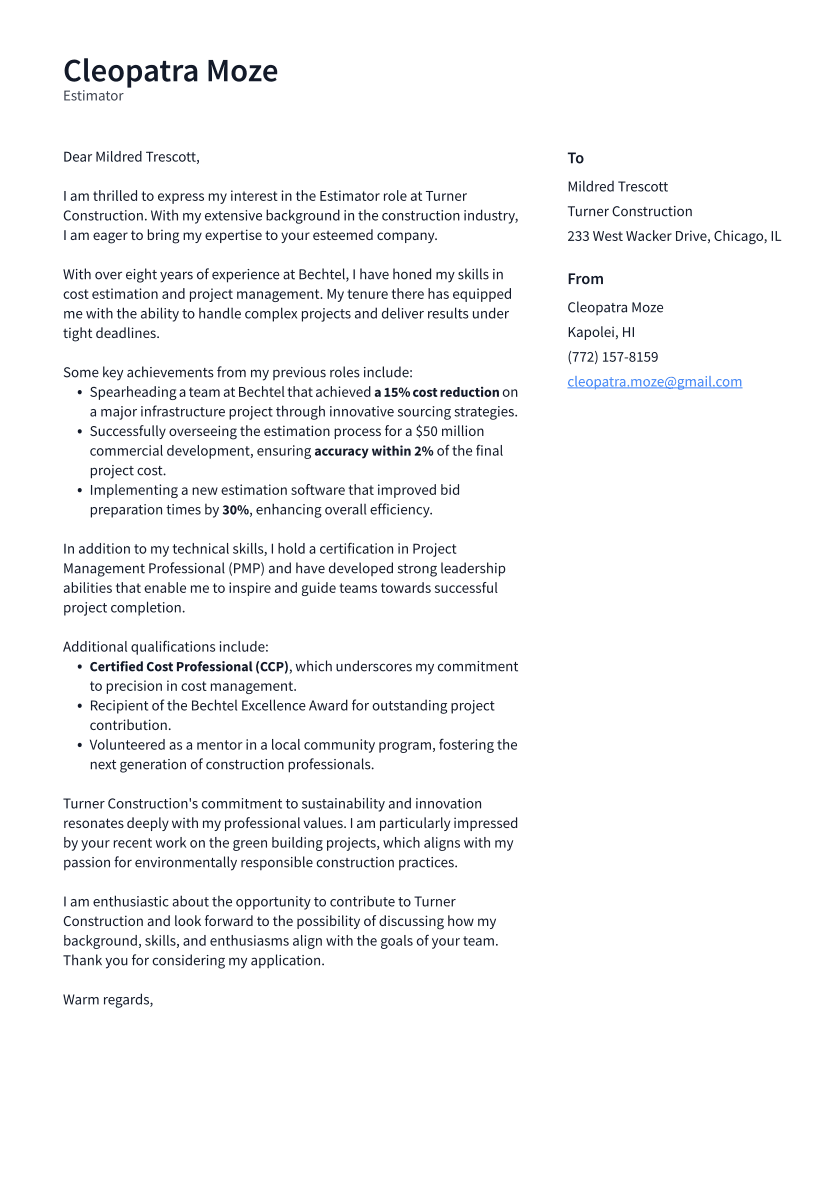
It cuts through the noise—no fluff, just clear proof they know the job inside-out. You can feel their competence right away.
Senior-Level Estimator Cover Letter Example
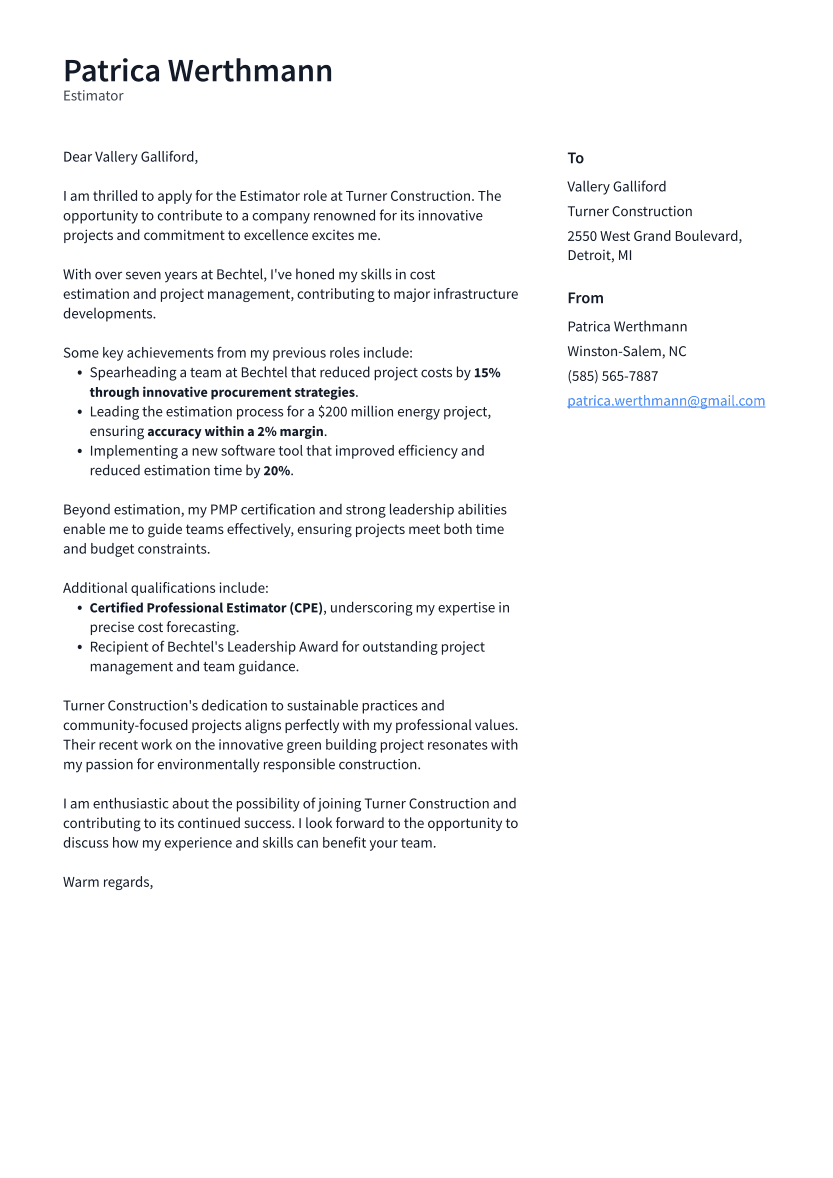
This letter slices straight to the core of what matters—real project wins and sharp cost-saving instincts. You can feel the experience, not just read it.
Pro Tips for Writing a Winning Estimator Cover Letter
Pro Tip: Every construction firm sizes up candidates differently, so tailoring your Estimator cover letter shows you understand their unique needs and aren’t just tossing generic lines into the void.
DO'S
- Highlight proven experience managing bids or cost estimates with hard numbers.
- Show you understand the company’s projects and tailor your enthusiasm to their specific work.
- Explain how your attention to detail and communication skills have solved real estimation challenges.
DON'TS
- Don't ramble on about unrelated work history.
- Don't send a generic letter—address the company and role directly.
- Don't forget to proofread for typos and sloppy formatting.